Saturday, May 31, 2025

I ditched my PC for the MSI Vector A18 HX A9W gaming laptop - here's my verdict after three weeks

MSI Vector A18 HX A9W: Two-Minute Review
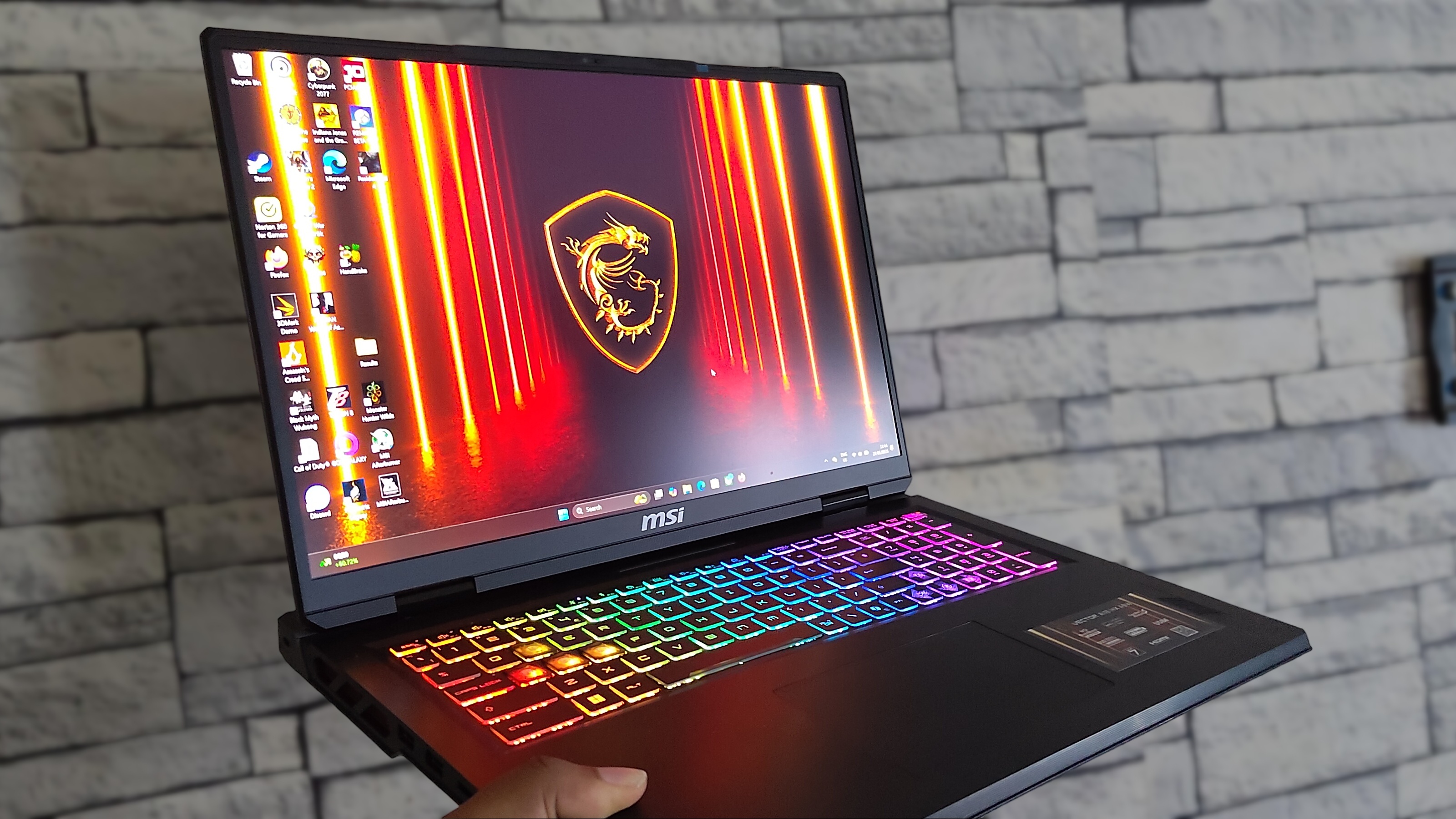
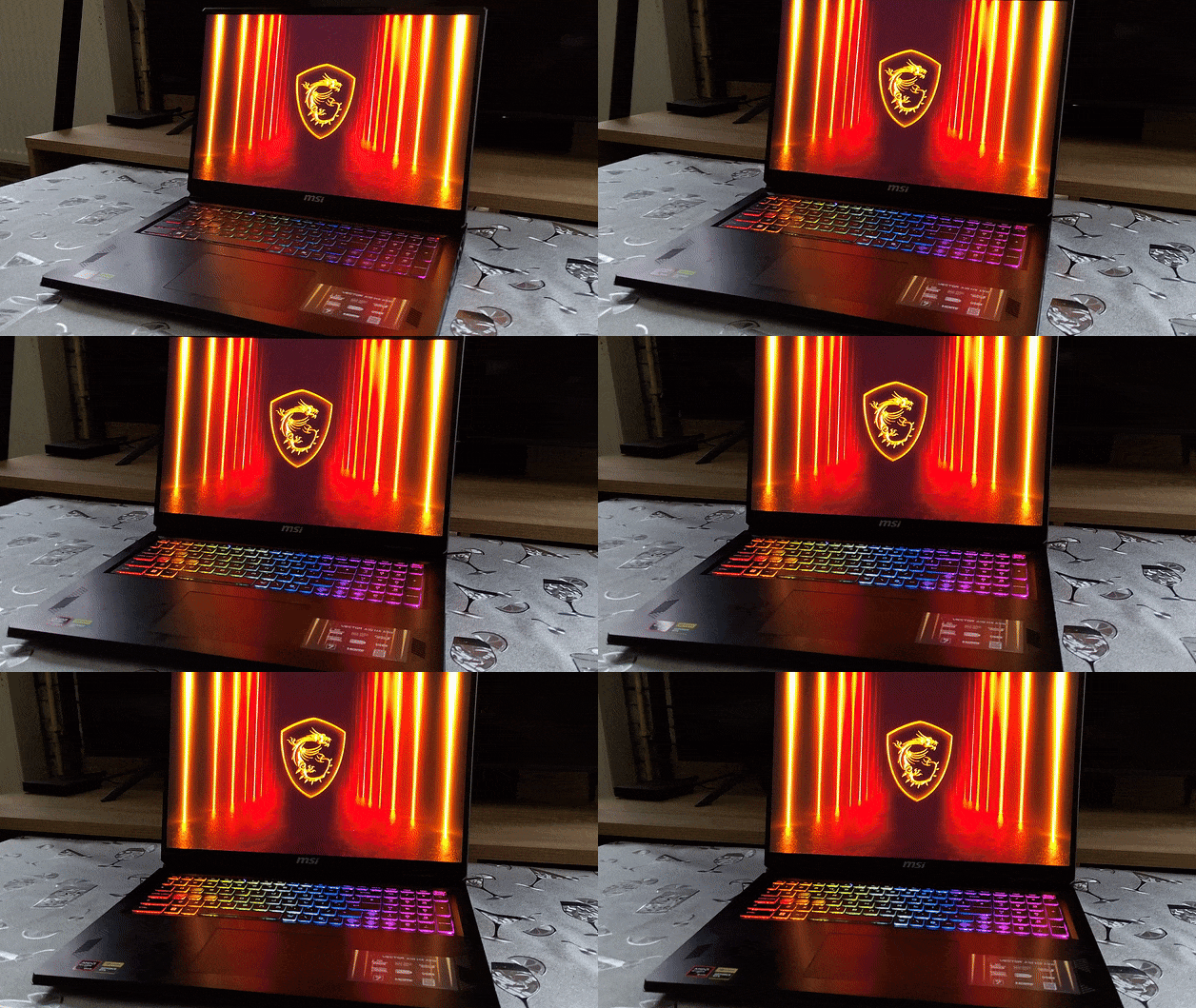
This thing is heavy, seriously... (Image credit: Future / Isaiah Williams)

It's simple. If you're out for a powerful gaming laptop, capable of reaching high and smooth frame rates with minimal performance issues, the MSI Vector A18 HX A9W is your answer. Using Nvidia's RTX 5080 laptop GPU and AMD's Ryzen 9 9955HX processor, gaming is a breeze at its native 2560x1600 resolution without using Team Green's DLSS upscaling technology; however, when it is used, achieving high frame rates is a cakewalk.

It shines best in games like Cyberpunk 2077, Indiana Jones: The Great Circle, and Resident Evil 4 remake. It can struggle when attempting to use ray tracing at maximum graphics settings and at a 4K resolution without enabling DLSS, but that's exactly what Nvidia's tools are there for.

Call of Duty: Black Ops 6 had very little trouble reaching over 100fps, and edged close to the 100fps mark when running on ECO-Silent mode (which is incredible as I'll dive into later), helping reduce the workload and high temperatures, thanks to MSI Center's user scenario options.

With a 240Hz refresh rate, playing less demanding titles like Hades that can reach such frame rates, was an immersive and astonishing gaming experience. I know I've previously said that 144 or 165Hz refresh rates are more than enough for gaming, but with any game that can stay at 240fps without any significant dips, it's very impressive.

It's not all perfect though; this laptop is not ideal for long trips or playing on the go, as it's incredibly heavy (especially when including its 400W power adapter), and you'd need a large backpack to fit the 18-inch laptop in for travels. I found it difficult to use for long hours on a sturdy mini bed desk, with worries that it would snap its legs in pieces, and even at my main gaming desk, with its power adapter taking up space – so, portability isn't the best here.

This isn't an inexpensive system either - however, if you can afford the expense and you're looking for one of the best gaming laptops to provide great gaming performance, look no further.

MSI Vector A18 HX A9W: Price & Availability

  • How much does it cost? Starting at $2,999.99 / £3,199 / AU$6,599 (for RTX 5080 configuration)
  • When is it available? Available now
  • Where can you get it? In the US, UK, and Australia

There's no denying that the MSI Vector A18 HX A9W is a very expensive piece of hardware, instantly locking most gamers out of a potential purchase. However, for those who can afford it, you're getting the bang for your buck with a system that is capable of matching a variety of desktop builds.

With both a powerful AMD processor and Nvidia GPU, it's more than enough to satisfy most gamers' performance needs; the Ryzen 9 9955HX excels at single-core and multi-core processes, which you'll see later below.

With this configuration (A9WIG-006UK), there is no OLED or mini-LED display available, which would've slightly softened the blow of the high price, with an immersive and brighter screen – but that shouldn't hinder the gaming experience here.

The issue is that it's more or just as expensive as some pre-built gaming PCs, which is somewhat reasonable since it's using a CPU as powerful as those in high-end desktops – but the RTX 5080 discrete desktop version is the stronger GPU.

Regardless, this is a gaming laptop that packs plenty of processing power in a beefy and sturdy chassis, cooled very well with its Cooler Boost 5 tech using a 'Dedicated Cooling Pipe', so it's not very surprising to see it cost so much.

Still, the point remains; unless you're adamant on travelling with the Vector A18 HX A9W and using it on the go (which I wouldn't recommend because portability isn't that great here), or just want a PC you can move around your home easily, it might be a better choice to buy a desktop rig.

  • Value: 2.5 / 5

MSI Vector A18 HX A9W: Specs
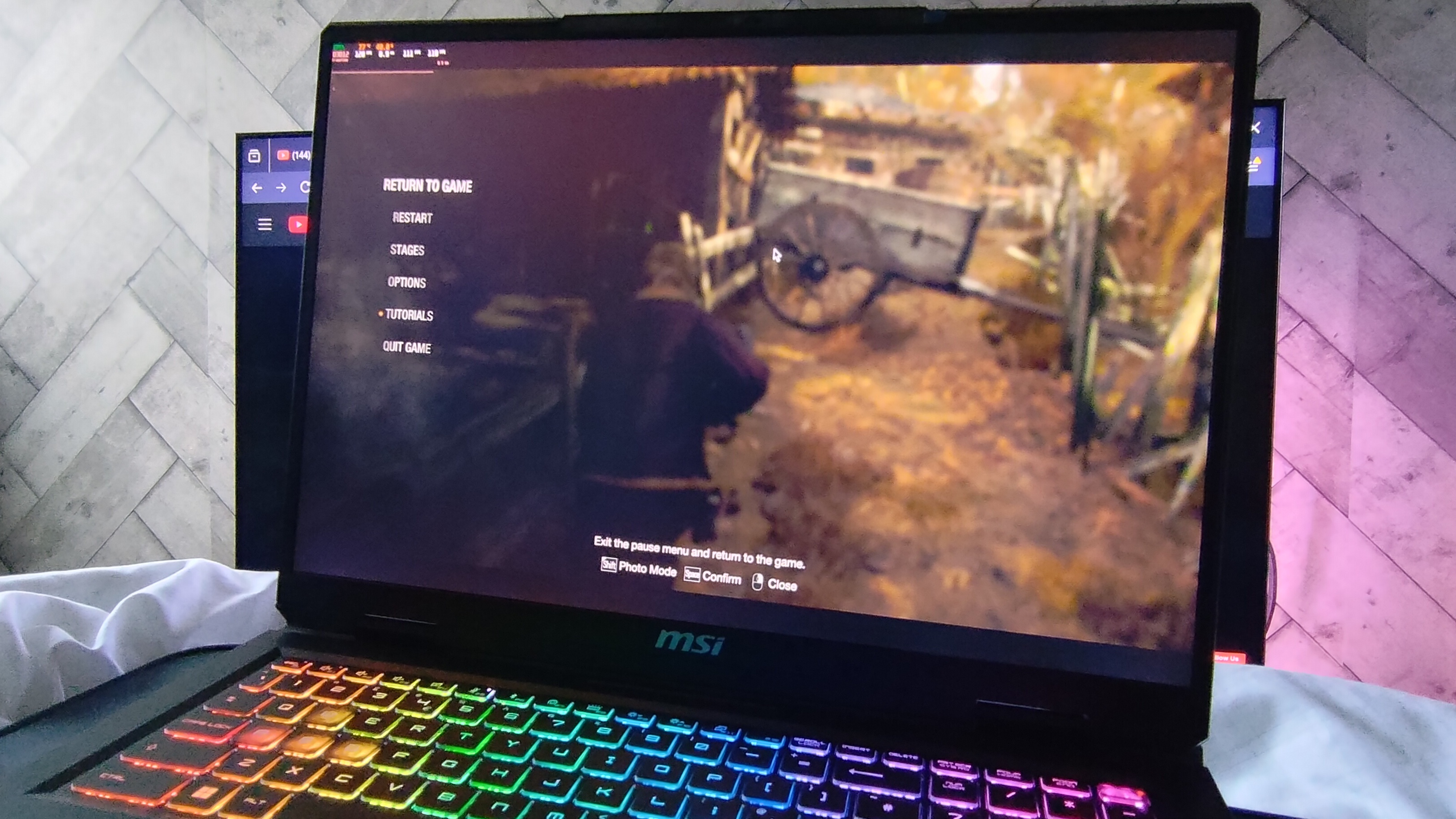
Resident Evil 4 remake running on MSI Vector A18 HX A9W

You knew you'd see Resident Evil 4 at some point in this review... I'm obsessed with it (Image credit: Future / Isaiah Williams)

MSI Vector A18 HX A9WIG-006UK (Review model UK)

MSI Vector A18 HX A9WIG-223US (Base model US)

MSI Vector A18 HX A9WIG-076US (Highest config)

Price

£3,199

$2,999.99

$3,959

CPU

AMD Ryzen 9955 HX

AMD Ryzen 9955 HX

AMD Ryzen 9955 HX

GPU

Nvidia RTX 5080

Nvidia RTX 5080

Nvidia RTX 5080

RAM

32GB DDR5

32GB DDR5

64GB DDR5

Storage

2TB NVMe Gen 4x4

1TB NVMe Gen 4x4

2TB NVMe Gen 4x4

Display

18" QHD+(2560x1600), 240Hz Refresh Rate, IPS-Level, 100% DCI-P3(Typical)

18" 16:10 QHD+(2560 x 1600), 240Hz, 100% DCI-P3 IPS-Level Panel

18" 16:10 QHD+(2560 x 1600) 240Hz 100% DCI-P3 IPS-Level Panel

Battery

4-Cell,
99.9 Whrs

4-Cell,
99.9 Whrs

4-Cell,
99.9 Whrs

Ports

2x Type-A USB3.2 Gen1, 1x Type-A USB3.2 Gen2, 2x USB 4/DP&PD 3.1 (Thunderbolt 4 Compatible), HDMI 2.1

2x Type-A USB3.2 Gen1, 1x Type-A USB3.2 Gen2, 2x USB 4/DP&PD 3.1 (Thunderbolt 4 Compatible), HDMI 2.1

2x Type-A USB3.2 Gen1, 1x Type-A USB3.2 Gen2, 2x USB 4/DP&PD 3.1 (Thunderbolt 4 Compatible), HDMI 2.1

Dimensions

15.91" x 12.09" x 1.26"

15.91" x 12.09" x 1.26"

15.91" x 12.09" x 1.26"

Weight

3.6 kg / 7.9lbs

3.6 kg / 7.9lbs

3.6 kg / 7.9lbs

MSI Vector A18 HX A9W: Design

Chassis of MSI Vector A18 HX A9W

(Image credit: Future / Isaiah Williams)

I absolutely love the chassis of the Vector A18 HX A9W as it has a sturdy build, and perhaps most importantly, a great cooling pipe design. Even when gaming on Extreme Performance, temperatures were never too high, often hitting a maximum of 77 degrees Celsius.

Its speakers aren't particularly a standout, but are serviceable and get the job done, especially with an equalizer and 3D surround sound available to improve audio immersion. It's also always easier to use Bluetooth speakers or headphones that have much better bass and clarity.

The two Thunderbolt 4 USB-C ports present are ideal for fast file transfers and for those who aren't keen on expanding internal storage with a new SSD, who would rather use an external one. It also features an HDMI 2.1 port on its rear, right next to its power adapter port – and one particular aspect I don't like is the slightly short length of the wire, which often forced me to place the chunky adapter on the desk.
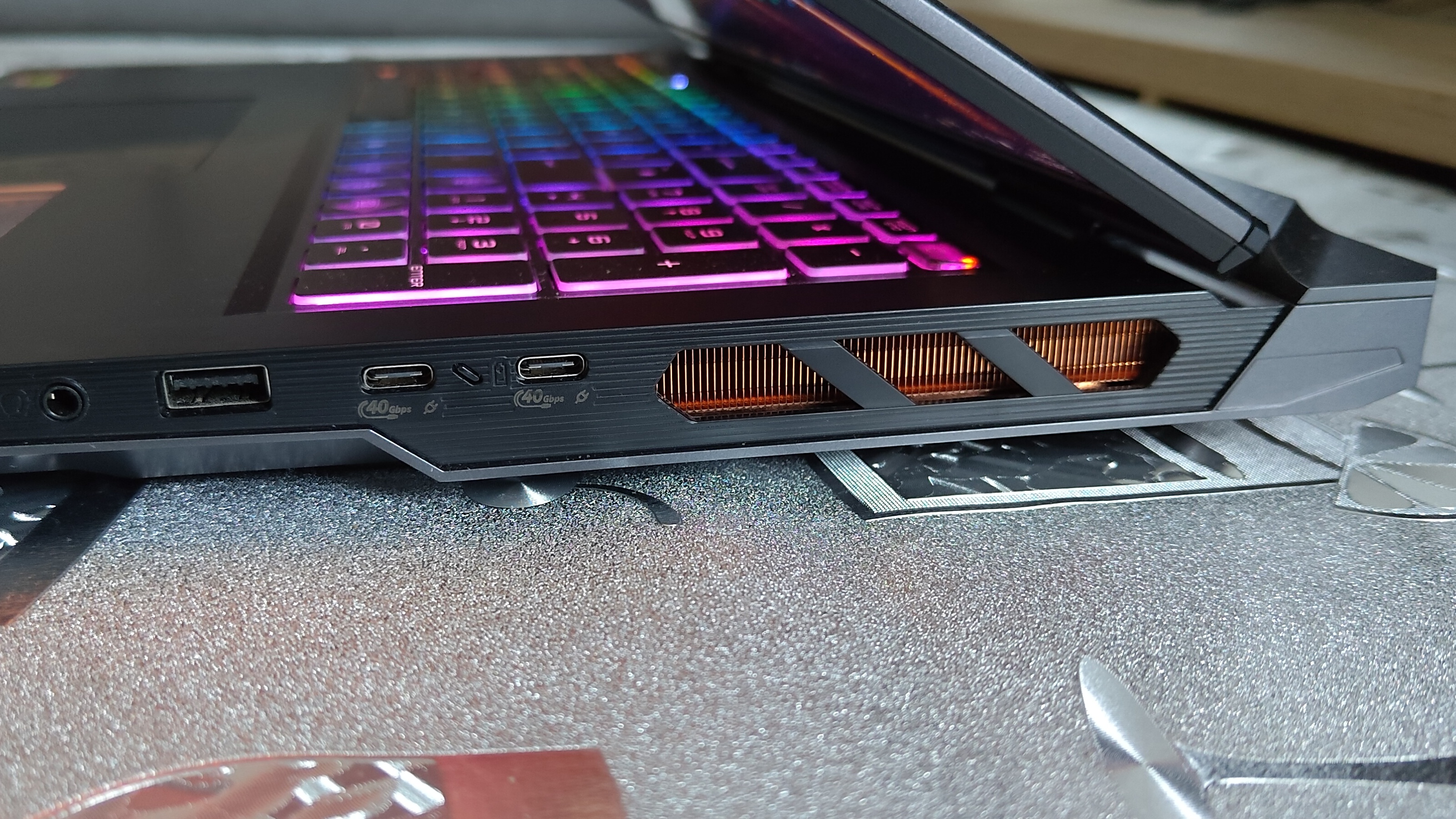
Ports on the MSI Vector A18 HX A9W

Cool design, right? (Image credit: Future / Isaiah Williams)

With an 18-inch screen, you're getting the best you could possibly ask for when it comes to portable gaming – and if you've got a spacious desktop setup, it's a great experience.

However, the screen size and the weight are the only two main issues I have in this region, as you're going to have trouble fitting this in most backpacks for travel, and it's very heavy to carry around.

At 7.9 lbs, it had me paranoid that it would make my mini desk meet its demise, and while it's understandable considering all the powerful components, you should be aware that this laptop isn't built for portability (especially while carrying the adapter around, too).

Regardless, this is a beefy gaming laptop power-wise, and these gripes weren't too significant to spoil my experience overall.

  • Design: 4 / 5

MSI Vector A18 HX A9W: Display
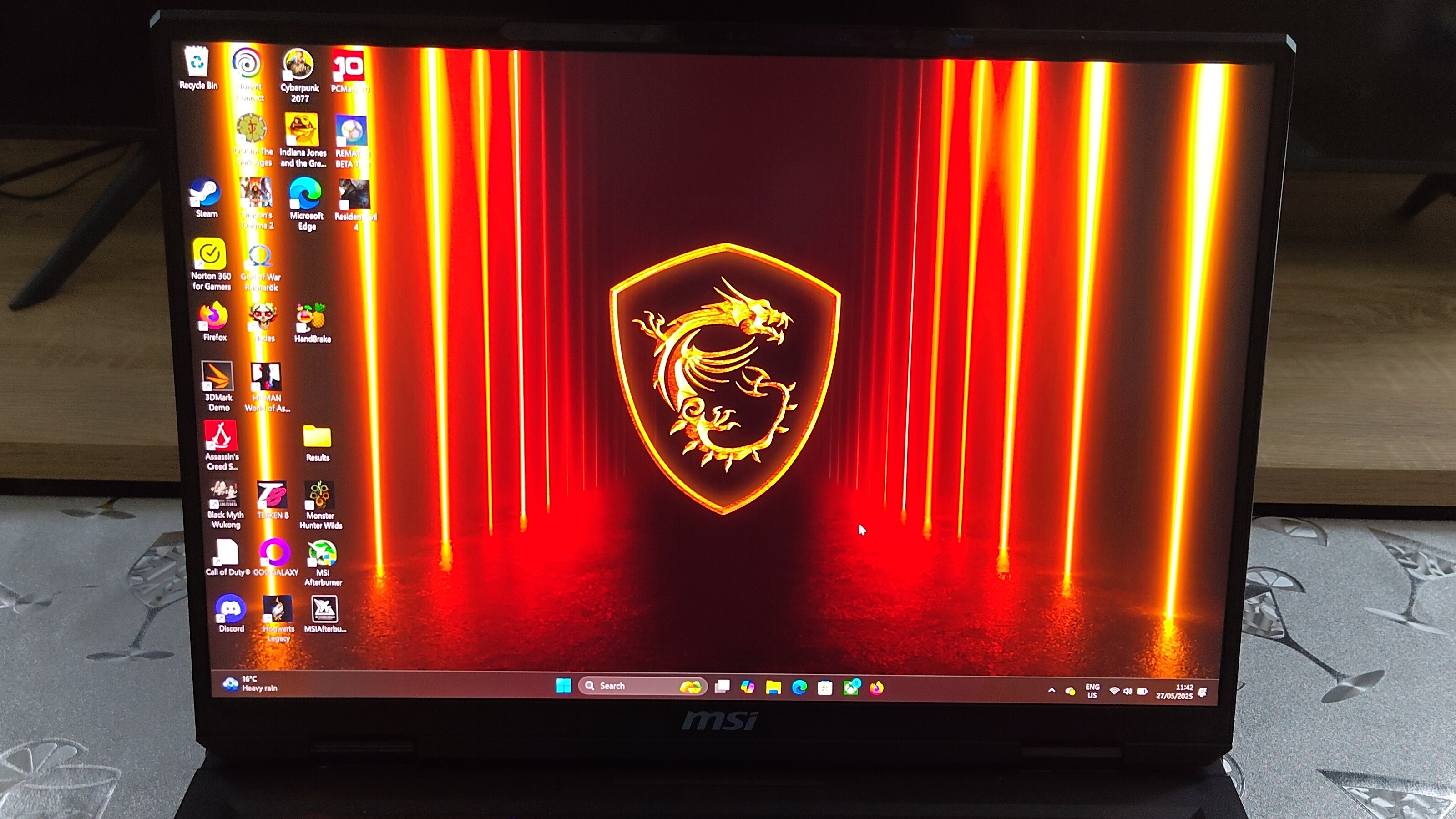
MSI Vector A18 HX A9W

(Image credit: Future / Isaiah Williams)

My review model of the Vector A18 doesn't exactly have the best display available, as it's neither OLED nor mini-LED – both of which offer greater contrast and brightness. However, that doesn't stop it from being an immersive display that I found ideal for intense and competitive multiplayer gaming sessions.

It's thanks to the 240Hz refresh rate and 2560x1600 resolution, which matches up well with the horsepower of the RTX 5080. There aren't many games that are going to run at 240fps (unless you significantly lower graphics settings or resolution), but the ones that do, look absolutely incredible.

I must admit, coming from the consistent use of an OLED ultrawide, it took a little bit of an adjustment to become accustomed to an IPS LCD panel again – but that's to be expected when scaling down from one of the best display types (and it would be unfair to knock points off here because of that).

It's worth noting that HDR isn't present either, which often goes a long way at providing better color accuracy and detail in both brighter and darker images.

Regardless, the Vector A18 HX A9W has a 100% DCI-P3 coverage, so I never once felt dissatisfied or urged to calibrate or adjust color profiles. It also helps that you're getting a full 18-inch screen, which I believe is the sweet spot for portable laptop gaming (besides it probably being why it's so heavy).

The one downside I ran into is playing games that don't have 16:10 aspect ratio support. To put it simply, if you dislike black bars filling out portions of your screen while gaming, you're not going to like it here. So, it's definitely worth considering before committing to a purchase, but there are no other gripes from me.

  • Display: 4 / 5

MSI Vector A18 HX A9W: Performance
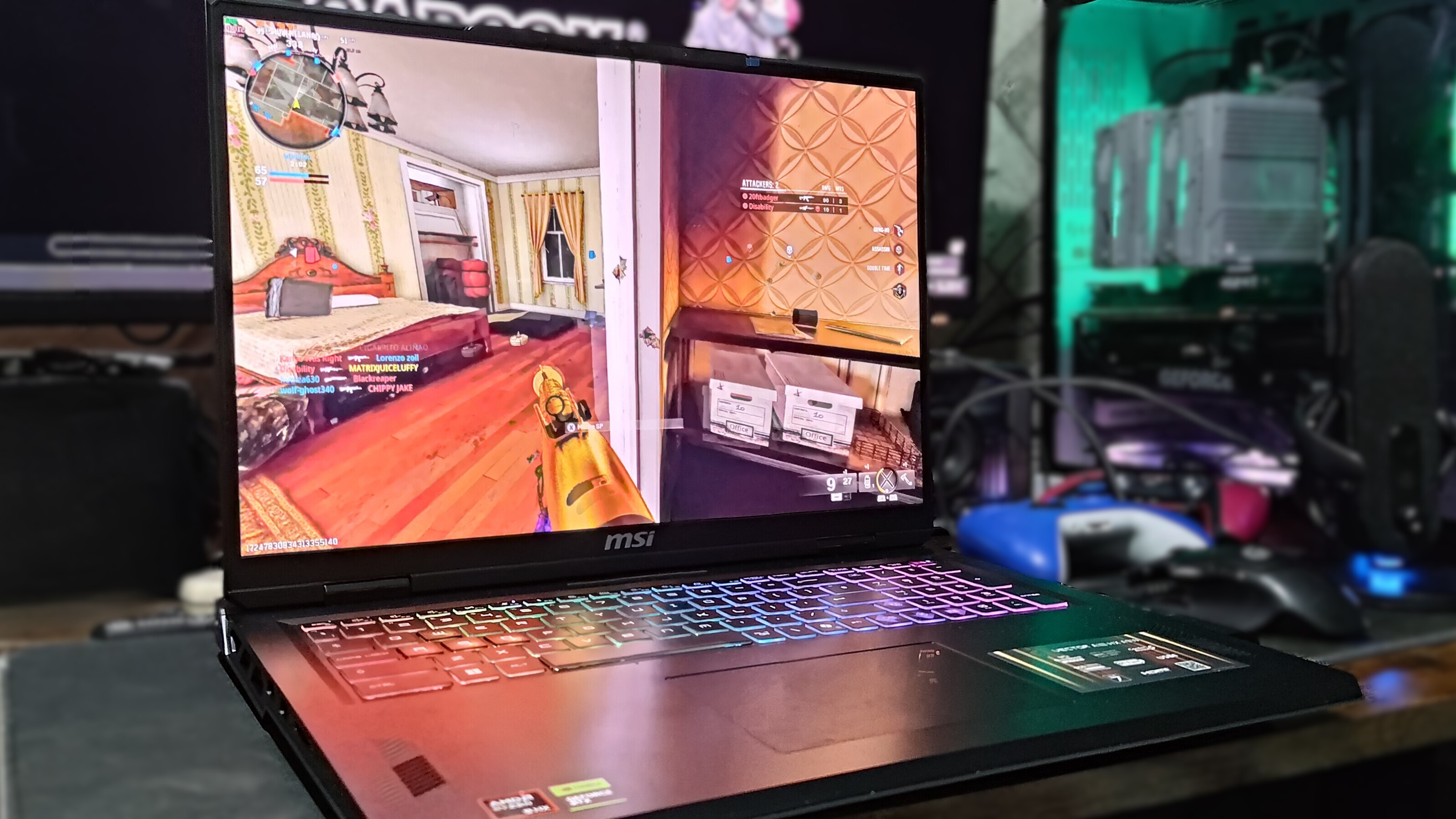
MSI Vector A18 HX A9W running Black Ops 6

Sweaty Call of Duty lobbies... we love to see it (Image credit: Future / Isaiah Williams)
  • RTX 5080 is a beast of a laptop GPU
  • The combo with AMD's Ryzen 9955HX processor is fantastic
  • The CPU's performance is incredible, matching desktop processors

The biggest highlight of the MSI Vector A18 HX A9W is its performance, almost across the board. It shouldn't come as a surprise for me to say that the RTX 5080 laptop GPU is an absolute powerhouse, and crushes the 2560x1600 resolution in most triple-A games – and DLSS 4 with Multi Frame Generation is a game changer when used where necessary (essentially anything as demanding as Cyberpunk 2077).

In CPU-bound games, AMD's Ryzen 9955HX processor shines bright with 16 cores and 32 threads, ensuring the Blackwell GPU can do its job without any major bottleneck. In synthetic tests, both single-core and multi-core scores soared above chips like Apple's M1 Max in Cinebench 2024, and in real-world gaming tests, the results were consistent, as I didn't notice anything ominous regarding performance frame rates and frame pacing.

Most importantly, MSI Center features three different user scenario modes: ECO-Silent, Balanced, and Extreme Performance, which can all be used in any of the three Discrete, MSHybrid, or Integrated Graphics modes.

For the best results, I stuck with Discrete Graphics mode, and I must say I was pleasantly surprised at how great ECO-Silent was, in particular. Using a lower TDP (power consumption), temperatures are significantly decreased, and the fans are silent, hence the name ECO-Silent – but I came away shocked at the frame rates I was hitting using this mode.

At 1600p on ECO-Silent, Cyberpunk 2077 at maximum graphics settings without ray tracing and DLSS Quality, it ran at a solid 77fps, sometimes reaching the low 80fps mark, with a 1% low of 66fps.

In Assassin's Creed Shadows – a game that is arguably nearly as demanding on PC hardware as Cyberpunk 2077, and frankly, needs Frame Generation for higher FPS – ran at an average of 40fps on maximum graphics settings at 1600p, using DLSS Quality on ECO-Silent.

With the same graphics settings applied to Indiana Jones and the Great Circle, it hit an average of 62fps; if that doesn't indicate how impressive ECO-Silent mode is, then I don't know what will. It's the best option for gamers who are bothered by fan noise and higher temperatures, while you still get very impressive performance results.


It gets even better with Balanced and Extreme Performance; the former has fans only a little louder than ECO-Silent, and is the way you should use the Vector A18 HX A9W for gaming (it's also MSI's recommended option), as it gives you a true reflection of what this machine is capable of, evident in the performance charts above.

Sticking with Indiana Jones and the Great Circle, Balanced mode was 41% faster than ECO-Silent, with an average of 94fps and 1% low at 77fps.

In the case of Extreme Performance, expect a whole lot of fan noise and higher temperatures, in favor of the best possible performance. In most cases of casual play, I hardly needed to use this mode, as the FPS boost wasn't significant enough coming from Balanced mode. However, it's absolutely essential for gaming at 4K, especially if you're using ray tracing.

It mustn't go without mention that DLSS Multi Frame Generation (when you have a decent base frame rate) is an absolute treat. It makes Cyberpunk 2077's Overdrive path tracing preset playable without needing to adjust graphics settings; yes, increased latency is worth noting, but I honestly didn't think it was too impactful in this case.

  • Performance: 5 / 5

MSI Vector A18 HX A9W: Battery
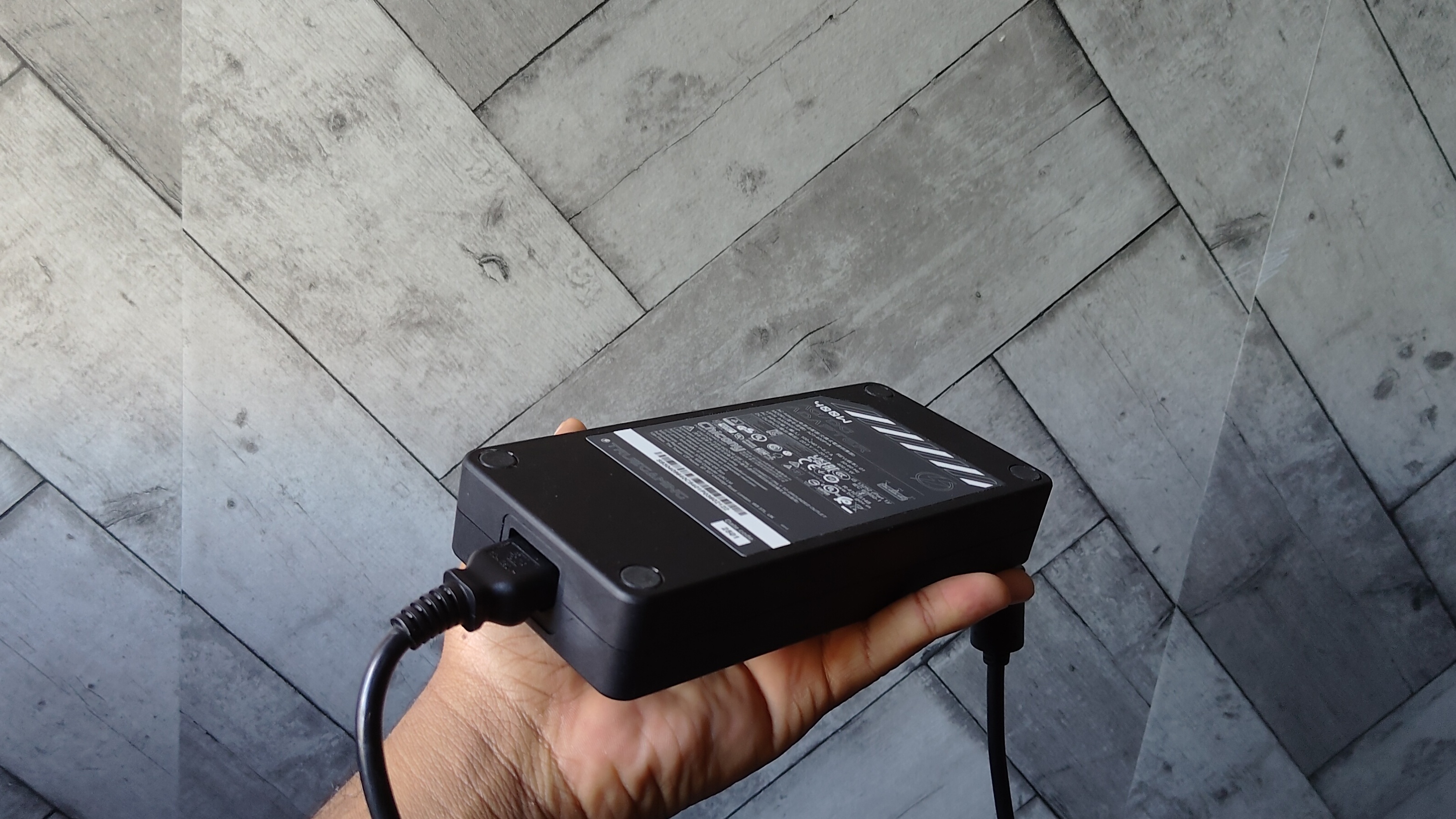
Male holding the MSI Vector A18 HX A9W's adapter

This heavy adapter is your best friend... forget about the battery (Image credit: Future / Isaiah Williams)

As it is with most gaming laptops I've used, the battery life isn't terrible, but it's also not great either – so, decent at best. We're still seemingly a long way off from battery tech improving, especially for gaming laptops and handheld gaming PCs, but I give the Vector A18 HX A9W its plaudits for being at least average here.

It has a 99.9WHr battery, and switching MSI Center's user scenarios, battery life can vary. While playing Resident Evil 4 remake on Hybrid mode and Extreme Performance, the laptop lasted a full hour, starting at 85% before draining. Knocking the scenario settings down to Discrete mode and Balanced (with 50% brightness) allowed it to last another 10 minutes from the same battery percentage.

If you ask me, I wouldn't even bother gaming without the power adapter because, as expected, performance is significantly worse. Bear in mind, there's a 400W power adapter ready to handle the combined 260W of power from the RTX 5080 and the Ryzen 9 9955HX.

On the other hand, while web surfing in Balanced mode and Integrated Graphics, results were a little bit more impressive; at 59% battery, it took exactly 51 minutes to fall to 6%. When at 100%, it lasted 3 hours and 25 minutes during YouTube playback, so it's decent enough for those who want to use this laptop for work or multitasking.

However, the biggest downside is the charging time, as it takes a total of 2 hours to fully charge. It's already not great that the battery drains within 3 hours outside of gaming, but the addition of a long charge time isn't beneficial if you're looking to use it while on the go.

Portability isn't a strong suit, and these battery results are one of the main reasons why, especially when paired with the hefty design.

  • Battery: 3 / 5

Should you buy the MSI Vector A18 HX A9W?

Buy it if...

You're looking for one of the best gaming laptops

The MSI Vector A18 HX A9W is one of the best gaming laptops you can find on the market, providing fantastic performance results in games with Nvidia's powerful Blackwell RTX 5080 GPU and AMD's desktop-rivalling Ryzen 9955HX processor.

You want an immersive high refresh rate display

It's great for games like Call of Duty: Black Ops 6 or Counter-Strike 2, which rely on fast refresh rates, with access to 240Hz here. The laptop GPU is capable of achieving high frame rates with the right graphics settings.

You plan on moving around your home with a powerful gaming machine

The Vector A18 HX A9W is great for those who wish to move around their home using different displays in different rooms, without a big desktop PC case taking up space.

Don't buy if...

You need a laptop with long battery life

While the Vector A18 HX A9W's battery life isn't bad, it's also not the best either, as you might find with most gaming laptops, and you shouldn't consider this if that is a dealbreaker.

You want to game or work on the go

Coinciding with its average battery life, you won't get great performance without using its 400W power adapter, which is required to utilize the RTX 5080 and Ryzen 9955HX's combined 260W of power.

It's also very heavy and won't fit in most backpacks due to the display's 18-inch size.

You want an affordable gaming laptop

Affordability and the MSI Vector A18 HX A9W are completely distant, as all configurations have an eye-watering cost using either the RTX 5070 Ti or the RTX 5080.

How I tested the MSI Vector A18 HX A9W

I tested the MSI Vector A18 HX A9W for three weeks, running multiple games and synthetic benchmarks. It kept me away from my main desktop gaming PC for a while, with Multi Frame Generation being a significant reason in why, and while I don't want game developers to become over-reliant on Nvidia's DLSS tech, it's great when implemented properly.

Navigation and web browsing was a breeze too, with 32GB of RAM and a powerhouse CPU giving me all I needed to acknowledge that this was a gaming laptop that enthusiasts won't want to miss out on.
Friday, May 30, 2025

I tried this armband-style Coros heart rate monitor to free me from the shackles of smartwatches

Coros Heart Rate Monitor: One minute review

The Coros Heart Rate Monitor is a strap-based monitor designed for your upper arm that uses optical tracking tech to measure blood volume, rather than electrocardiograph or ECG, which measures the heart's electrical signals. While many of the best heart rate monitors use ECG, optical sensors are found in the best smartwatches. Which begs the question: why does Coros' stand-alone HRM use optical sensors instead of ECG?

The short answer, from Coros, is that optical heart rate monitoring works by using light shone through your skin to see your blood flow. While watches can do a reasonable job on the wrist, there is a lot more blood higher up the arm, making a dedicated strap – which can be affixed tightly yet comfortably to that higher arm position – more accurate.

So, for your money, you are getting a more accurate optical heart rate monitor than a smartwatch, yet with arguably a more comfortable wearing position. Unlike a chest strap, it's a comfortable wear for both men and women of all body types and sizes, and to top it off you get a decent 38 hours of use with its rechargeable battery.

Thanks to Bluetooth connectivity, this can be used with many different devices from smartwatches and phones to bikes and gym machines. There's also a useful wear detection feature which means this can auto-power on and connect. All you need to do is put it on.

There is basic waterproofing, to 3ATM, but this is more to make it sweat and rain-proof – so don't expect this to be usable for swimming. You also won't find connectivity options like ANT+ here, so that may limit some people in terms of which devices this can be used with.

Coros Heart Rate Monitor key specs

Component

Coros Heart Rate Monitor

Dimensions

42.5 x 28.4 x 9.1mm

Weight

19g with strap

Fit

18-32cm standard, 24-43cm large

Case material

Plastic unit, with polyester fibre, nylon and spandex band

Connectivity

Bluetooth

Compatibility

3 simultaneous

Water resistance

3 ATM

Accelerometer

No

Battery

Rechargeable USB-A

Coros Heart Rate Monitor: Price and release date

  • Available to buy now in the US, UK, and Australia
  • Priced at $79 / £69 / AU$140 RRP
  • A similar price point as Garmin's HRM Pro

The Coros Heart Rate Monitor launched on June 27, 2023 and is available across the globe. It launched with a price of $79 in the US, £69 in the UK and $140 in Australia.

The Coros HRM is available in several colours thanks to a selection of band options, which you can pick at purchase. These include Grey, Lime and Orange. There is also an option to get a large version of the Grey if needed – more details on that in the design section.

You can buy the Coros HRM directly from Coros via sites like Amazon.

Price-wise, it's comparable to the Garmin HRM-Pro, so it's in line with the rest of its competitors without being either outstanding value or egregiously expensive.

  • Value score: 3.5/5

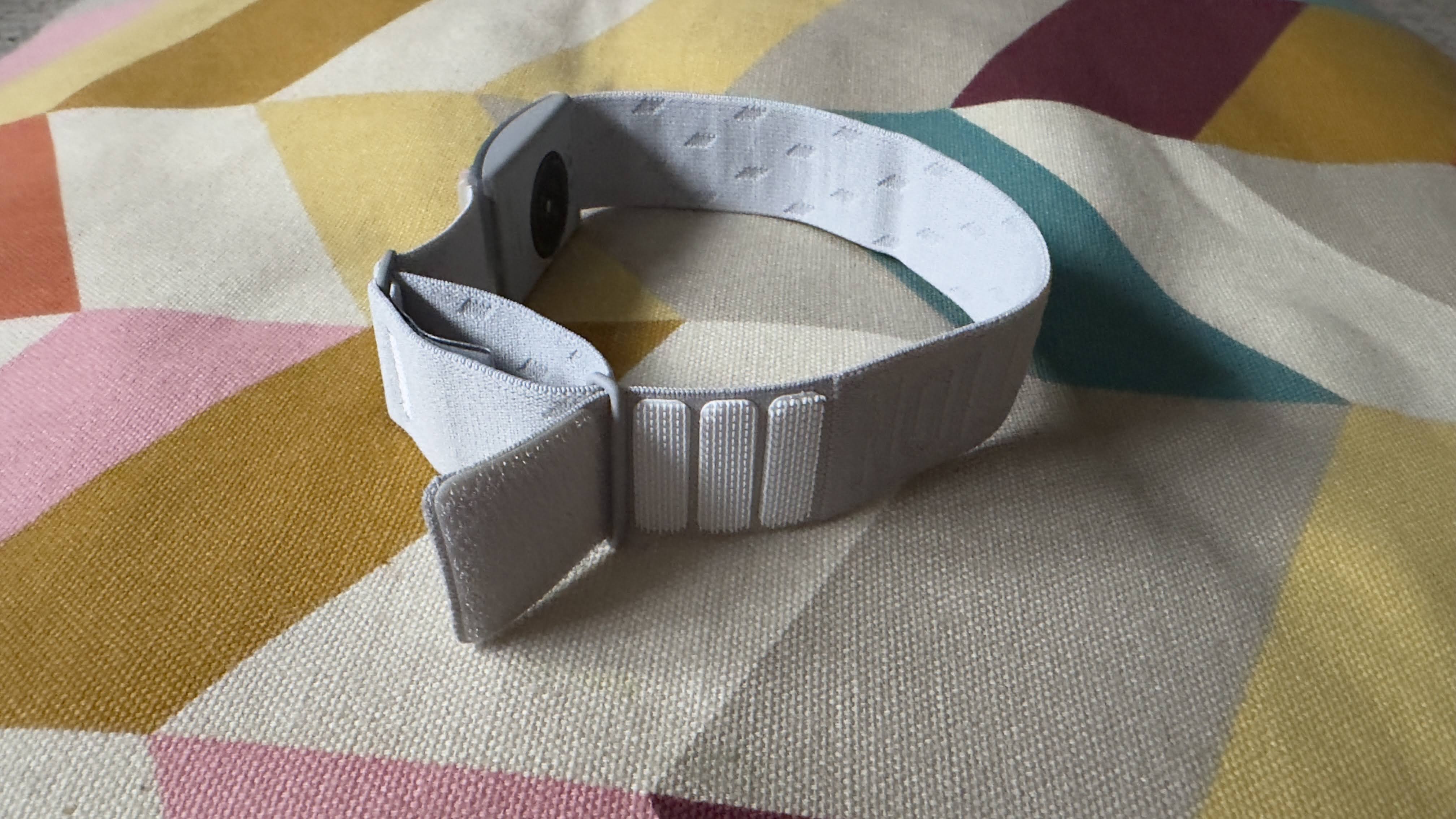
Coros HRM

Coros HRM (Image credit: Future)

Coros Heart Rate Monitor: Design

  • Comfortable to wear
  • Easy to fit
  • Simple design

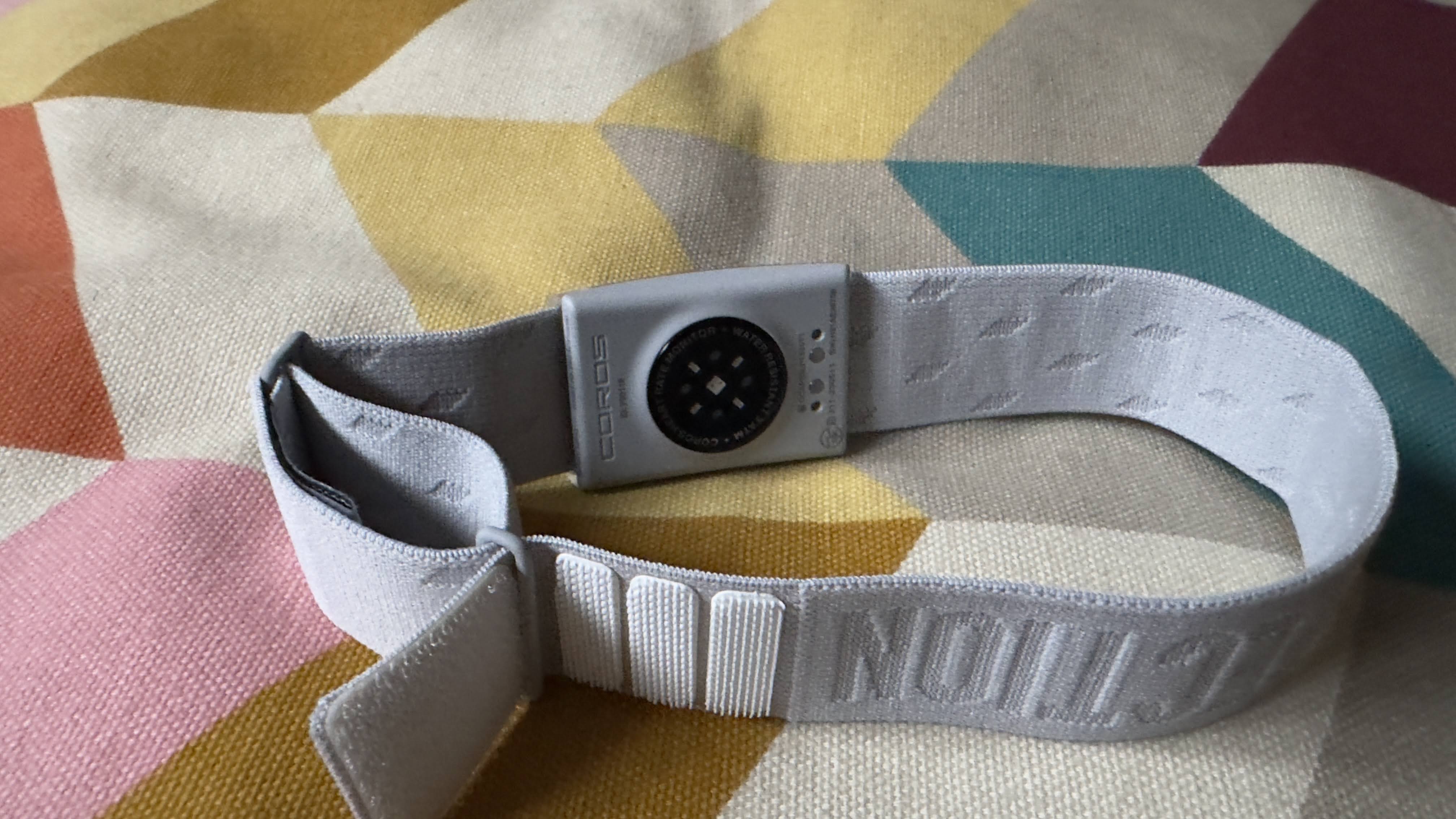
The Coros Heart Rate Monitor is all about simplicity and as such this is a doddle to wear. Since this is made to go on your bicep, once you've got the right size adjusted to suit you using the velcro fitting, it's a simple case of sliding it up your arm to pop it on.

The strap materials are a combination of polyester fiber, nylon and spandex, which all equate to a very comfortable feel. But, crucially, this is flexible enough to slip on and off with a stretch, but tight enough to stay in place without it feeling too tight or uncomfortable.

At 19g the total weight is barely noticeable. When you consider people run with large phones in arm strap cases and barely notice them, you can imagine how unobtrusive this feels.

Does this feel more comfy than a chest strap? The answer in my case was a yes, but that may vary from person to person. I certainly like the fact this slips on easily, and thanks to that auto-wear detection sensor it'll connect up quickly and easily too.

This is made to fit biceps of sizes between 18 and 32cm. So unless you're very slim or a bodybuilder, this is likely to fit you comfortably regardless of gender. If you are bigger in the arm area then there is the option to go for a larger variant of the strap at point of purchase, which accommodates 24-43cm biceps.

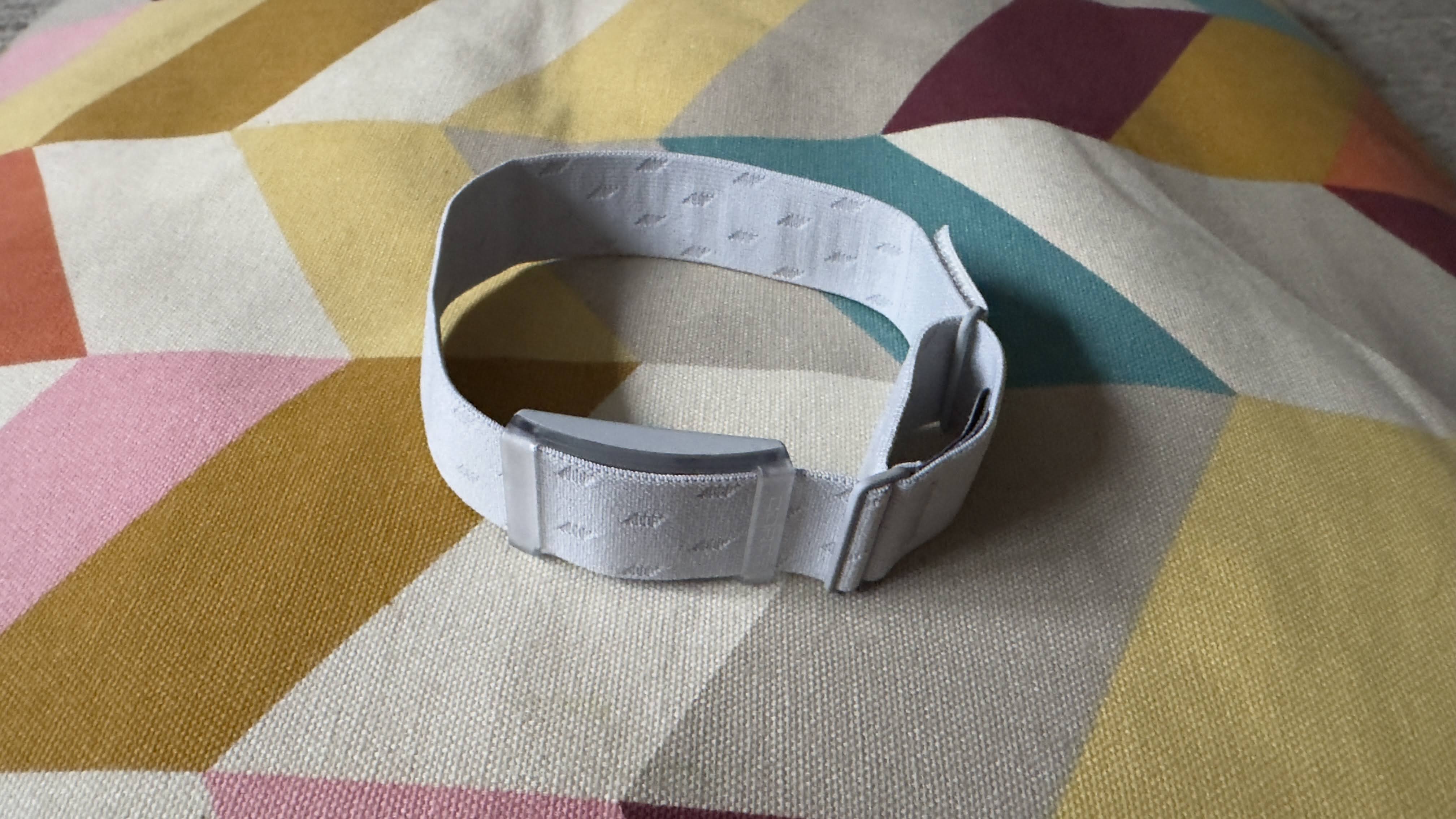
Coros HRM

Coros HRM (Image credit: Future)

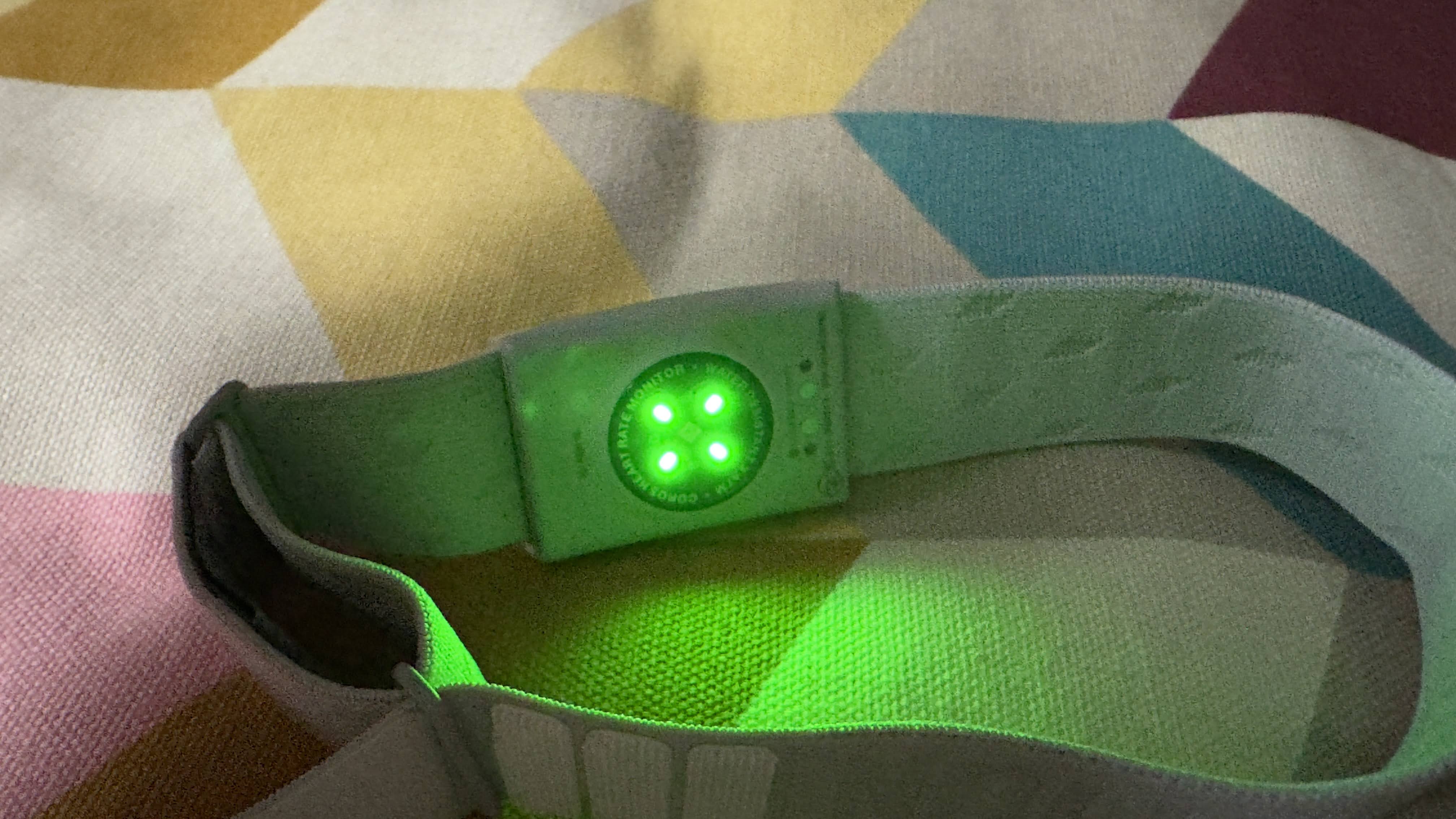
The sensor setup itself comprises five LEDs with four photodetectors. That combination, representing the best optical heart rate sensors from Coros right now, should mean this is fairly future-proof, unlikely to be eclipsed by more accurate technology for a while. That said, it won't offer SpO2 measurements, so if you're after O2 features then you may want to keep looking elsewhere.

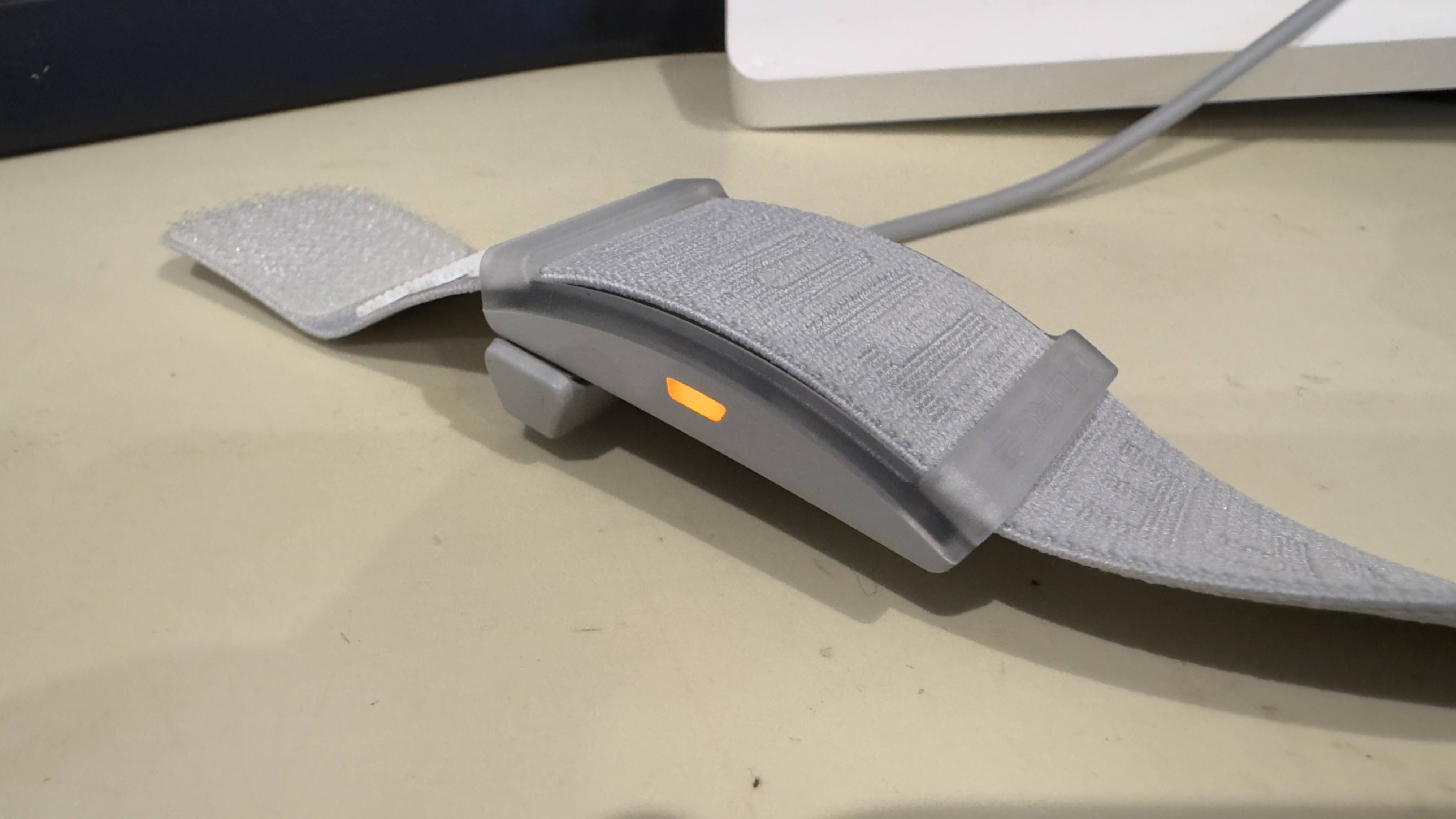
There is an LED light on the side of the main unit which acts as a useful communication light. When on charge this will glow orange until the battery is full after two hours, and it then turns solid green so you know it's good to go.

The charger is USB-A at one end and a proprietary magnetic attachment at the end of the HRM connection. While it's easy to plug into many different power sources, we would have preferred the more efficient, up-to-date USB-C.


The strap is also washable, where the main unit can slide off, making it possible to keep that looking fresh for long periods.

  • Design score: 4/5

Coros HRM

Coros HRM (Image credit: Future)

Coros Heart Rate Monitor: Features

  • App is minimal
  • Lots of third-party app compatibility
  • No swim tracking

The Coros Heart Rate Monitor can be paired to many devices and works with the app you want to use. But there is an included Coros app that you can use, ideal if you've already got other Coros devices like the Coros Pace Pro.

The Coros app is fine for analyzing data, but it won't track you while you're out exercising. So you will need to use a third-party app, like Strava. I connected the HRM by opening the Coros app, and once connected, I could just open Strava, slip on the armband, and it would pull in the HR data directly.

I found this helpful for heart rate training or zone tracking. Generally speaking, I used the phone to collect the data and then only looked at it when analyzing my effort after I was back and showered off, so you'll need to take your phone in a chest, waist or arm-mounted running case.

Coros HRM

Coros HRM (Image credit: Future)

It's also worth noting that if you already have a smartwatch and simply want to add a more accurate heart rate tracker than the built-in optical option, this can connect to your smartwatch too. And yes, this did prove more accurate than wrist-based options during our testing, so this could be a viable alternative to a chest strap.

The app is the only way to know an accurate measure of the HRM's battery life. Sure the light on the side can give you rough guidance, but that's not likely to serve you before a run or ride where you'll want reassurance you have enough juice to go the distance. A push notification would have been helpful when connected too.

It's worth noting that this can broadcast heart rate to up to three devices simultaneously. So you could have your watch and phone connected to your bike computer at the same time, for example. I haven't tested this feature yet, but it's good to have the option should the need arise.

  • Features: 3/5

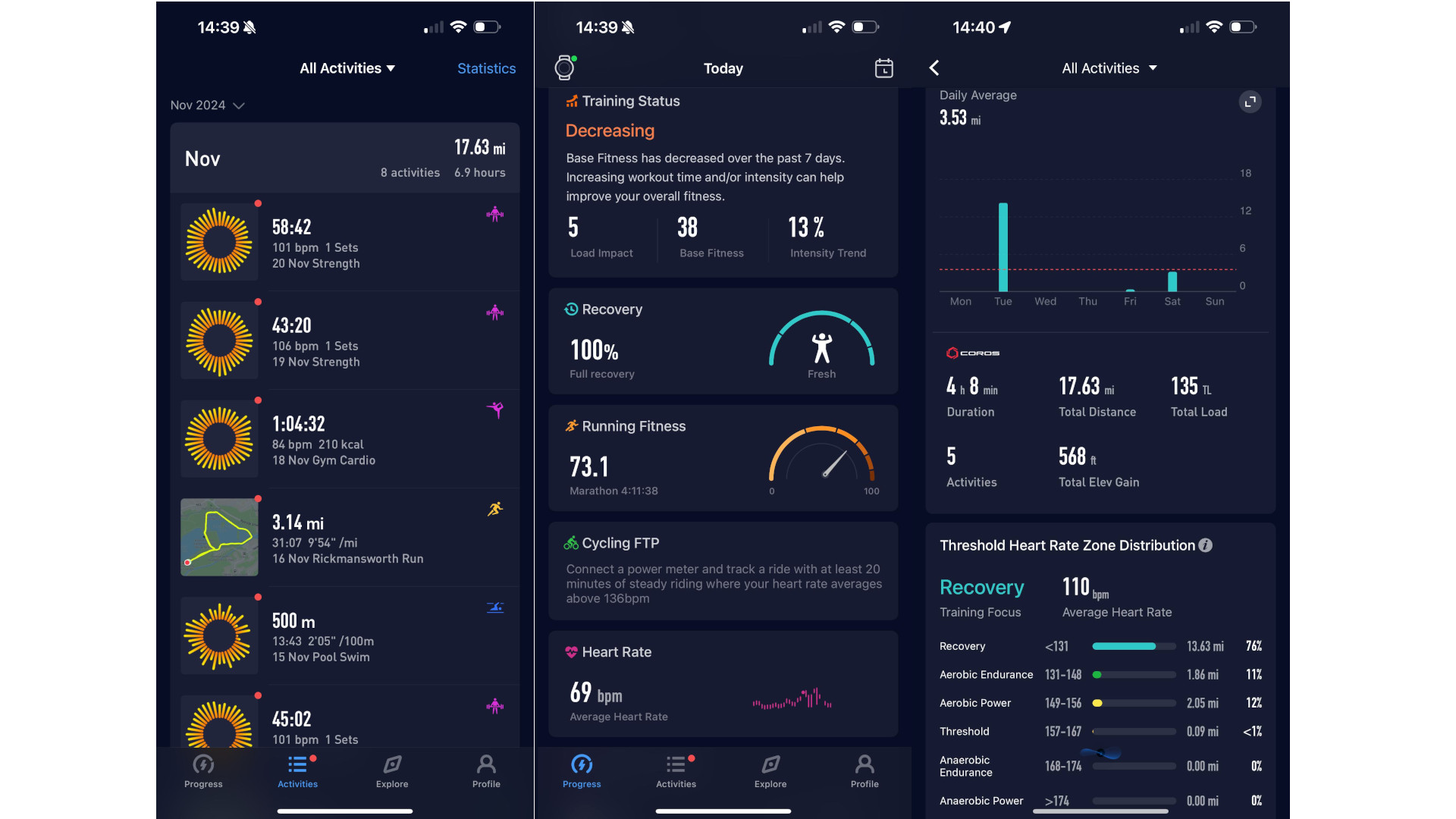
Coros app

Coros app (Image credit: Future)

Coros Heart Rate Monitor: Performance

  • Good accuracy
  • Easy to use
  • Very comfortable

One of the most important things to mention here is comfort. This is more comfy to wear than a chest strap, while offering almost the same level of accuracy. It's easy to slip on and off, less noticeable to wear and can also be kept hidden to avoid knocks – with the option to slide it under your sleeve.

While a wrist-worn heart rate monitor in a watch can be useful, wearing this on your bicep is so much more accurate. As mentioned it's a better spot, with more blood, for clearer readings. But it's also higher up the arm with far less movement when running and way less bumping when riding a bike. All that combines to offer great levels of accuracy across sports while staying comfy.

Where this falls down compared to a chest strap is battery life. It's decent, hitting close to the claimed 38 hours in real-world use, but still doesn't compare to the one or two year battery power of some chest straps.

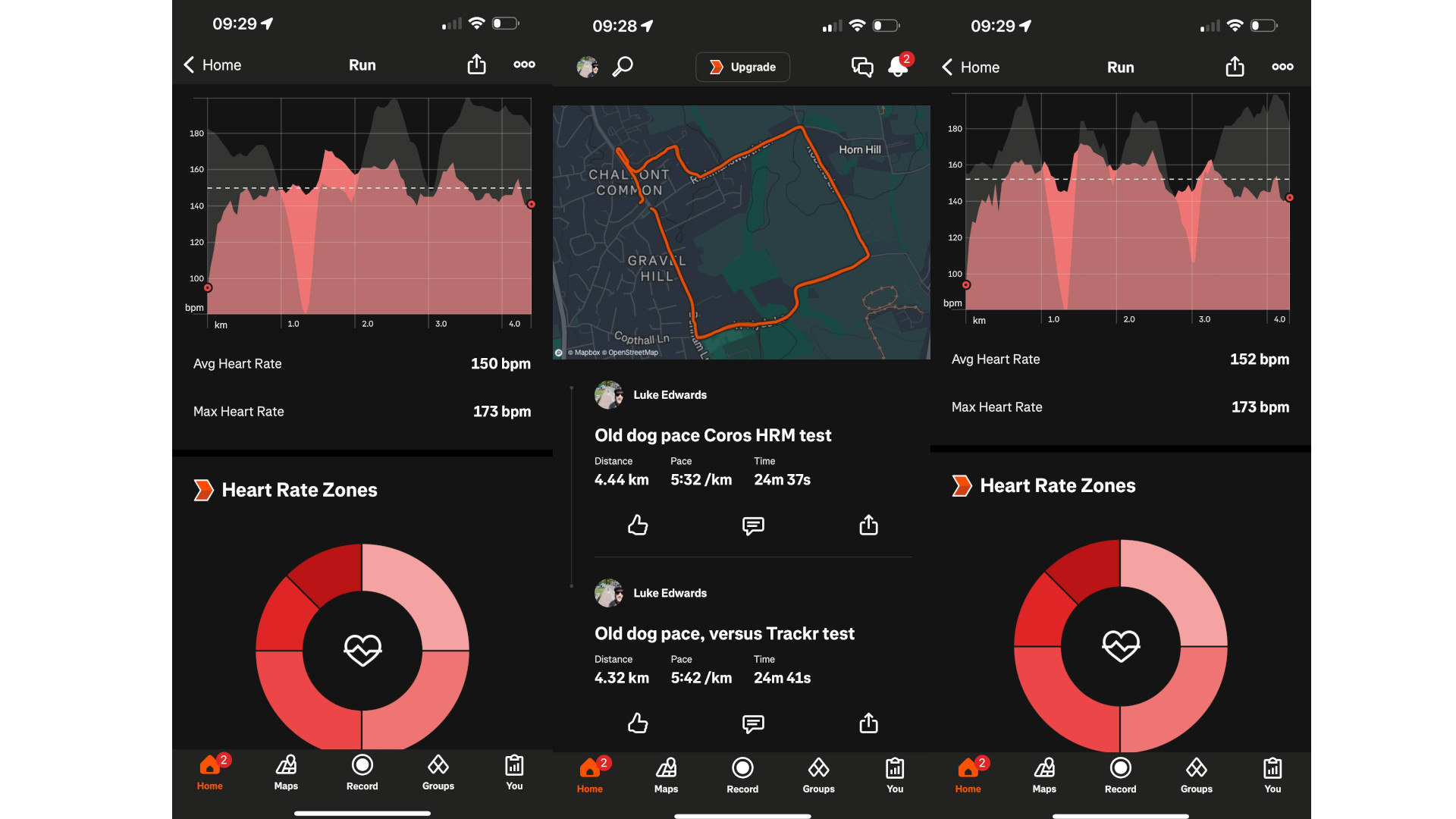
Coros HRM data

Coros HRM on the left and chest strap on the right. (Image credit: Future)

In one run (image above), with an early hill climb which I use to beat any chance of averaging explaining accuracy, I did spot some issues. I had a competitor chest strap on in addition to the arm-based Coros HRM connected to my phone. On the hill climb, my heart quickly jumped to 170 and the chest strap kept up. However, the Coros strap lagged behind, reading 155. It did catch up, but was a few seconds behind.

After that, as the distance lengthened and those averages came into play, it got even closer, but I was aware of that initial blip.

So while you can see the early discrepancy, generally both the Coros and chest-mounted HRM show similar readings with near-identical max and average heart rate data. It was certainly noticeably more accurate than a wrist-worn optical heart rate sensor is capable of offering.

  • Performance score: 4/5

Coros HRM: Scorecard

Category

Comment

Score

Value

In line with competition, making it reasonable.

3.5/5

Design

Very well designed to be comfy, work well, be easy-to-use and accurate.

4.5/5

Features

Great app compatibility but loses points on lack of swim support.

3/5

Performance

Accurate, comfortable and easy to use.

4/5

Total

A superb option for accuracy and comfort with charge support.

4/5

Coros HRM

Coros HRM (Image credit: Future)

Coros Heart Rate Monitor: Buy it if...

You're need true heart rate training
A dedicated HRM detects changes to your heart rate more accurately than a watch alone, allowing you to zone train with quality.

You want comfort and ease
The Coros HRM is very comfortable and easy to slip on and off with that auto turn-on and -off functionality, making it a pleasure to use.

Coros Heart Rate Monitor: don't buy it if...

You want to see your data
Unless you own a Coros or other smartwatch, then seeing your data isn't easy when phone connected to this HRM.

You want the best battery
While battery life here is good, it's not chest strap level performance so consider that charging will be a part of this use.

Also consider

Also consider

Component

Wahoo Trackr

Garmin HRM Pro

Coros Heart Rate Monitor

Dimensions

615 x 30 x 10 mm

142 x 30 x 12 mm

42.5 x 28.4 x 9.1mm

Weight

39g with strap

59g

19g with strap

Case material

Plastic

plastic

Plastic, polyester fibre, nylon and spandex

Connectivity

Bluetooth and ANT+

ANT+, Bluetooth

Bluetooth

Operation temperatures

-10, -50°C

-10°C - 50°C

Up to 122°F

Water resistance

IPX7

5ATM (50 meters)

3 ATM

Accelerometer

No

Yes

No

Battery

CR3202 rechargeable

210mAh

38 hours

Garmin HRM-Pro (£119 / US$129.99 / AU$159.00)

Designed for multi-sport use, the HRM-Pro is the most advanced heart rate strap Garmin produces, although it’s probably of greater interest to those who already own Garmin products.

Read our full MyZone Garmin HRM-Pro review

MyZone MZ-Switch (£139.50 / $159.95 / AU$209.99.)

The MyZone MZ-Switch isn’t just a chest strap. The center sensor node features an ECG monitor as well as an optical sensor and pops out so it can be worn on the wrist like a smartwatch.

Read our full MyZone MZ-Switch review

How I tested

I used the Coros HRM for a few weeks to test. I did this across running and cycling mainly and mixed in longer steady trips out as well as hills and sprints to get a range of results. I compared using a wrist-worn Garmin, a chest strap and, at one point, an optical armband too. I used this with a few different apps to try out how the data could be used, shared and analyzed.

I used the Samsung 25W 10,000mAh Wireless Battery Pack for wireless charging, and while it works well, there are cheaper and smaller alternatives out there

Samsung 25W 10,000mAh Wireless Battery Pack: review

The Samsung 25W 10,000mAh Wireless Battery Pack is a power bank designed for charging Galaxy and other small devices.

It has quite a sleek design with an organic-looking finish, emphasized by the beige colorway of my unit, which is mottled for a pebble-like appearance. It also feels quite solid, although there is some flexing to the panels, so it isn’t the most rugged power bank around.

However, it’s pleasingly thin and light, and combined with the rounded edges at one end, this makes the Samsung 25W 10,000mAh Wireless Battery Pack relatively easy to carry around. However, it’s quite long, even for a wireless power bank, and many of the best power banks with similar power and capacity specs are smaller than this.

What also mars its seamless design is the hump of the wireless charging pad, although its soft material offers extra cushioning and grip for your device, and seems quite resistant to tears and scratches.

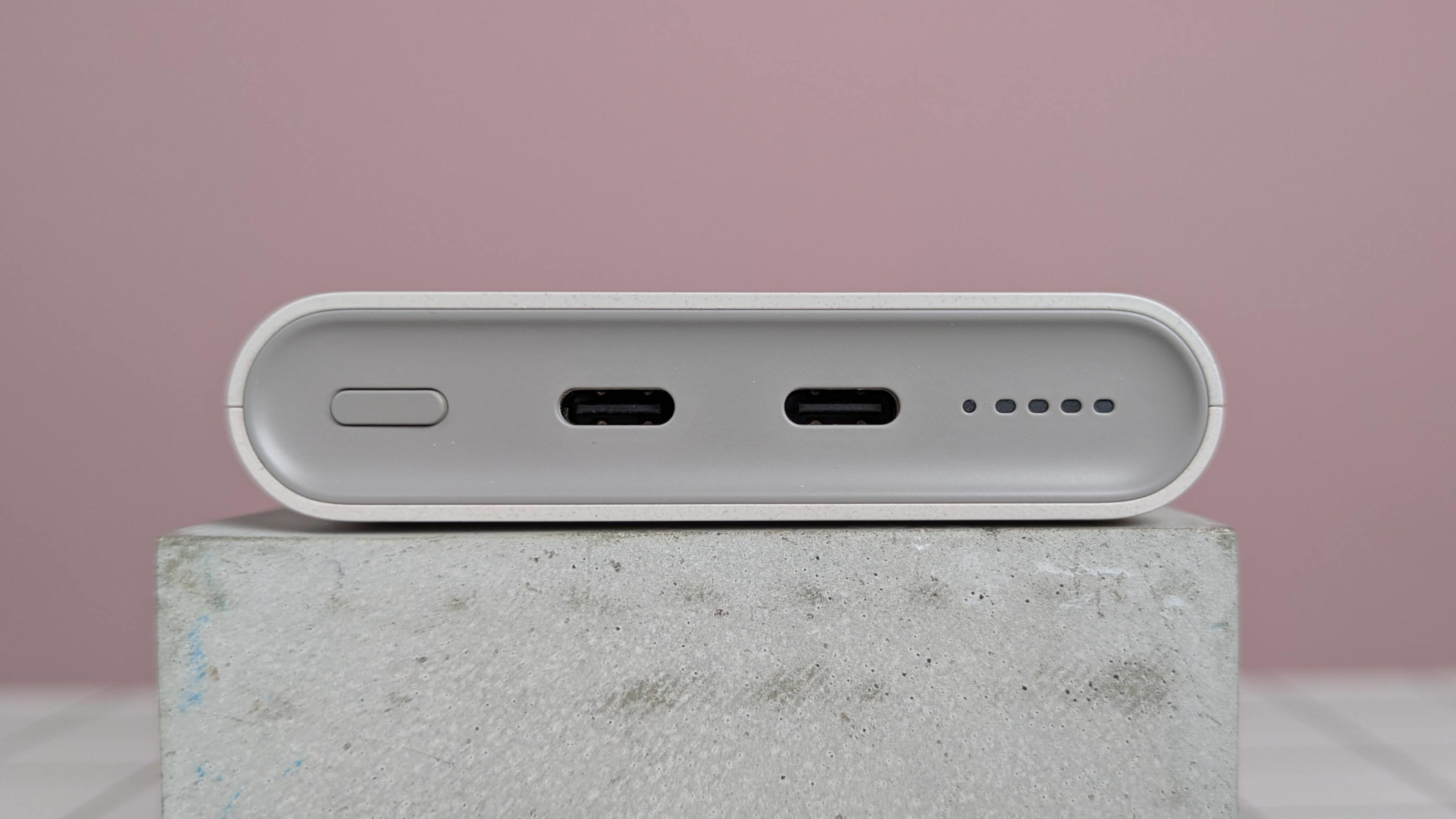
There’s no real interface to speak of on the Samsung 25W 10,000mAh Wireless Battery Pack. It features a single power button and five LED dots: one indicating charging activity and the other four representing battery life. These are placed at the end of the unit, next to the USB ports, and are large and bright enough to be seen clearly.

The wireless charging feature is capable of outputting 7.5W of power. It also features two USB-C ports, both of which serve as inputs and outputs. These offer Super Fast Charging, providing 25W of output power each when charging a single device.

Three-way charging is also supported when using both ports and the wireless pad, although the power output drops to 7.5W for all outputs in such cases. It’s also a shame that while charging, the battery life indicators don’t remain lit, so you can’t tell how much battery the Samsung 25W 10,000mAh Wireless Battery Pack has left without pressing the power button first, which is somewhat inconvenient.

It managed to wirelessly charge a Samsung Galaxy S23 Plus, which has a 4,755mAh battery, from empty to full in about three and a half hours, which is quite a good performance. In the process, the Samsung 25W 10,000mAh Wireless Battery Pack lost all but one of its LED dots, indicating that it had between 5-20% left in reserve.

This is somewhat disappointing, since it means you’ll only get one full wireless charge out of it. What’s more, charging the bank itself from empty to full took over three hours, which isn’t particularly fast; other 10K power banks are faster at charging themselves than this.

The Samsung 25W 10,000mAh Wireless Battery Pack is reasonably priced considering its wireless charging capability and the inclusion of two USB-C ports for additional charging. However, there are other wireless chargers out there with smaller form factors that perform just as well, such as the Anker MagGo Power Bank (10K), which even includes a handy flip stand for propping up your phone.

Samsung 25W 10,000mAh Wireless Battery Pack leaning on plinth, on desk with pink background

(Image credit: Future)

Samsung 25W 10,000mAh Wireless Battery Pack review: price & specs

Price

$44.99 / £44 / AU$79

Capacity

10,000mAh

Total wattage

25W

Number of ports

2

USB-C

2

Wireless charging

Yes

Weight

7.8oz / 222g

Power-to-weight

45mAh/g

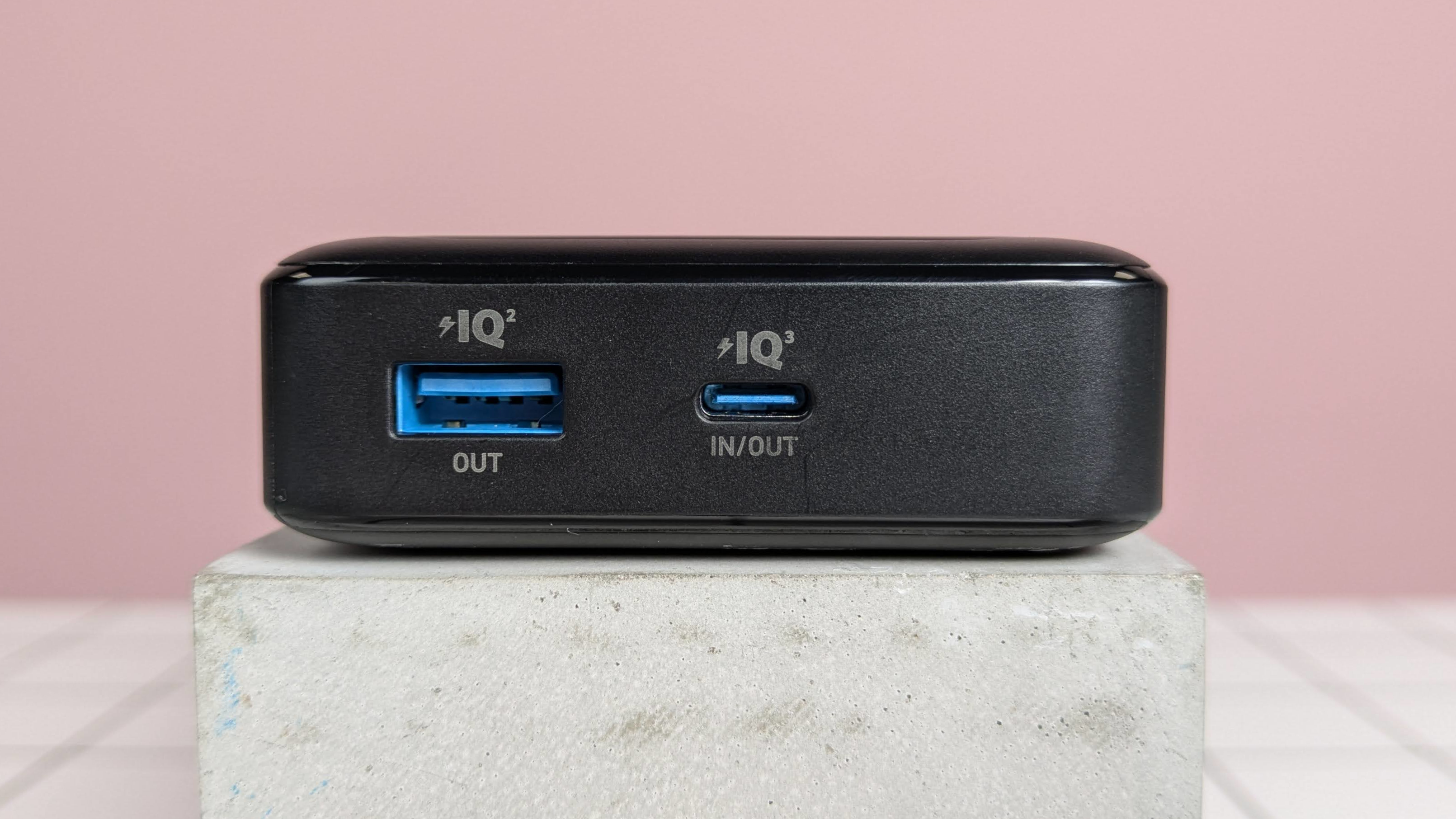
Close-up of ports on Samsung 25W 10,000mAh Wireless Battery Pack, on plinth on desk with pink background

(Image credit: Future)

Should I buy the Samsung 25W 10,000mAh Wireless Battery Pack Battery Pack?

Buy it if…

You want to charge multiple devices at the same time
Thanks to the two USB-C ports and three-way charging support, you can charge all your small devices at the same time.

You want to charge wirelessly
The wireless charging capability is quite good, and the soft pad is durable and provides plenty of stability.

Don't buy it if…

You want multiple charges
With its 10,000mAh capacity, the Samsung 25W 10,000mAh Wireless Battery Pack won’t be enough for charging your phone more than once.

You want the best value
There are cheaper power banks out there with similar specs, and sometimes with extra features to boot.

Samsung 25W 10,000mAh Wireless Battery Pack review: Also consider

Anker MagGo Power Bank (10K)
If you’re looking for another power bank with wireless charging capabilities, then the MagGo Power Bank is a great choice, given its small dimensions and integrated stand. Although primarily designed for MagSafe iPhones (hence the name), it works with Android phones as well, although it won’t provide the same magnetic security. MagSafe cases are available for Android phones, but since these aren’t officially endorsed, there’s no guarantee they’ll work with MagSafe chargers. Read our full Anker MagGo Power Bank (10K) review.

I tested the Anker 20,000mAh 87W Power Bank and it has plenty of power, but it might be too much for some

Anker 20,000mAh 87W Power Bank: review

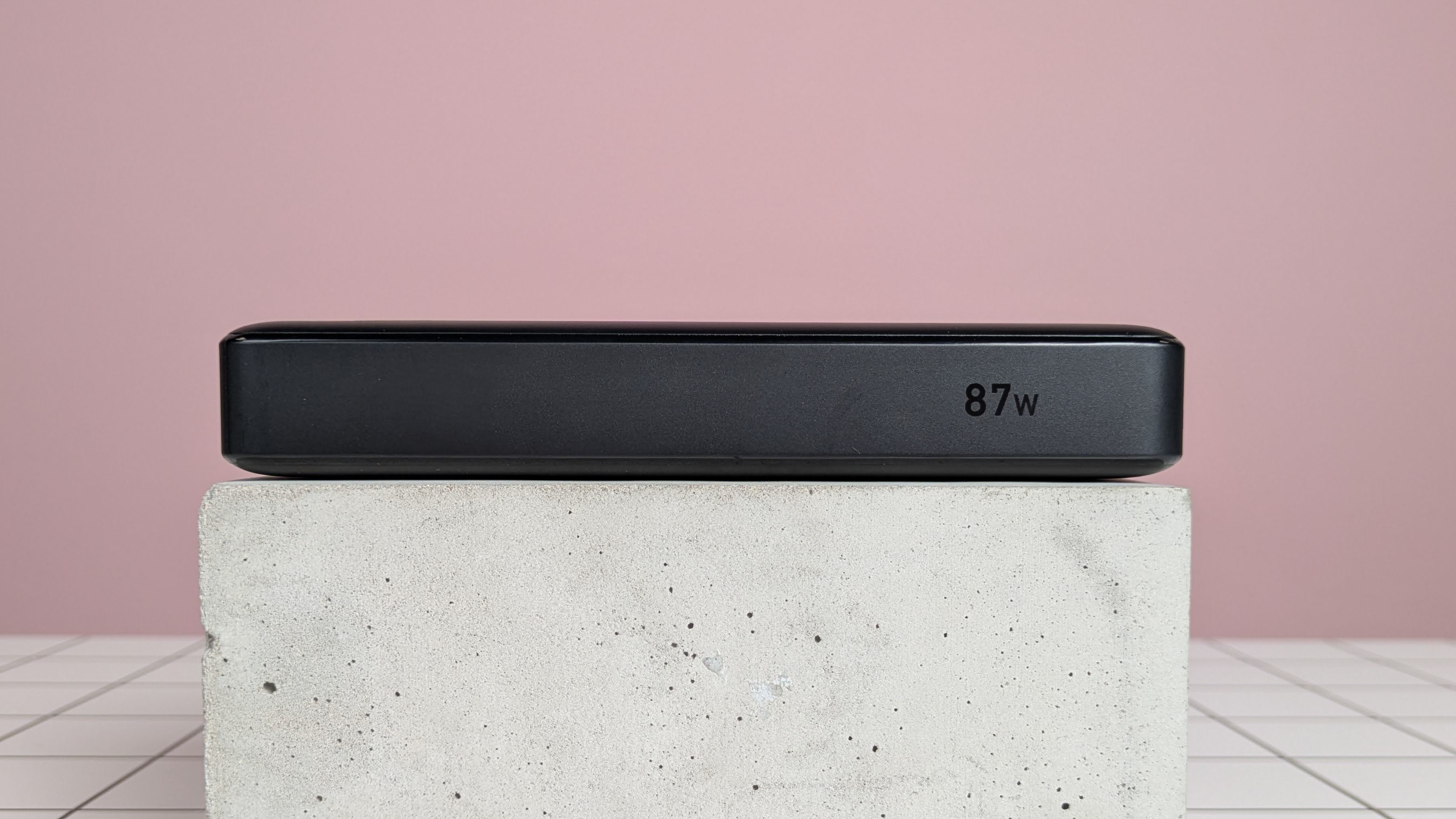
The Anker 20K 87W power bank has a large capacity and power output, as well as an inbuilt USB-C cable for ease of use. It’s a sleek-looking brick, although it’s quite big. Thankfully, it’s not too thick or too heavy, both of which help to make it more portable than it otherwise would be.

It features a small screen that displays the battery life as a percentage, which is bright and clear, making it easy to glance at. There’s also a relatively large power button next to it, which is very accessible owing to its size.

True to many of Anker’s products, it feels solidly constructed, equal in durability to the best power banks. This extends to the inbuilt USB-C cable, which Anker claims has 11lbs of pulling resistance, and is rated for over 10,000 bends and 5,000 twists during its lifetime.

It folds away neatly, sitting flush with the side panel, and it also feels secure in this housing, so I wasn’t concerned it would come loose or expose the jack to damage. What’s more, the cable is still easy to unsheathe when needed.

However, it isn’t that long, which, given the overall size of the bank itself, can make it a little awkward to use. It also has to be twisted around when connecting to devices in a way that feels unnatural, since the cable is flat rather than cylindrical.

In addition to this integrated cable, the Anker 20,000mAh 87W Power Bank also features a USB-C port, which is capable of input and output (as is the cable), and a USB-A port, which is output only.

The Anker 20,000mAh 87W Power Bank provides 87W of power in total, with a maximum of 65W for single-port charging, which is more than enough to charge large devices, including many modern laptops. It managed to charge my Google Pixel 7a, which has a 4,385mAh battery, in about two hours, which is respectable.

In the process, it lost 30% of its battery life, which means you should be able to get at least three charges out of it, which is acceptable, although some other 20,000mAh banks I’ve tested previously appear to retain slightly more in the tank than this.

Still, the Anker 20,000mAh 87W Power Bank is reasonably priced considering its high power output, build quality, and integrated cable. However, it might not represent great value unless you intend on charging very power-hunger devices; even many modern laptops don’t need 65W to charge quickly. But, if you do, the Anker 20,000mAh 87W Power Bank is a very solid portable and convenient option.

Anker 20,000mAh 87W Power Bank leaning on plinth on desk, with pink background

(Image credit: Future)

Anker 20,000mAh 87W Power Bank: price & specs

Price

$69.99 / £49.99 / AU$119.99

Capacity

20,000mAh

Total wattage

87W

Number of ports

3

USB-C

2 (1 x inbuilt cable)

USB-A

1

Wireless charging

No

Weight

15.5oz / 439g

Power-to-weight

46mAh/g

Close-up of ports on Anker 20,000mAh 87W Power Bank, on plinth on desk, with pink background

(Image credit: Future)

Should I buy the Anker 20,000mAh 87W Power Bank?

Buy it if…

You want plenty of power
87W is a lot of power, meaning you should be able to charge many laptops and other similarly sized devices comfortably.

You want a solid build
The Anker 20,000mAh 87W Power Bank certainly feels durable, and even the housing for the integrated cable seems to offer plenty of security.

Don't buy it if…

You want something small
The Anker 20,000mAh 87W Power Bank is a sizable unit, and although it’s admirably thin, there are smaller 20K power banks out there.

You don’t need all that power
The 87W total power is probably too much for many, and even the 65W single-charging capability is overkill for many modern laptops.

Anker 20,000mAh 87W Power Bank review: Also consider

INIU P51L-E1
If you’re looking for a bank with the same capacity as the Anker 20,000mAh 87W Power Bank but in a much smaller package, the INIU P51L-E1 could be the ideal solution. It too features a built-in USB-C cable, but also includes a flashlight for even better practicality. However, it has a lot less power (22.5W), so it’s really only suitable for devices no bigger than iPads and the like. Read our full INIU P51L-E1 review.

Thursday, May 29, 2025

I tested the Samsung Galaxy Chromebook 2 360 and loved its design and display, but its weak specs hold it back from true greatness

Samsung Galaxy Chromebook 2 360: Two-minute review

The Samsung Galaxy Chromebook 2 360 is a 2-in-1 Chromebook with a small form factor for easy portability. It’s this miniature size that first strikes the eye, followed by the sleek and minimal design. It also has a sturdy construction, although it’s thicker and heavier than you might expect. Regardless, the Galaxy Chromebook 2 360 is still easy to carry around.

Opening up the Galaxy Chromebook 2 360 further reveals its high level of engineering. The hinge mechanism, for instance, is silky smooth to operate yet provides plenty of stability.

Of course, as you may have guessed from its name, the Galaxy Chromebook 2 360 is convertible, so you can flip the screen all the way back and use it as a tablet. However, this isn’t ideal, as the aforementioned heft prevents this from being practical for extended periods. It does much better, though, when tented upside down on a desk, as you can still operate it via the touchscreen, but without being burdened by the weight.

When it comes to performance, there are some disappointments. The specs of the Galaxy Chromebook 2 360 are rather middling compared to the best Chromebooks, which means that multitasking and even moderate gaming can be a stretch for it. Thankfully, it does much better at light productivity and playing back video content.

The 12.4 inch display I had in my review unit was glorious, rendering images and scenes vividly and with plenty of brightness. The 2560 x 1600 resolution also provides stunning clarity, as does the high gloss finish.

However, the latter aspect can cause prominent reflections, and the contrast can be too high. However, these drawbacks aren’t persistent or egregious, and they didn’t ruin the overall experience for me.

The touchscreen is very responsive and easy to use, as is the trackpad and keyboard. I could type accurately thanks to the generous spacing of the keys, which is impressive when you consider the small form factor of the Galaxy Chromebook 2 360. They’re also very tactile for Chromebook keys.

The Galaxy Chromebook 2 360 sits at the mid-to-high end of the market in terms of pricing, which may seem unjustified given its performance is lacking in certain departments, especially when compared to Windows or Mac laptops. However, that small and sublime build, combined with the exquisite display, might just be enough to win you over.

Samsung Galaxy Chromebook 2 360 review: Price and availability

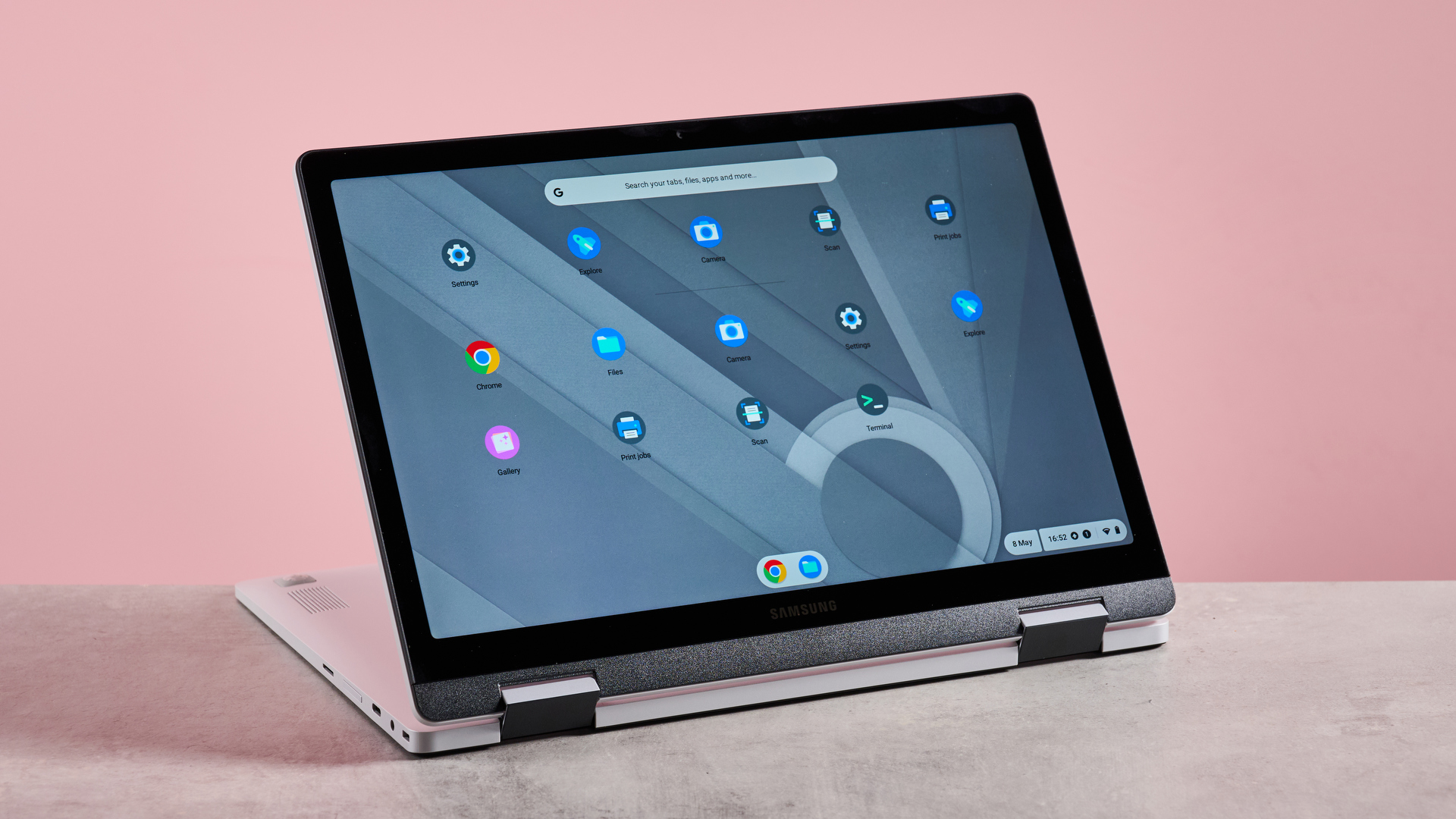
Back of Samsung Galaxy Chromebook 2 360 open on desk with pink background

(Image credit: Future)
  • $429.99 / £419 / AU$707
  • Available now
  • Higher end of the market

The Galaxy Chromebook 2 360 costs $429.99 / £419 / AU$707 and is available now. However, we have seen it on sale for considerably less. It can be configured with either 32GB or 64GB of storage, and various screen sizes are available, although only one colorway is offered.

This is a good price for a convertible and expertly crafted Chromebook. However, the CPU and RAM it’s equipped with are on the weaker side, but the performance is still capable enough.

It’s still quite a lot more expensive than the Acer Spin 314 Chromebook, though, which is one of our favorite models. This has more storage and a much better battery life than the Galaxy Chromebook 2 360, although its resolution isn’t as high, and we found it can get quite hot when processing strenuous workloads – but these were about the only drawbacks we could find with it.

  • Value: 4 / 5

Samsung Galaxy Chromebook 2 360 review: Specs

My Samsung Galaxy Chromebook 2 360 review unit was configured with a 12.4-inch display and 64GB of storage.

Price

$429.99 / £419 / AU$707

CPU

Intel Celeron N4500 1.10GHz (2 threads, 2.80GHz)

Graphics

Integrated, Intel UHD Graphics

RAM

4GB LPDDR4x

Screen

12.4-inch WQXGA LED Display (2560 x 1600), Touch

Storage

64GB e.MMC

Ports

1x USB-A, 2x USB-C, 1x microSD, 1x 3.5mm audio

Wireless

Wi-Fi 6, LTE (Option), Bluetooth v5.1

Camera

HD 720p / 8MP

Weight

2.82lbs (1.28kg)

Dimensions

11.3 x 8.1 x 0.7 inches (28.8 x 20.7 x 1.7cm)

Samsung Galaxy Chromebook 2 360 review: Design

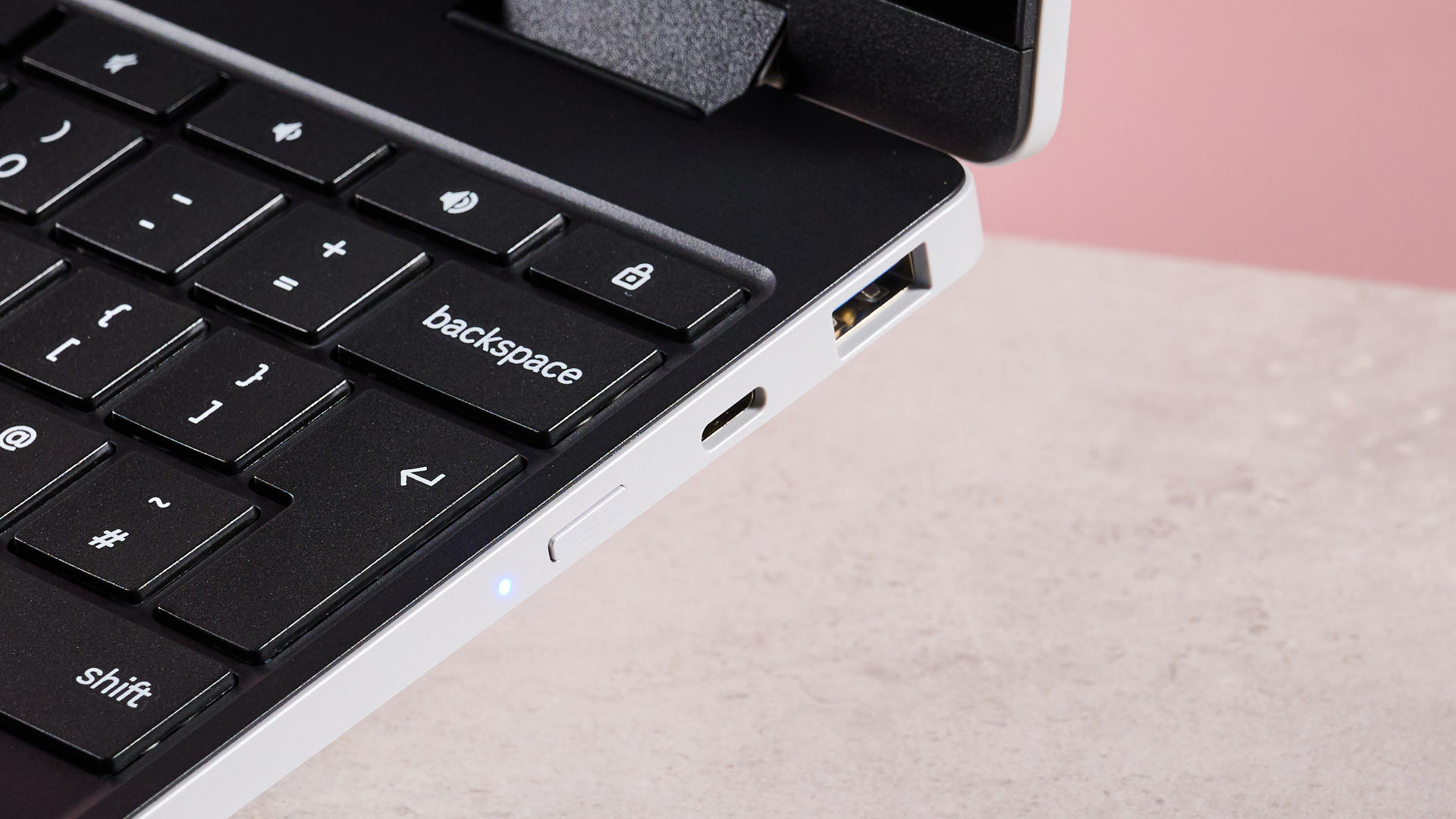
Close-up of right side ports on Samsung Galaxy Chromebook 2 360, open on desk with pink background

(Image credit: Future)
  • Looks premium
  • Heavier than expected
  • Great hinge mechanism

The design of the Samsung Galaxy Chromebook 2 360 is a notable step up from the usual budget fare of many Chromebooks. It looks very sleek, especially in the light grey colorway, and its metal-looking imparts a premium appearance that rivals even some of the best laptops around.

Every dimension is almost completely flat, save from the most minimal of protrusions of the power and volume buttons on either side. Even the underside is free from unsightly vents or etchings, and the four rubber feet are very small and thin, which also makes it easier to slide the Galaxy Chromebook 2 360 into your bag.

Despite appearances, however, the unit is made from plastic, not metal, and as a result the Galaxy Chromebook 2 360 doesn’t feel quite as premium as it looks. It’s still well-made, and Samsung even markets the Galaxy Chromebook 2 360 as a tough device, with its spill-resistant keyboard and ability to withstand light drops.

The downside is that it’s thicker and heavier than its small form factor might lead you to believe. This is a minor disappointment from a portability perspective, although it’s still easy to carry around.

Flipping open the Galaxy Chromebook 2 360 and positioning the screen at different angles is easy, thanks to the silky smooth hinge mechanism. There’s a small amount of wobble after making adjustments, but this isn’t concerning and it remains perfectly stable in use.

The screen can also rotate all the back to 360 degrees, letting you use the Galaxy Chromebook 2 360 as a tablet. This works well to an extent, although the aforementioned thickness and weight means this mode isn’t practical for long periods, and isn’t a match for the best tablets in this regard. However, it works much better when you rotate the screen by about 315 degrees instead, flip it upside down, and tent it on a desk.

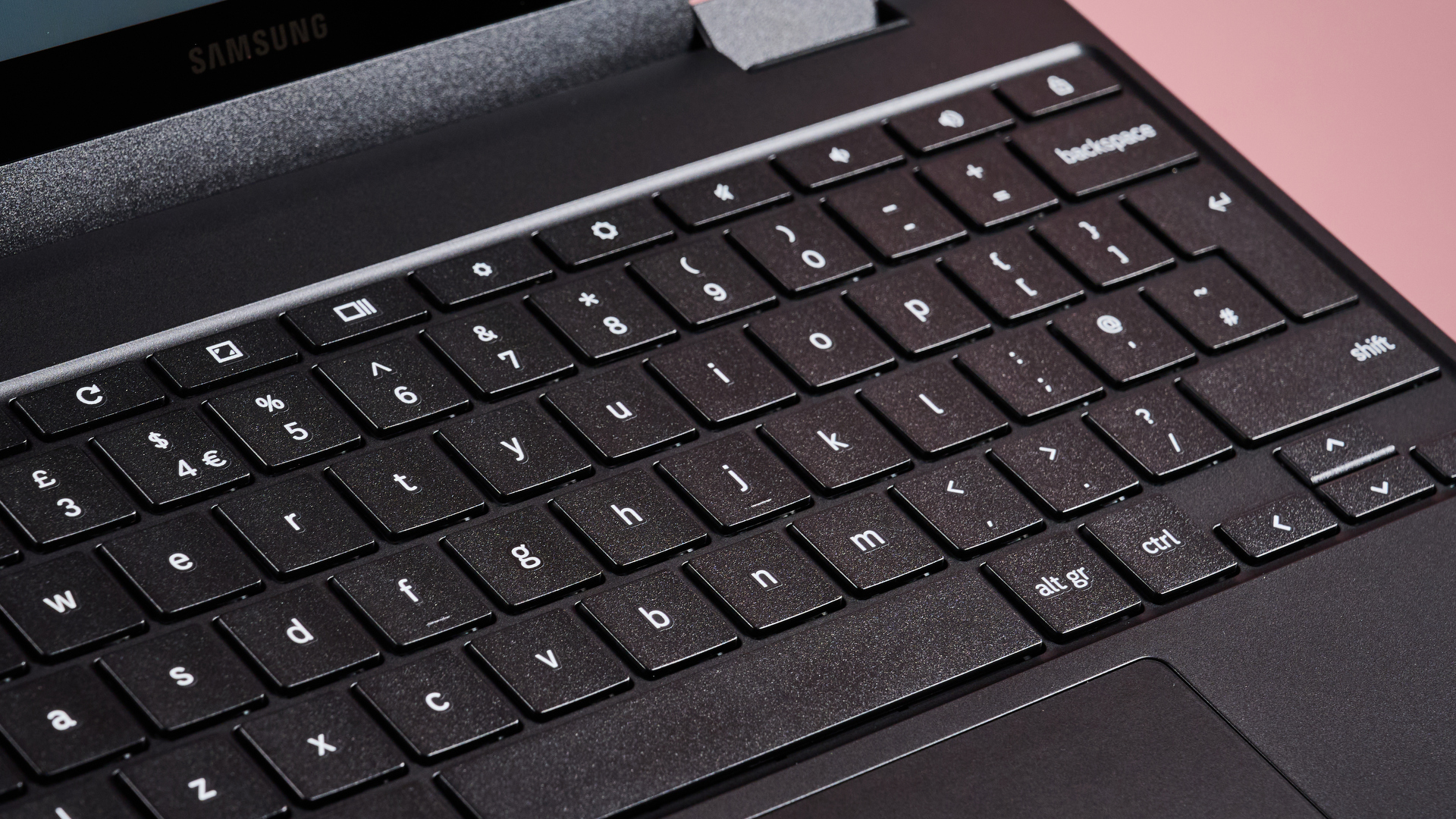
The keyboard is also well made, although it feels less premium than the rest of the Galaxy Chromebook 2 360, since the keys have a scratchy texture that doesn’t feel the most pleasant to touch. However, they operate very well, and despite the small layout, they’re generously spaced apart. There’s also a good selection of keys available, including various ChromeOS shortcuts on the top row, arrow keys and a long enter key.

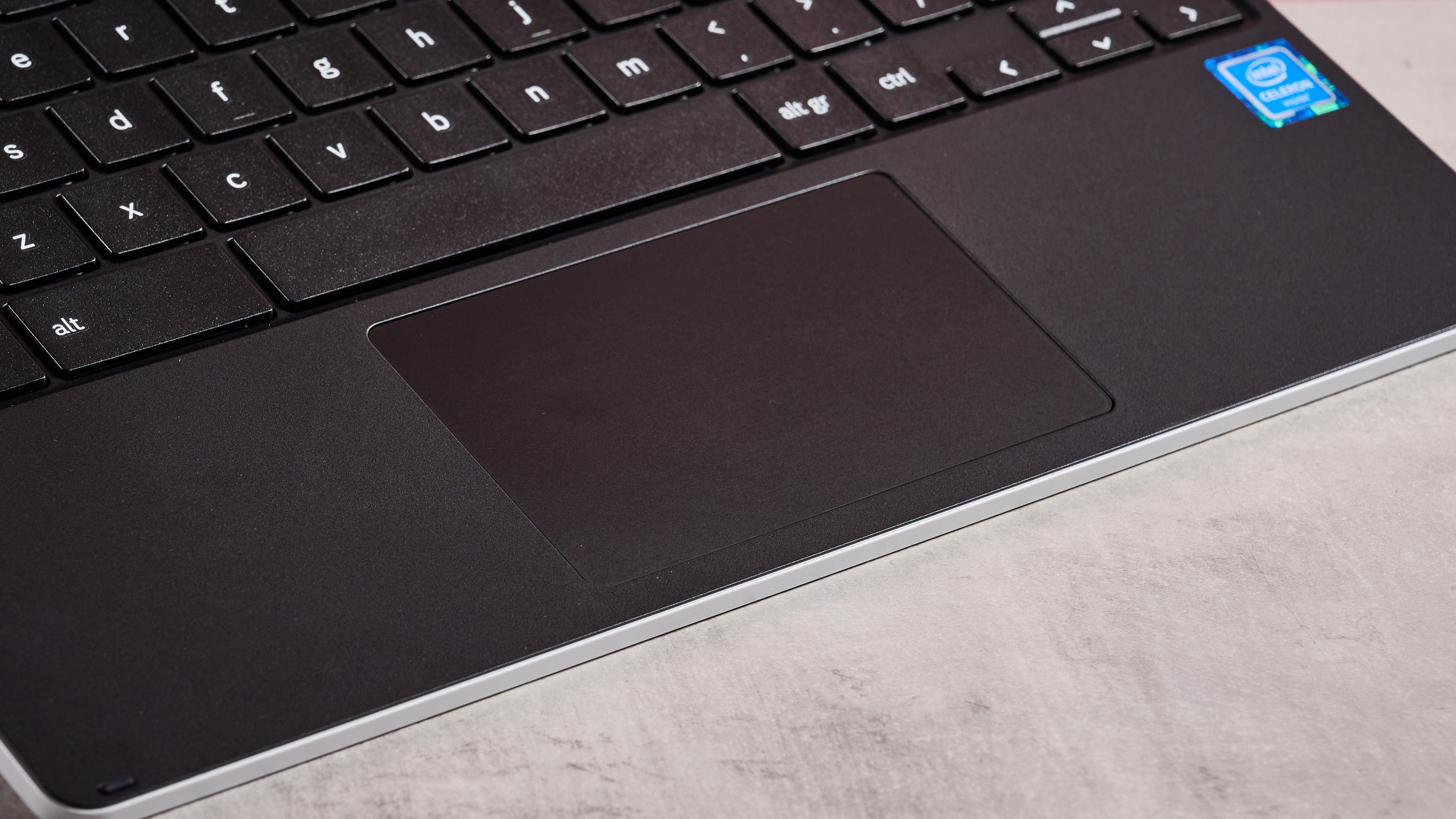
The trackpad falls more in line with the overall standard of the Galaxy Chromebook 2 360. It’s quite small but reasonably wide and feels very smooth to the touch, making it easy to operate.

  • Design score: 4.5 / 5

Samsung Galaxy Chromebook 2 360 review: Performance

Close-up of keyboard on Samsung Galaxy Chromebook 2 360, open with pink background

(Image credit: Future)
  • Unimpressive specs
  • Some stuttering
  • Excellent display
Benchmarks

These are the results of our benchmarking tests for the Samsung Galaxy Chromebook 2 360:

TechRadar Battery Life Test: 6 hours and 30 minutes
Jetstream2 Benchmark: 108.216
Kraken Benchmark: 1298.6ms
Speedometer 3.0: 4.79 (±0.23)

The Galaxy Chromebook 2 360 features an Intel Celeron N4500 1.10GHz CPU and 4GB RAM, neither of which are particularly promising in terms of performance, even by Chromebook standards.

It can handle light tasks, from entertainment to general productivity, but it can come somewhat unstuck even when reasonable demands are made of it. For instance, switching between various windows isn’t always the smoothest experience, and I did experience some stuttering when loading pages and navigating between multiple tabs in Chrome, despite not having an excessive amount open.

Light productivity work is also subject to small amounts of lag on occasion, although for word processing and spreadsheet editing, the Galaxy Chromebook 2 360 is still capable enough to be usable without frustration.

When it comes to gaming, the Galaxy Chromebook 2 360 is even less impressive. Playing Asphalt Legends Units was a slow and stutter-ridden experience, even on moderate graphical settings.

However, it was much more competent when streaming video content, with 4K videos loading quickly and playing without buffering midway. The viewing experience is further enhanced by the excellent display of the Galaxy Chromebook 2 360.

The WQXGA resolution is very welcome on a Chromebook device, and even more so on a display this small, since the crispness and sharpness is more apparent. This benefits not just video content, but also general navigation and productivity, since the whole UI is rendered with brilliant clarity.

Colors are vivid and there’s plenty of brightness on offer too, both of which mean the Galaxy Chromebook 2 360 is immune to the washed-out look that some Chromebook displays suffer from.

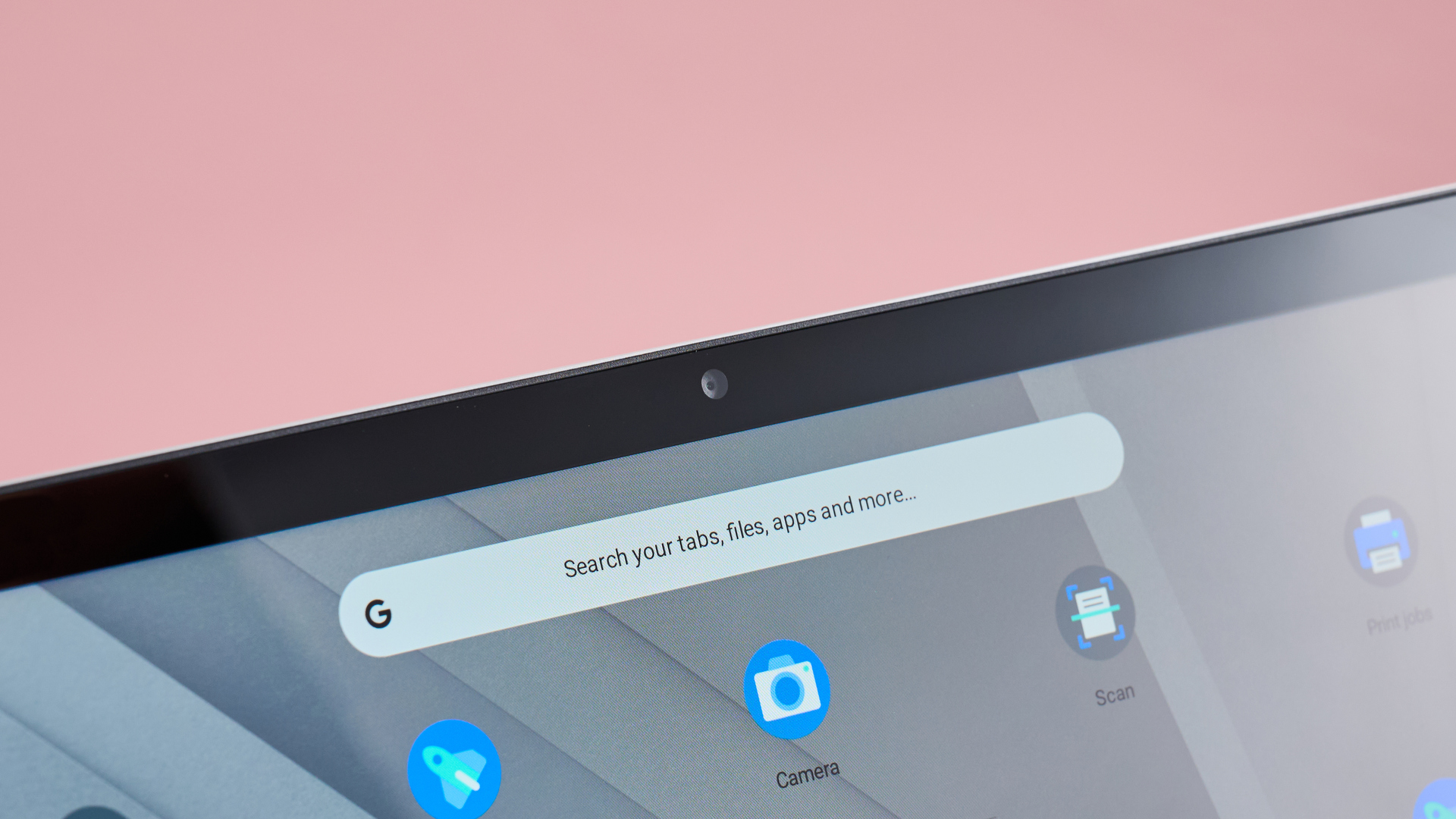
Close-up of webcam on Samsung Galaxy Chromebook 2 360 with pink background

(Image credit: Future)

However, the contrast can be a little too strong, which creates a more garish image at times. What’s more, the screen is very glossy, which, while radiant, is prone to heavy reflections. This is more noticeable at lower brightness settings, but thankfully it didn’t ruin my viewing experiences completely – although there were certainly occasions when it was less than ideal.

This high shine also means that finger marks are highlighted more than I would’ve liked, so you’ll likely want to have a cloth to hand if you’re using the touchscreen frequently.

Thankfully, the touchscreen performs excellently: it’s responsive and smooth, which makes navigation and gesturing easy. It’s also great for doodling and creating signatures, although it’s a shame no stylus is included to unleash its full potential in this regard.

The Galaxy Chromebook 2 360 is a joy to type on, with the aforementioned spacing of the keys helping me to achieve greater accuracy. They also have a surprising amount of depth to their travel, which makes them feel more tactile.

The trackpad is pleasant to use as well, despite its relatively small size. Cursor movements are incredibly smooth, and, as with the touchscreen, it’s responsive to the various gestures you can perform.

As for audio, the integrated speakers on the Galaxy Chromebook 2 360 are sufficient for clear, distortion-free listening; however, as you might expect, they lack low-end depth. I wouldn’t recommend them for listening to music, but for the odd podcast or YouTube video, they fit the bill.

  • Performance score: 3.5 / 5

Samsung Galaxy Chromebook 2 360 review: Battery life

Close-up of trackpad on Samsung Galaxy Chromebook 2 360 on desk

(Image credit: Future)

The battery life of the Samsung Galaxy Chromebook 2 360 isn’t terribly impressive. During our TechRadar test, where we play a video on a continuous loop, it managed to last six and a half hours. This is considerably down on the Acer Chromebook Spin 314 (2023), our current pick as the best Chromebook overall, which managed over ten hours.

Still, it did better than the Acer Chromebook Plus 515, which we rate as the best student Chromebook, as this managed just over five hours. What’s more, charging the Galaxy Chromebook 2 360 is reassuringly quick, as it took just just over two hours to fully replenish from empty.

  • Battery life: 3 / 5

Should I buy the Samsung Galaxy Chromebook 2 360?

Attributes

Notes

Rating

Price

The Galaxy Chromebook 2 360 verges towards the higher end of the Chromebook market, but its design and screen are class-leading.

4 / 5

Design

Small, good-looking, and well-made, the Galaxy Chromebook 2 360 puts many other Chromebooks to shame.

4.5 / 5

Performance

The Galaxy Chromebook 2 360 is capable enough, but serious multitasking and gaming are beyond its means. The display is excellent, though.

3.5 / 5

Battery life

The Galaxy Chromebook 2 360 is on the lower end of the longevity spectrum, and didn’t perform terribly well in our battery test.

3 / 5

Total Score

The excellent design and display of the Galaxy Chromebook 2 360 are great, but don’t expect blistering multitasking or gaming performance. If you want a small device to do some light work and watch content, it could be the ideal choice.

4 / 5

Buy it if...

You want a high resolution
For a Chromebook, the display is very impressive, looking sharper than most.

You want a great design
The Galaxy Chromebook 2 360 is small and elegant, as well as being surprisingly sturdy and easy to move around.

Don't buy it if...

You want to use it as a tablet
Despite its convertible capabilities, it’s a little too thick and heavy to be used in tablet mode for long periods.

You want a serious multitasker
With only 4GB of RAM, the Galaxy Chromebook 2 360 can struggle even with basic multitasking at times. Gaming performance is also lackluster.

Samsung Galaxy Chromebook 2 360 review: Also consider

Samsung Galaxy Chromebook 2 360

Acer Chromebook Spin 314

Acer Chromebook Plus 515

Price

$429.99 / £419 / AU$707

$380 / £329 (around AU$661)

$399.99 / £399.99 (around AU$633)

CPU

Intel Celeron N4500 1.10GHz (2 threads, 2.80GHz)

Intel Pentium N6000 Processor

Intel Core i3-1215U

Graphics

Integrated, Intel UHD Graphics

Intel shared graphics

Intel UHD Graphics

RAM

4GB LPDDR4x

4GB DDR4

8GB

Screen

12.4-inch WQXGA LED Display (2560 x 1600), Touch

14-inch Full HD 1920 x 1080p

15.6-inch full HD (1920x1080) display with IPS, 16:9 aspect ratio

Storage

64GB e.MMC

128GB eMMC

128GB

Ports

1x USB-A, 2x USB-C, 1x microSD, 1x 3.5mm audio

USB Type-C x 2, USB 3.1 x 1 , HDMI x 1

1x Type-A USB port, 2x Type-C ports, 1x HDMI port, and 1x headset jack

Wireless

Wi-Fi 6, LTE (Option), Bluetooth v5.1

Wi-Fi 6, Bluetooth 5.0

Intel Wireless Wi-Fi 6E AX211, Bluetooth 5.1

Camera

HD 720p / 8MP

720p webcam

1080p HD video at 60 fps

Weight

2.82lbs (1.28kg)

3.42lbs (1.55kg)

3.7lbs (1.68 kg)

Dimensions

11.3 x 8.1 x 0.7 inches (28.8 x 20.7 x 1.7cm)

26.5 x 326 x 227mm

14.2 x 9.39 x 0.79 inches (360.6 x 238.5 x 19.99 mm; W x D x H)

If the Samsung Galaxy Chromebook 2 360 doesn't seem right for you, here are some alternatives:

Acer Chromebook Spin 314 (2023)
As the best Chromebook around in our view, the Acer Chromebook Spin 314 does most things well. It’s a capable performer and has a great battery life, making it a great choice for all kinds of users. It’s also convertible like the Galaxy Chromebook 2 360, but cheaper by a not inconsiderable amount. Read our full Acer Chromebook Spin 314 (2023) review.

Acer Chromebook Plus 515
If you want a device for productivity, look no further than the Acer Chromebook Plus 515. We found it great for multitasking and even for gaming, while the display and speakers also impressed us. Like the Galaxy Chromebook 2 360, though, it doesn’t have a great battery life. Read our full Acer Chromebook Plus 515 review.

How I tested the Samsung Galaxy Chromebook 2 360

  • Tested for full day
  • Ran benchmark tests
  • Experienced Chromebook reviewer

I tested the Galaxy Chromebook 2 360 for a full day, during which time I used it for general browsing, working, and gaming.

I also put it through TechRadar’s battery test for laptops and Chromebooks, which involves playing back a 1080p movie on a continuous loop. I also ran various benchmark tests to further assess its performance.

I have reviewed numerous laptops and Chromebooks in the past, including other Samsung models. These have ranged in price, form factors, and specs, so I am well versed in the wider portable computer market and know how the Galaxy Chromebook 2 360 stacks up to the competition.

Sony's 50-150mm F2 telephoto zoom lens is so good, I'm tempted to switch to Sony

Sony FE 50-150mm F2 GM: two-minute review

Sony's lens department is on a roll. Its superb FE 85mm F1.4 GM II bagged our 2024 lens of the year award; the recent FE 28-70mm F2 GM picked up a five-star rating; and now we have the FE 50-150mm F2 GM, which is the world's first telephoto zoom with consistent f/2 maximum aperture – and it's another stunning flagship optic.

When I was first presented with the 50-150mm lens in April, I wasn't convinced by its unique focal length. Especially when you consider the 28-70mm F2 GM, plus a string of other pro 70-200mm lenses from down the years, which includes the FE 70-200mm F2.8 GM OSS II.

However, following extended use, I'm convinced the 50-150mm is probably the single most versatile lens for the type of photography I often do – events, grass-roots sports, weddings, candids – and it's easily one of the best Sony lenses ever.

The 50-150mm lens is part of Sony's professional G Master (GM) range, which means handling, durability, autofocus performance and optical quality are all top-drawer. Add its bag-of-primes-in-one-lens credentials, and the result is an eye-watering list price.

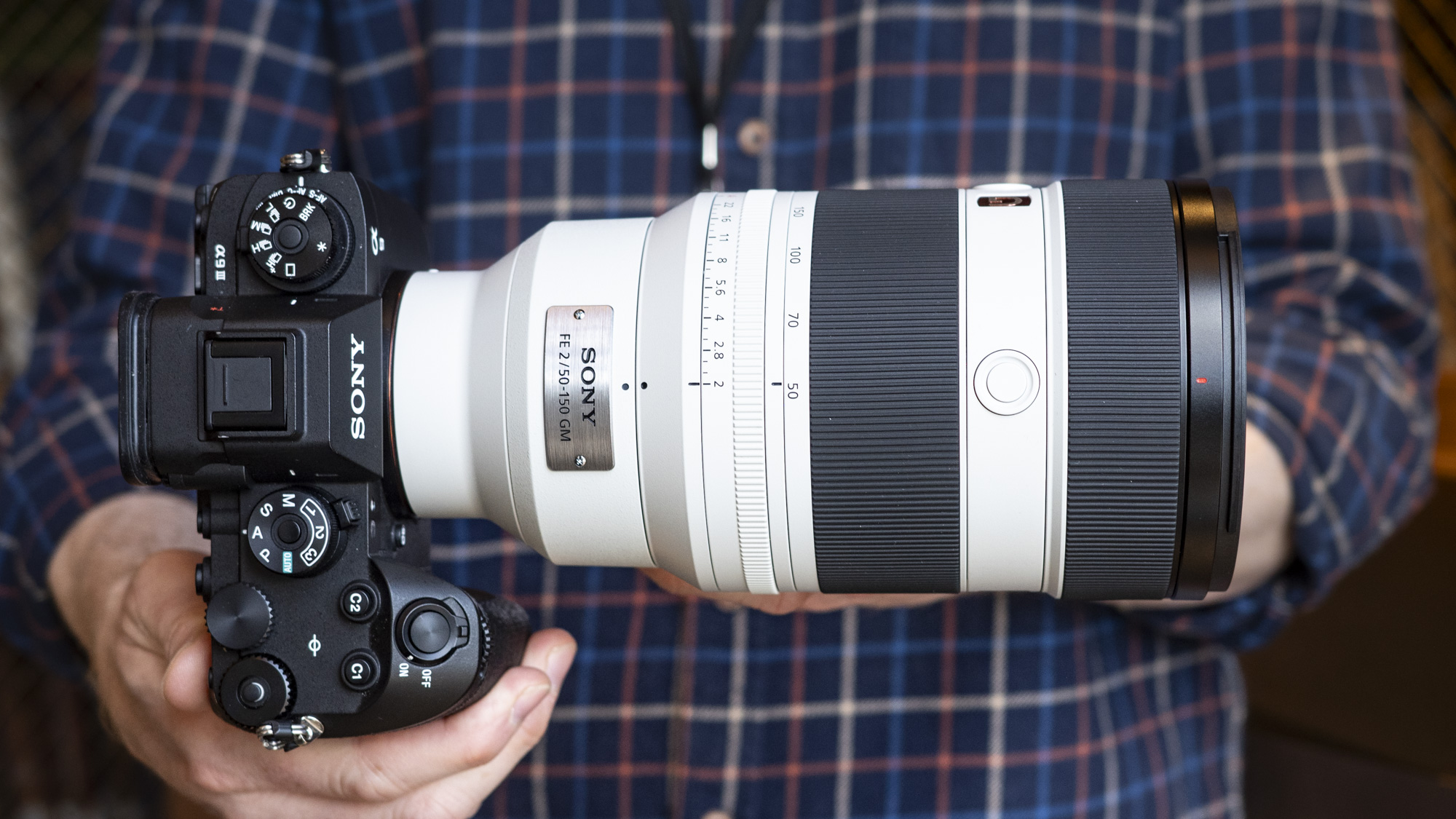
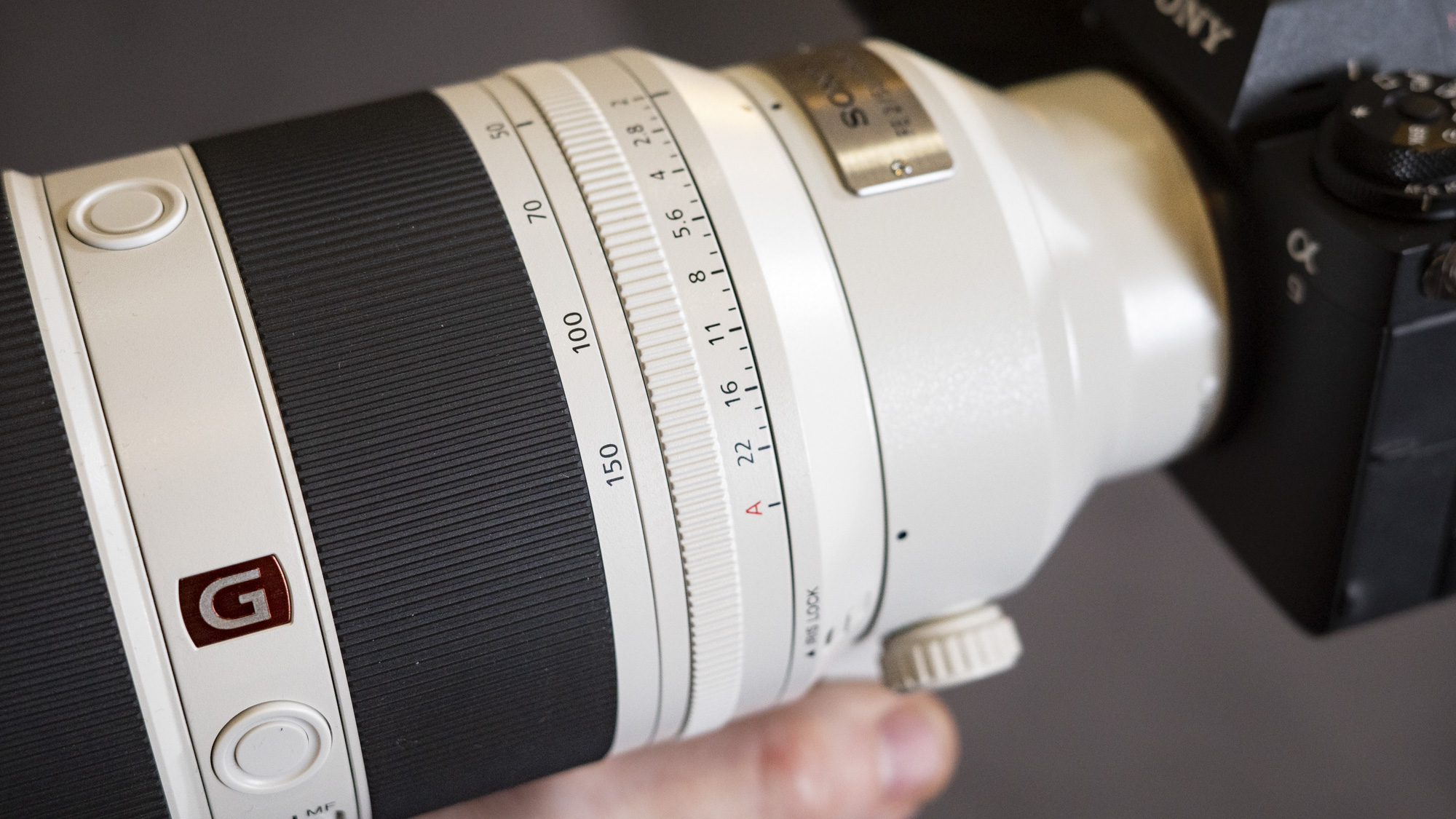
Sony FE 50-150mm F2 GM lens attached to a Sony A9 III, in the hand

(Image credit: Tim Coleman)

The real kicker, though, is the 50-150mm's heft – it weighs a wrist-tugging 1,340g. It was fine over the course of a soccer match, but all day at a wedding would be a proper workout. It's chunky, too, measuring 102.8 x 200mm – that's a particularly big diameter that will stretch the compartments of a regular camera bag.

Having what is effectively several fast aperture primes in one versatile optic makes sense for a certain type of user. It's the telephoto zoom flexibility and bright maximum f/2 aperture at any focal length that make the 50-150mm the goat for events photography, where speed, low-light performance, rapid autofocus, pin-sharp detail, shallow depth of field and buttery bokeh are needs, not wants. The 50-150mm ranks highly across the board.

Before the 50-150mm lens was announced, my go-to lens combination for events was a 24-70mm f/2.8 and a 135mm f/1.8. However, having put Sony's impressive telephoto zoom through its paces, I'm now reconsidering this setup – and even the camera system I've spent years building up. I can't think of any higher praise for a lens.

Sony FE 50-150mm F2 GM: specs

Sony FE 50-150mm F2 GM specs

Type:

Standard to telephoto zoom

Mount:

Sony E-mount

Sensor:

Full-frame

Focal length:

50-150mm

Max aperture:

f/2

Minimum focus:

0.4(W)-0.74(T) m / 1.32(W)-2.43(T) ft

Filter size:

95mm

Dimensions:

102.8 x 200mm (4-1/8 x 7-7/8 in)

Weight:

47.3oz / 1,340g (excluding tripod mount)

Sony FE 50-150mm F2 GM: price and availability

  • $3,899 / £3,799 / AU$6,799
  • Available for pre-order

Beyond its size and weight, if there's one thing that the FE 50-150mm F2 GM lens has going against it, it's the list price – which at the best part of $4,000 / £4,000 / AU$7,000, is eye-watering.

To put that into context, you could pick up both Sony's 24-70mm F2.8 and 135mm F1.8 G Master lenses and have change left over – or, for a little extra, the 24-70mm with Sony's 70-200mm F2.8 GM II.

Put simply, you have to really need the maximum f/2 aperture over f/2.8 to justify the extra outlay, and to put up with that extra weight. I'll get onto the benefits of the brighter aperture later in the reivew.

Naturally, the 50-150mm lens is billed as an ideal pairing with the 28-70mm F2 to cover a huge range of scenarios that would otherwise require an army of primes. I actually think the 50-150mm is the more compelling of the two f/2 lenses.

I'd happily pick up the 50-150mm and a wide prime such as the (cheaper) 24mm F1.4GM instead of the 28-70mm to cover the times when the telephoto zoom isn't wide enough – I'm not sure 28mm is wide enough for me.

Sony announced the 50-150mm lens in April, and at the time of writing it's available for pre-order, with the anticipated sales start date some time in June, 2025.

Sony FE 50-150mm F2 GM: Design

  • Big and heavy
  • Robust, weather-sealed build
  • Internal zoom and focusing

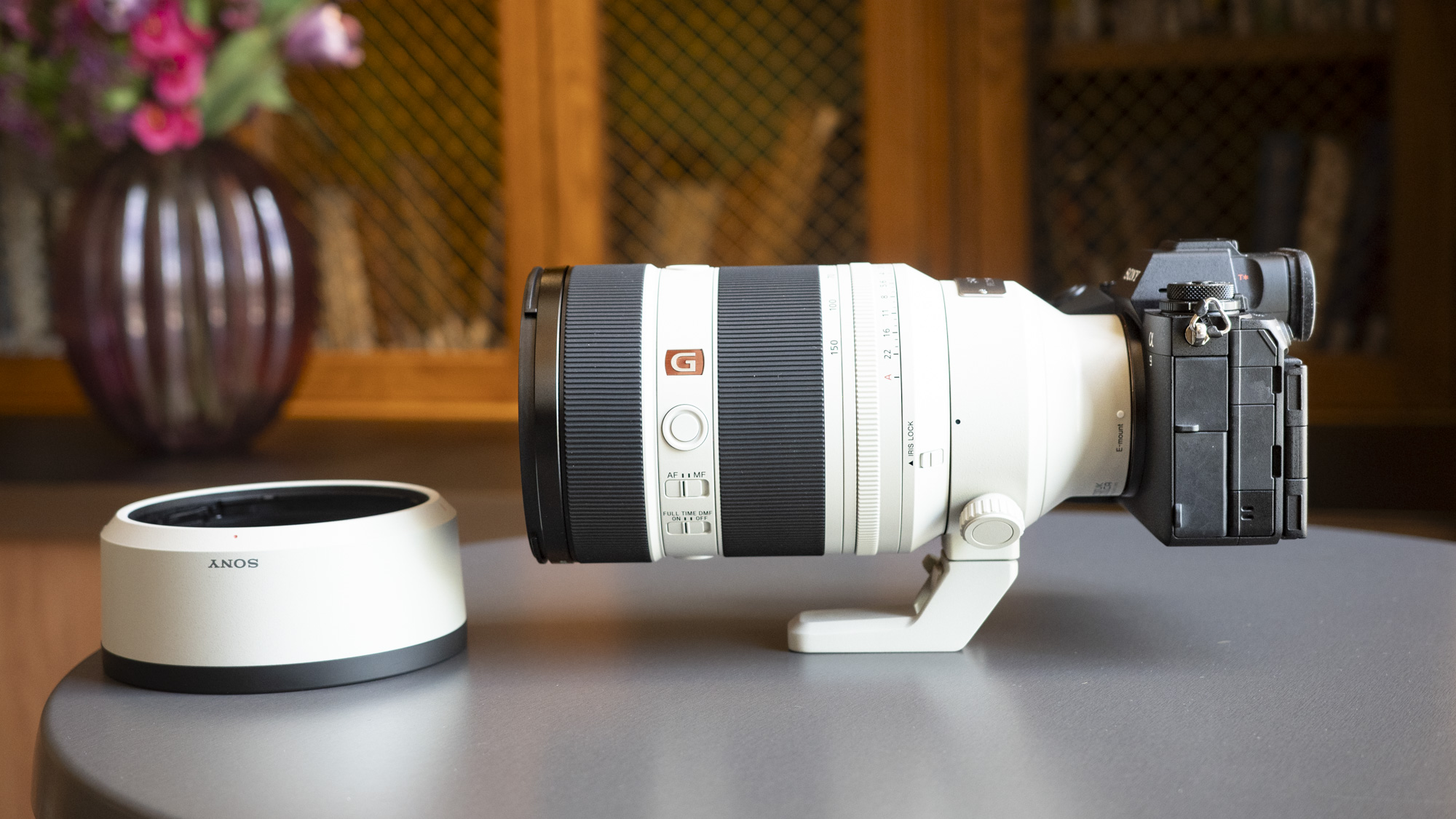
The bigger the maximum aperture, the bigger the lens, so it should come as no surprise that the Sony FE 50-150mm F2 GM is a substantial optic – a cumbersome 47.3oz / 1,340g, excluding the tripod mount.

For context, Sony's second-generation 70-200mm F2.8 GM OSS II lens weighs 36.9oz / 1,045g – that's 20-25% lighter. The pair are identical in length, measuring 200mm, but the diameter of the 50-150mm lens is wider at 102.8mm.

Such is the diameter of the lens, I found it struggled to fit into the padded dividers of numerous camera bags, requiring a reconfiguration of the dividers in most instances. Naturally, the 50-150mm lens' filter thread is bigger than most, too, accepting pricey 95mm lens filters.

Paired with the a7R V, I felt the combination was a little front-heavy and wished for Sony's vertical grip, which would make for a more comfortable setup. Without the grip, I happily photographed a soccer match, while supporting the lens with my second hand.

I would hesitate using the lens for weddings, but the action on such days can be in bursts, so weight might not be an issue. For lengthier, sustained shoots, the 50-150mm isn't too far off the size and weight of pro lenses benefiting from a monopod support.

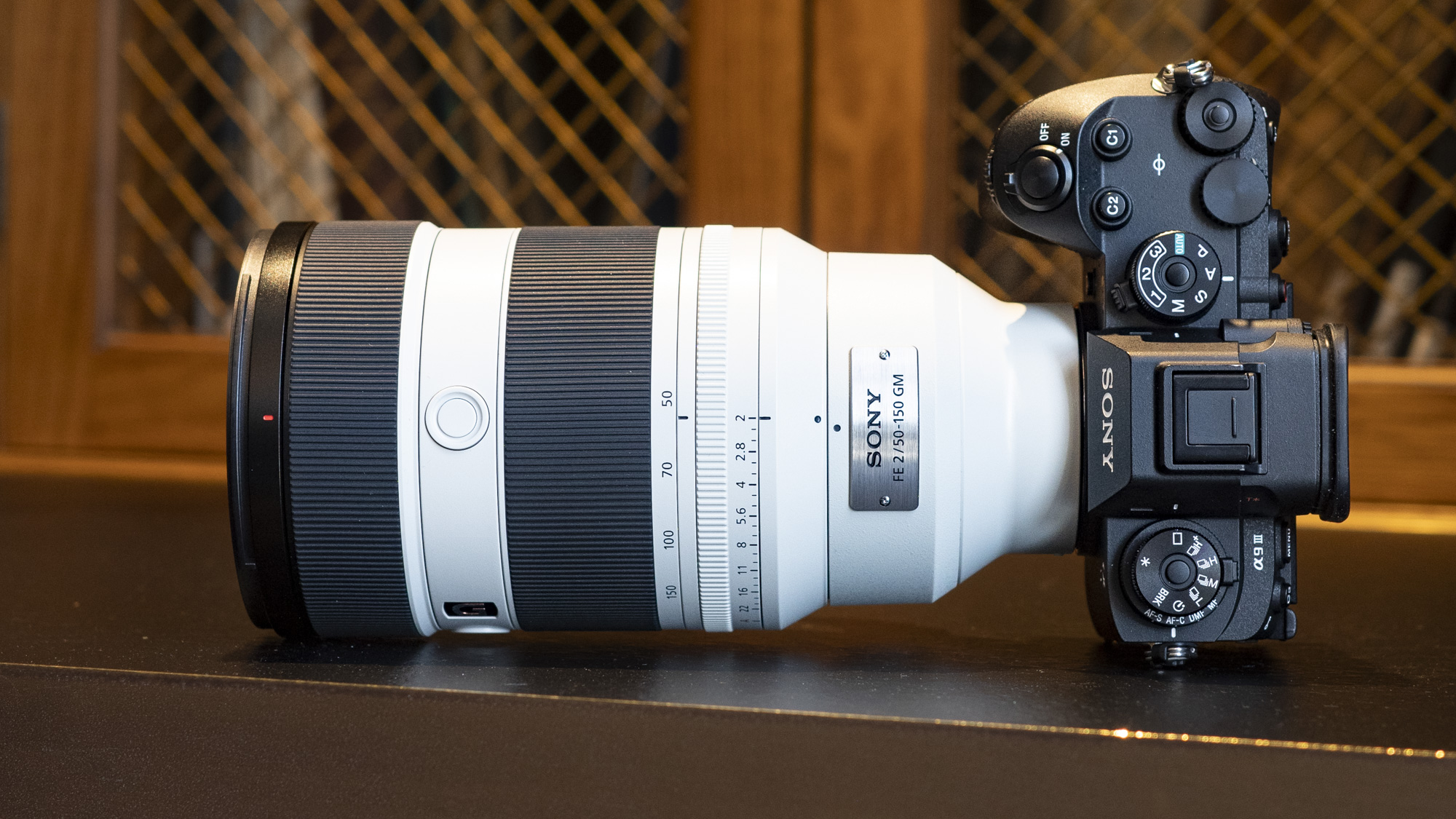
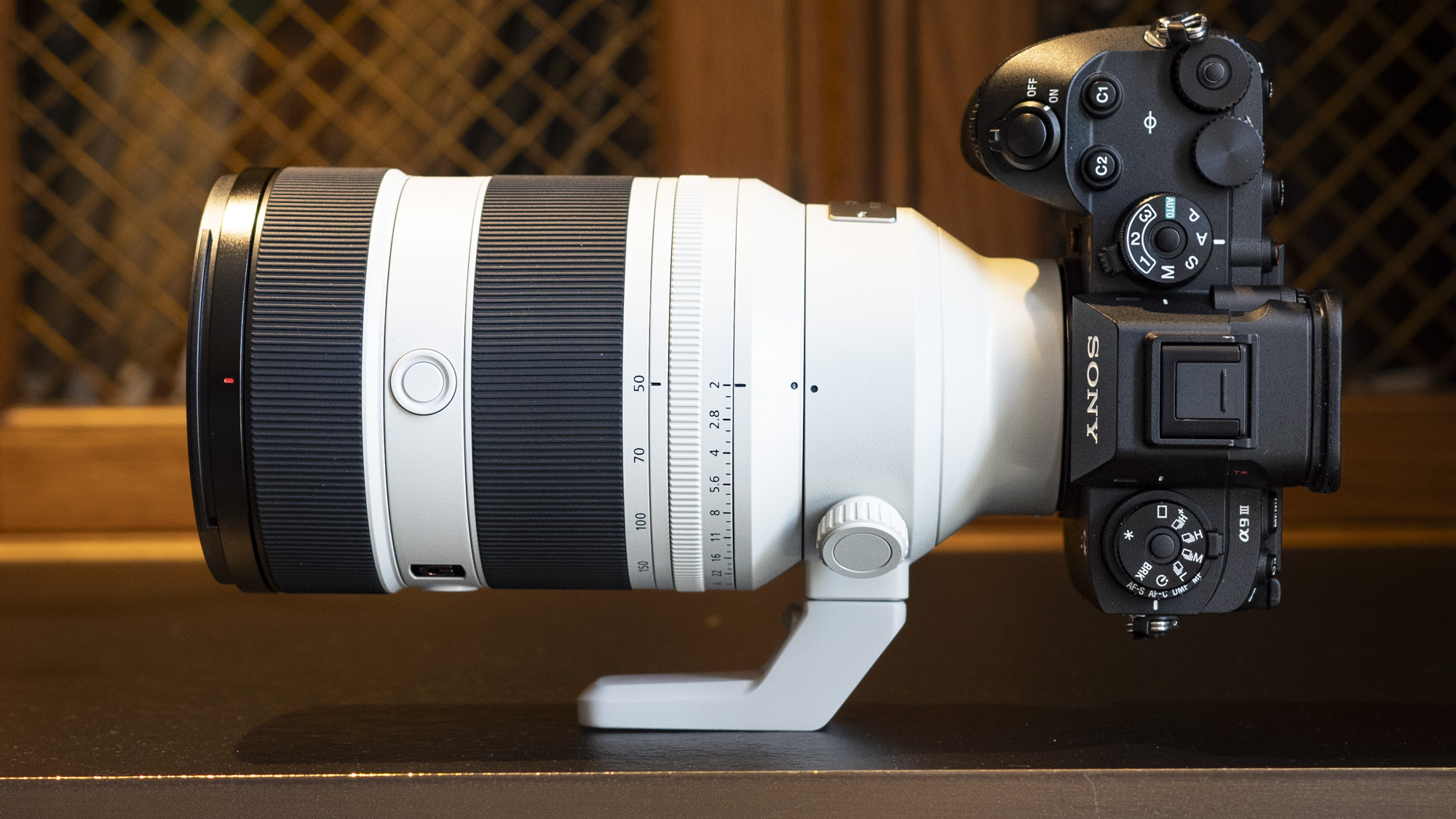
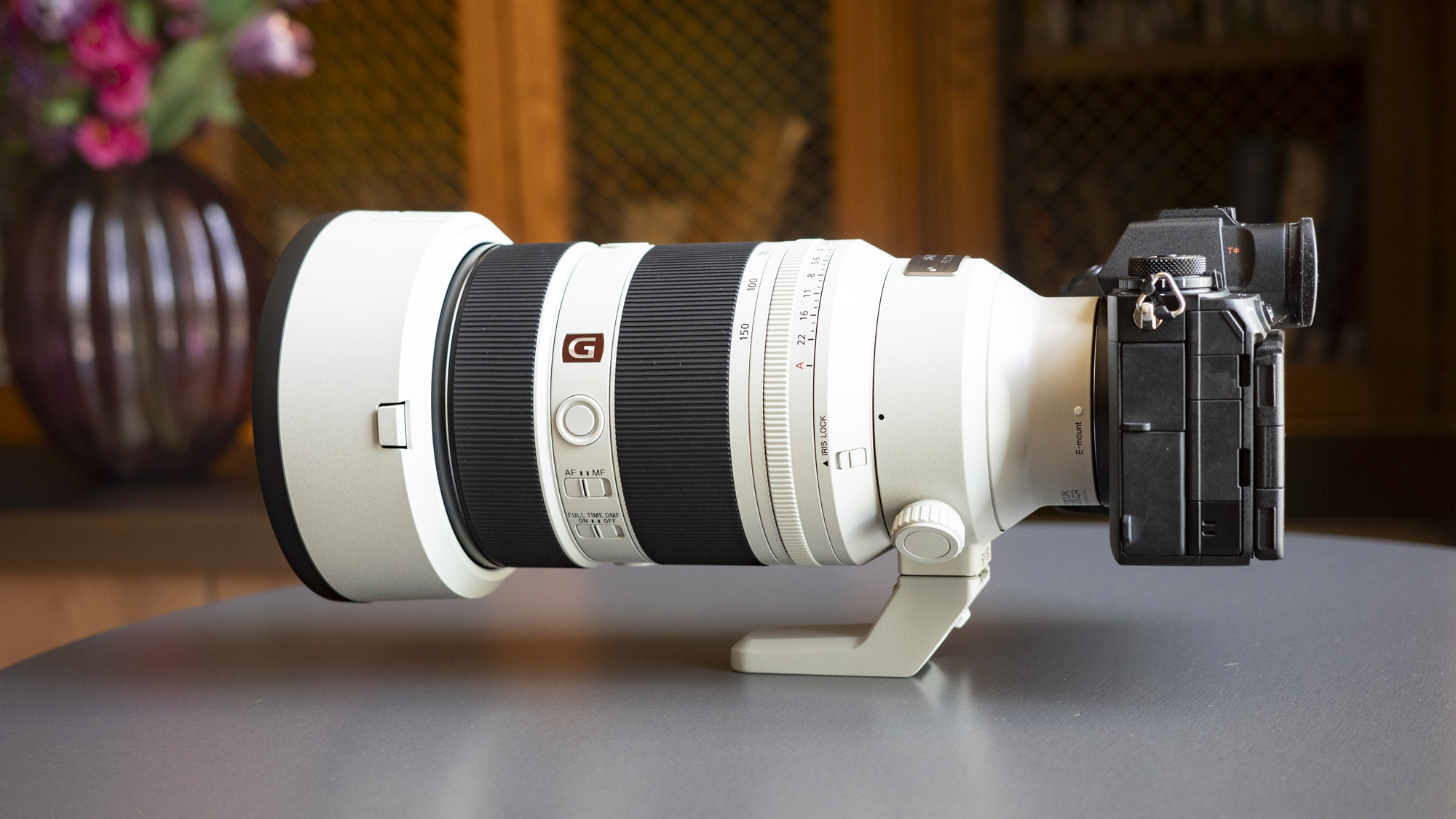
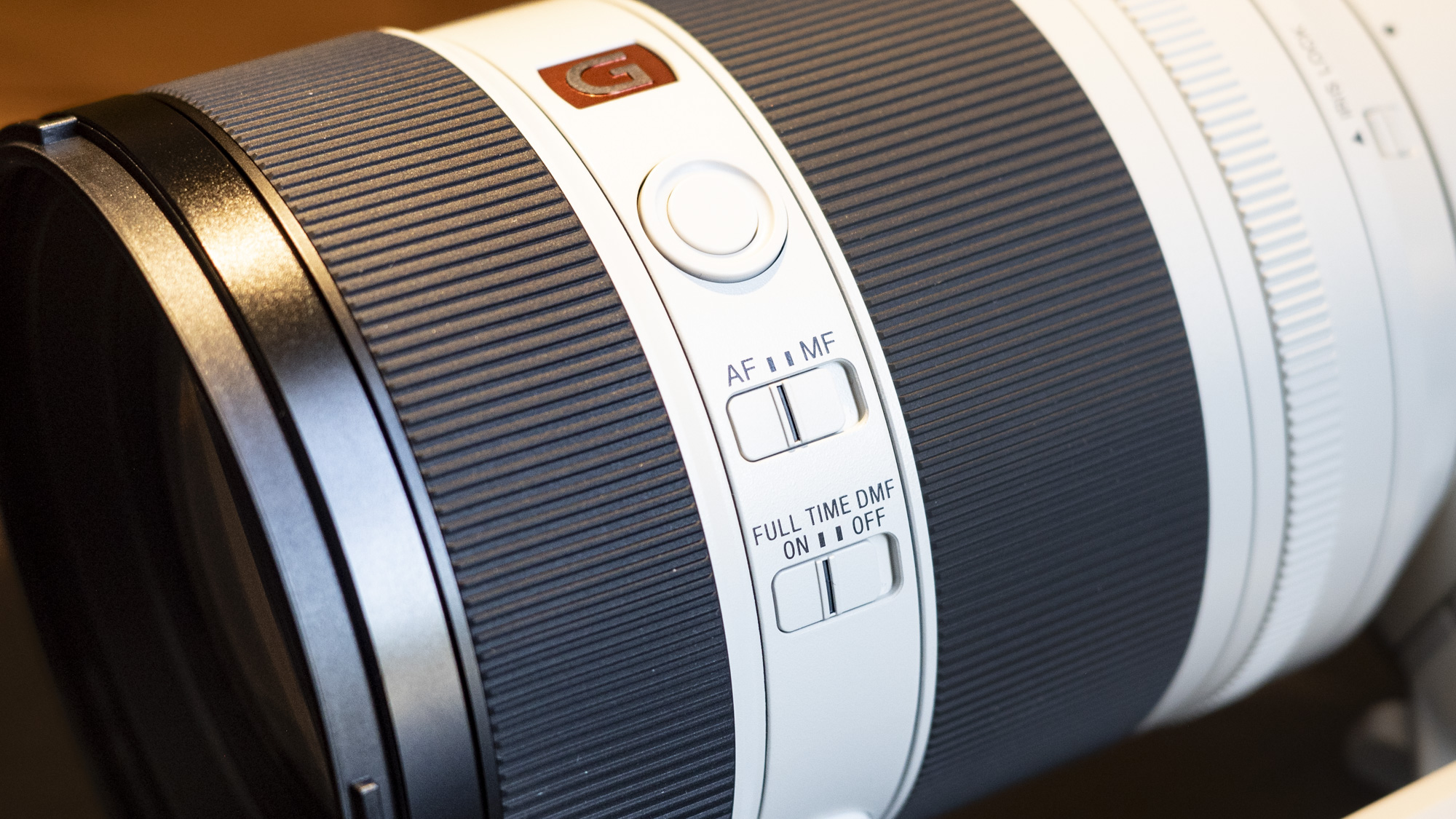
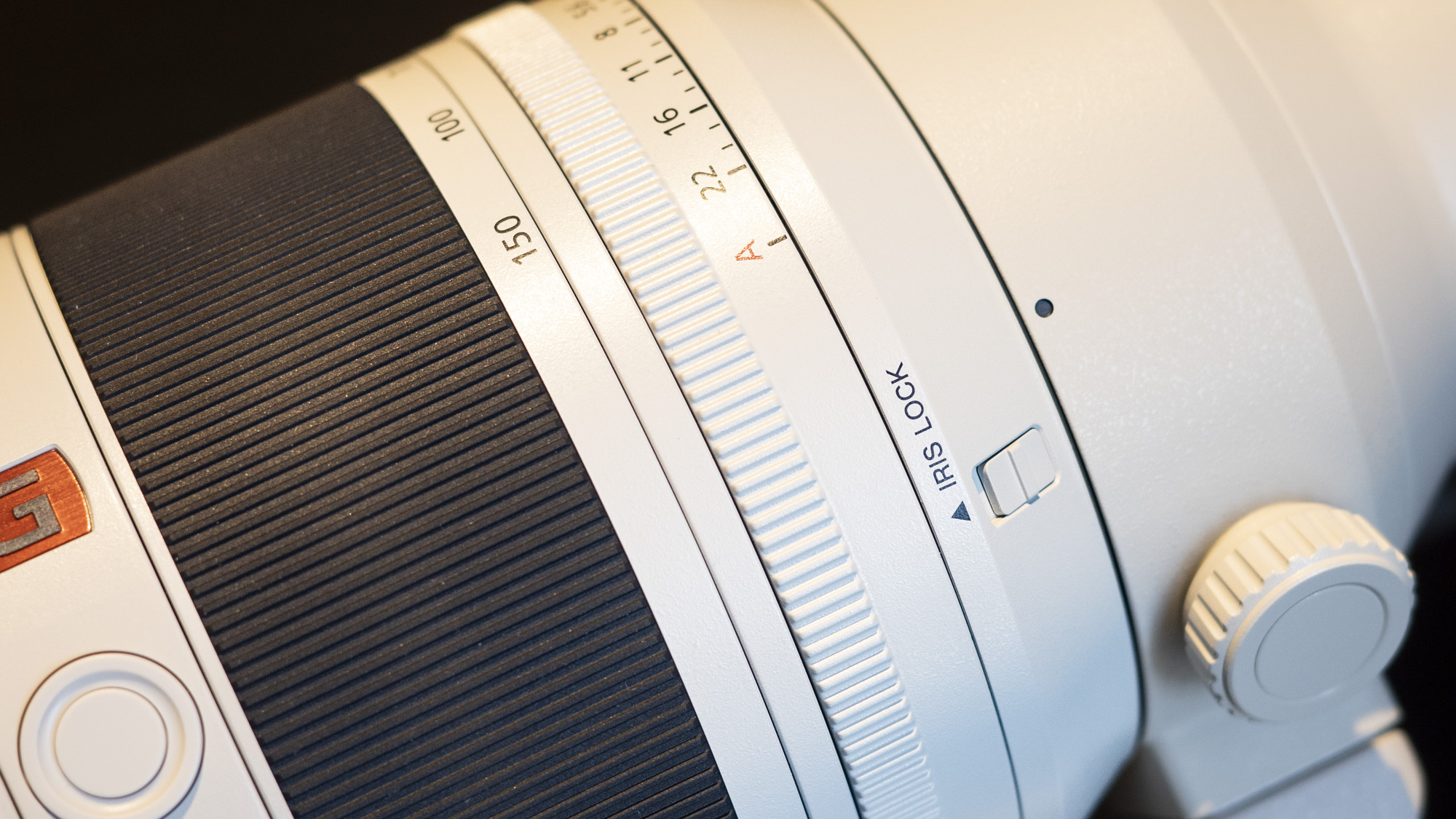
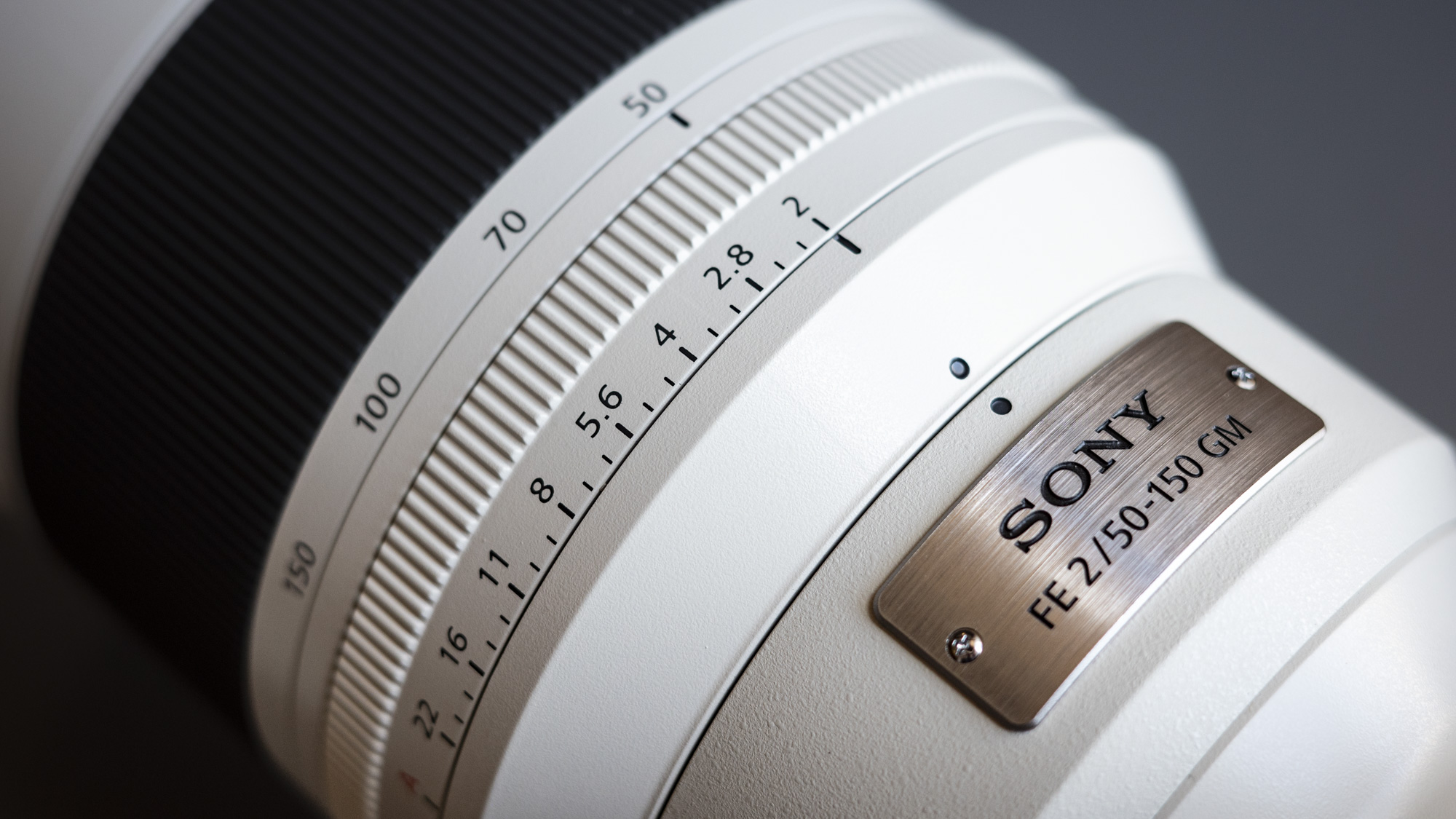
The handling of the lens is otherwise superb – every G Master lens I've tested is. Here, in the same mould of the FE 28-70mm F2 GM, you get a full complement of controls; rings for focus, zoom and aperture; plus customizable focus hold buttons, AF/MF, iris (aperture) lock and full time DMF switches – the latter lets you manually override autofocus.

However, optical stabilization is absent, which I find a little surprising. More on this later.

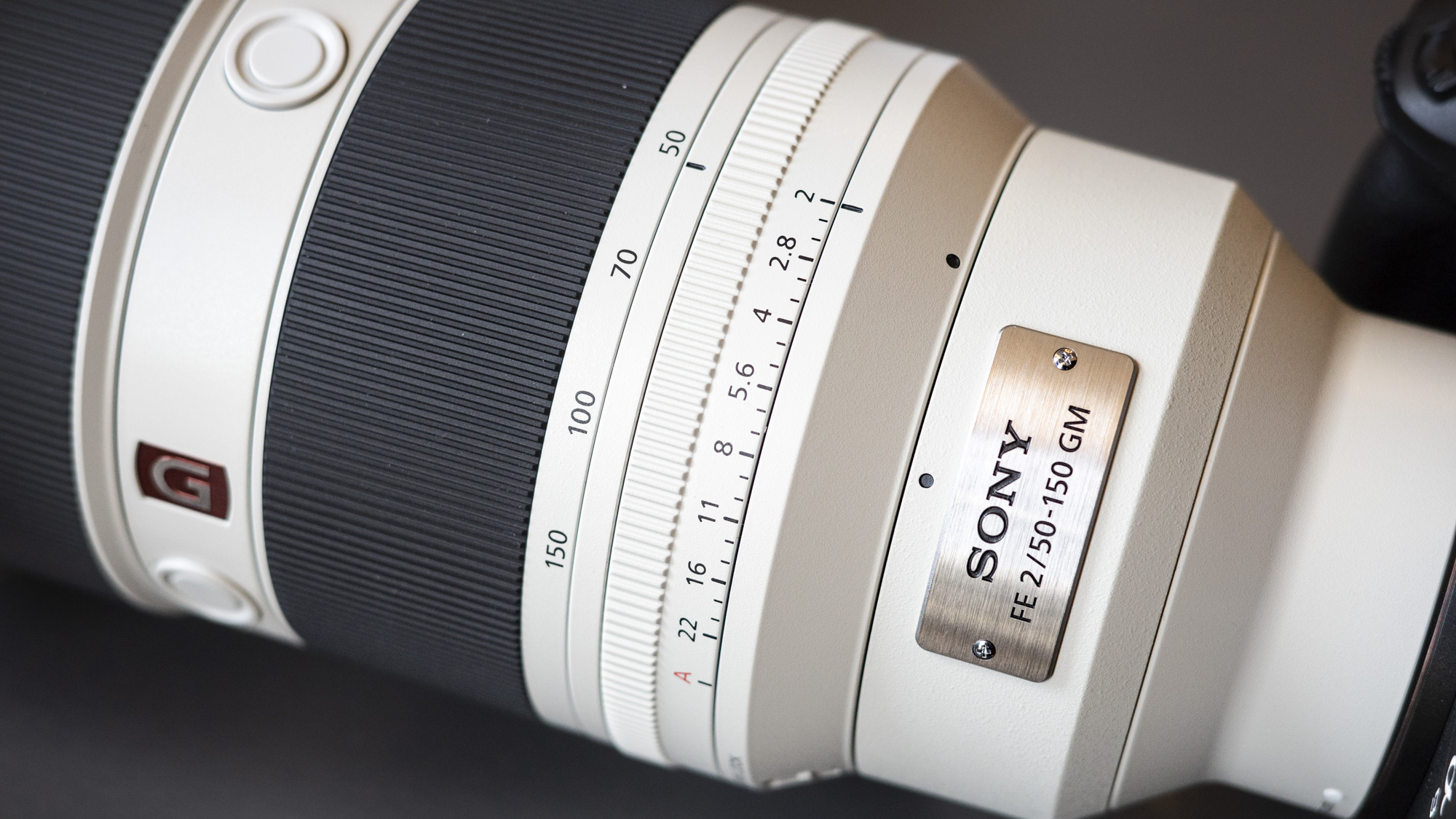
Aperture can be changed on the lens through smooth or clicked adjustments. In general, photographers opt for the tactile clicked feedback, while videographers prefer the smooth movement through f-stops, for whom the ridged ring will be compatible with follow-focus systems.

Zoom is internal, which means the lens barrel remains the same length whatever the focal length. That's one less point of potential weakness in this a fully weather-sealed lens built to withstand the rigors of professional use and inclement weather.

Put simply, no corners have been cut here – this is a top-quality lens. I'd just advise getting hands-on before you buy to check that its size and weight work for you.

Sony FE 50-150mm F2 GM: Performance

  • Fast f/2 maximum aperture at every focal length
  • Strong center sharpness across the zoom range
  • Four XD linear motors for rapid, accurate autofocus

In many respects, the FE 50-150mm F2 GM lens is a copy and paste of the superlative FE 28-70mm F2 GM – it's also equipped with four XD linear motors that drive autofocus. Together, these motors make light work of the sizable lens elements, for a truly rapid, reliable and remarkably quiet autofocus.

Autofocus speed and accuracy are paramount for high-pressure events and sports photography, and I've been consistently impressed by the 50-150mm. This is especially the case with the a7R V's subject-tracking capabilities – when shooting grass-roots soccer, in particular. There isn't the slightest hint of hesitation.

As mentioned, what's missing is optical stabilization (OIS). However, Sony's flagship mirrorless cameras, which are the natural choice for such a lens, are equipped with in-body image stabilization (IBIS). Armed with IBIS and the bright maximum f/2 aperture, I haven't given OIS a second thought.

Like the Sony FE 28-70mm F2 GM, the FE 50-150mm F2 GM delivers incredible image quality across the board. And of the two, it's the telephoto option that enhances the maximum f/2 aperture with smooth focus fall-off and buttery-smooth bokeh, even if its shaping can be cat's eye.

The series of the same image, above, is shot in sequence with the aperture set to f/2, f/2.8. f/4 and f5.6. Bokeh at f/2 is notably bigger and smoother than f/2.8 – that's one of the reasons to splash out on a bright aperture lens.

A difference of one stop between f/2 and f/2.8 lenses might not sound like much, but bokeh is much bigger at f/2, and you're gathering an extra stop of light that's supremely useful in low light – as is often the case in professional work.

The 50-150mm's qualities aren't all about bokeh, either – the lens is consistently sharp from center to edges across the zoom range and aperture settings, besides the natural focus fall off when shooting at wider apertures with shallow depth of field.

Having shot all pictures during my test in RAW and JPEG, I further assessed quality through Adobe Camera Raw by directly comparing like-for-like files, keen to know the extent of in-camera correction at play.

Minor pin-cushion distortion across the entire zoom range surprised me – I'd normally expect it just at the telephoto end of this zoom range, not at 50mm. JPEGs are notably sharper than in RAW, too. Still, neither pin-cushion distortion nor relative lens softness are an issue – corrected RAW images are spectacular.

As for vignetting and color fringing, both are kept under tight control, as are ghosting and flare artifacts when shooting into direct sunlight. Optically, the 50-150mm F2 GM is pretty much flawless, save for easily corrected pin-cushion distortion.

When pairing the lens with a high-resolution full-frame sensor, like I did with the 61MP Sony a7R V, there's no trouble cropping in on stills to effectively further extend reach. I shot a solid set of soccer images, capturing players across the pitch largely from one position on the touchline with the 50-150mm lens.

And it's this cropping flexibility that has convinced me the 50-150mm's wider focal length is much more versatile than 70-200mm.

Sony FE 50-150mm F2 GM: sample images

Should you buy the Sony FE 50-150mm F2 GM?

Buy it if...

You shoot events photography

For weddings and other events, the 50-150mm F2 offers a versatile zoom range and maximum aperture combination. Depending on the assignment, it could be the only lens you need.

You want top quality performance

Packing prime lens quality and bright aperture versatility, together with snappy autofocus, the 50-150mm doesn't skip a beat.

You need a robust lens

Heavy and big it may be, but the 50-150mm is a superbly built lens that will withstand the rigors of demanding professional use.

Don't buy it if...

You know your focal length

Designed to do the job of several primes, the 50-150mm is overkill for users who usually stick to a specific focal length. If this is you, you'll find a cheaper and smaller alternative prime.

You want a lightweight zoom

If the maximum f/2 aperture is overkill for your work, Sony also offers f/2.8 and f/4 zooms that are both smaller and much cheaper.

How I tested the Sony FE 50-150mm F2 GM

  • I had the lens and the Sony a7R V camera for a three-week loan
  • I've shot portraits, sports and more
  • I've also taken multiple series of identical images with the lens at different settings

I had a decent length of time with the Sony FE 50-150mm F2 GM lens – almost a month, during which time I was able to test it in multiple scenarios, including sports and for portraits.

Sony loaned me the a7R V to pair the lens with. With the camera's 61MP sensor and superb autofocus, the lens has felt even more versatile – giving greater scope for cropping into images such as distant players in football (soccer) match.

To really show the benefit of the f/2 aperture, I have made sure to use it regularly, and to take like-for-like images at different apertures to compare handling and quality.

  • First reviewed May 2025

!!!!!!!!!!

Popular Posts

Categories

Blog Archive