Friday, May 29, 2026

The Razer Viper V4 Pro took me back to basics, and you know what? Maybe that's all a gaming mouse should be

Razer Viper V4 Pro: Two-minute review
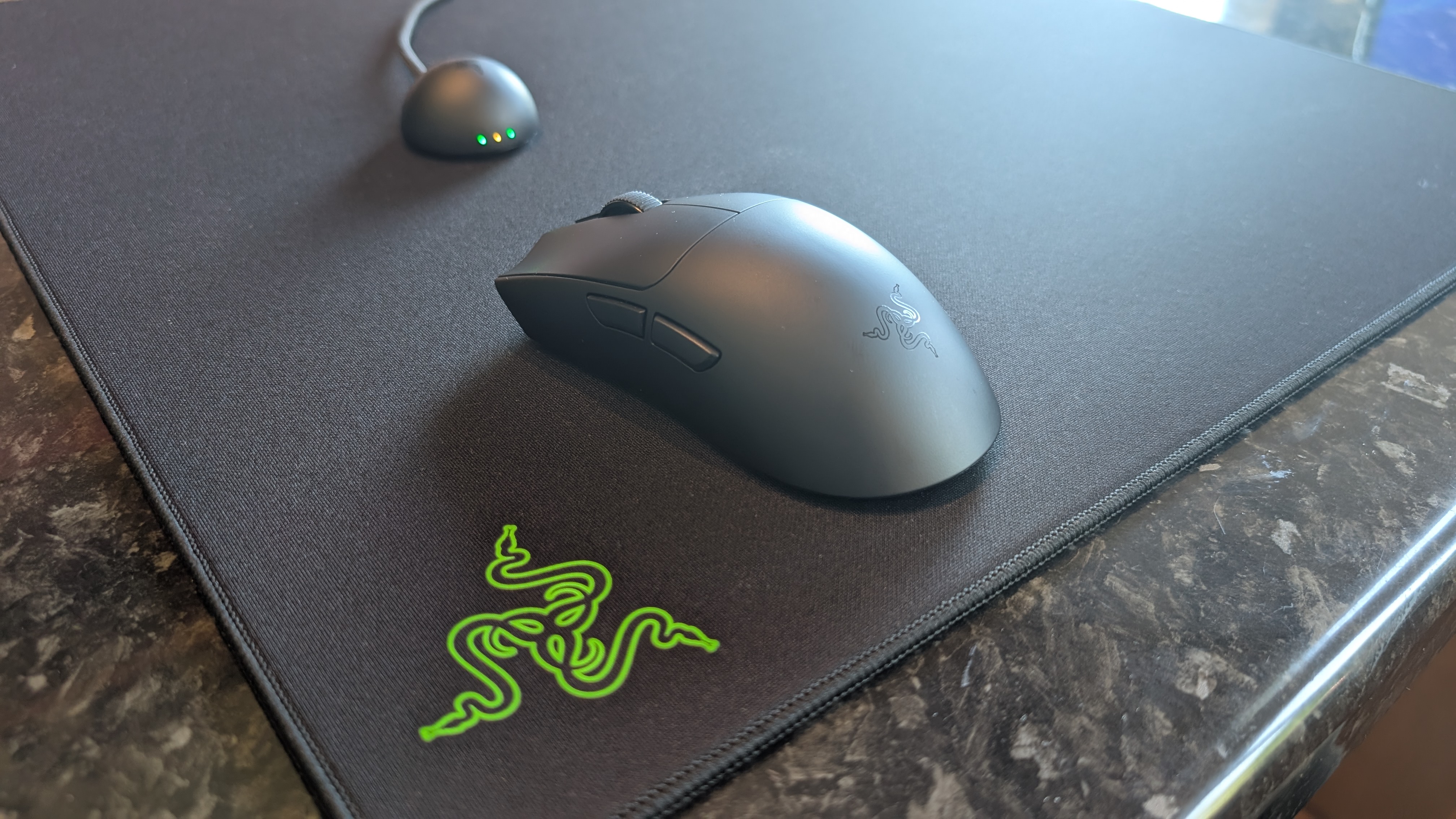
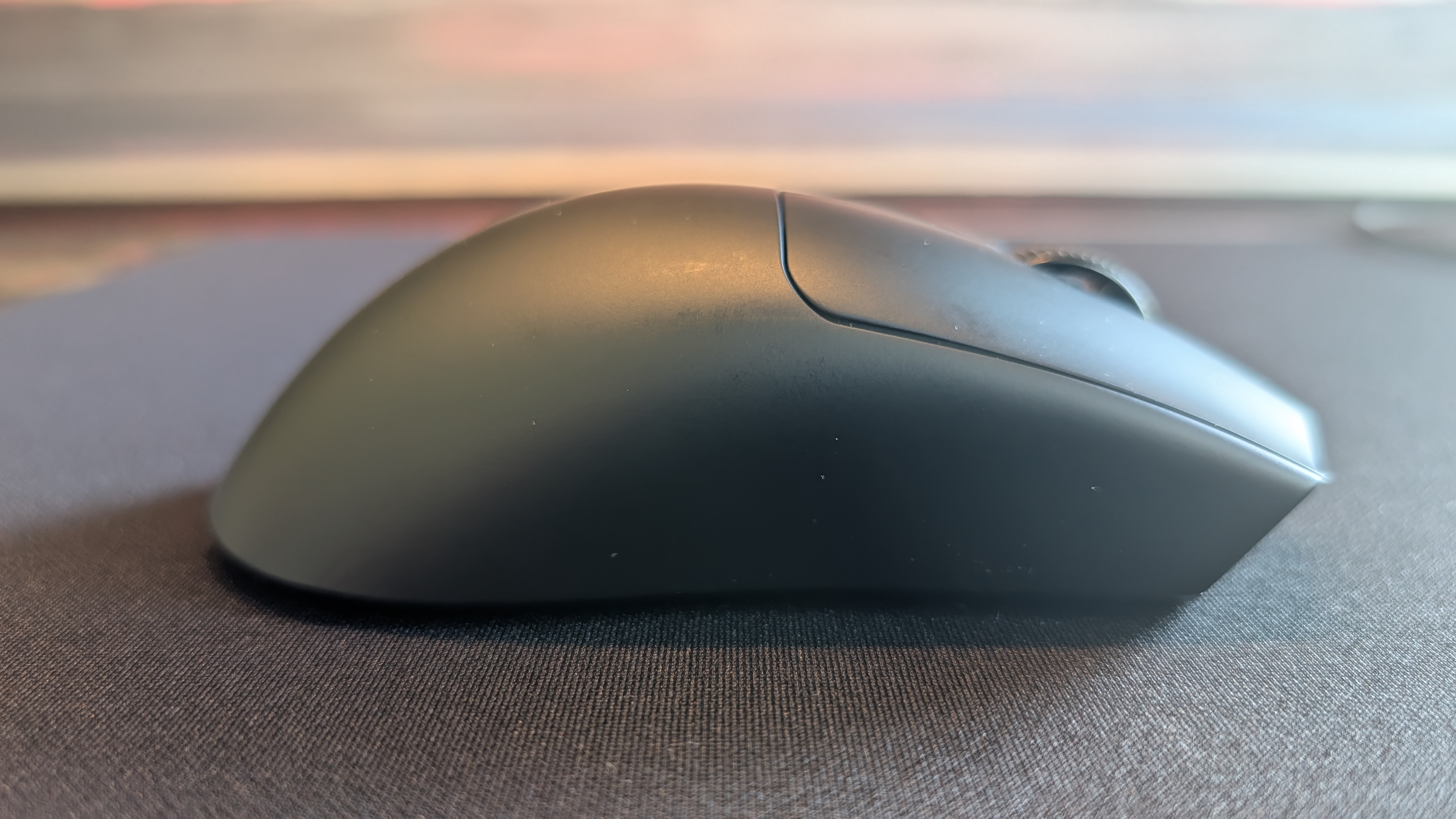
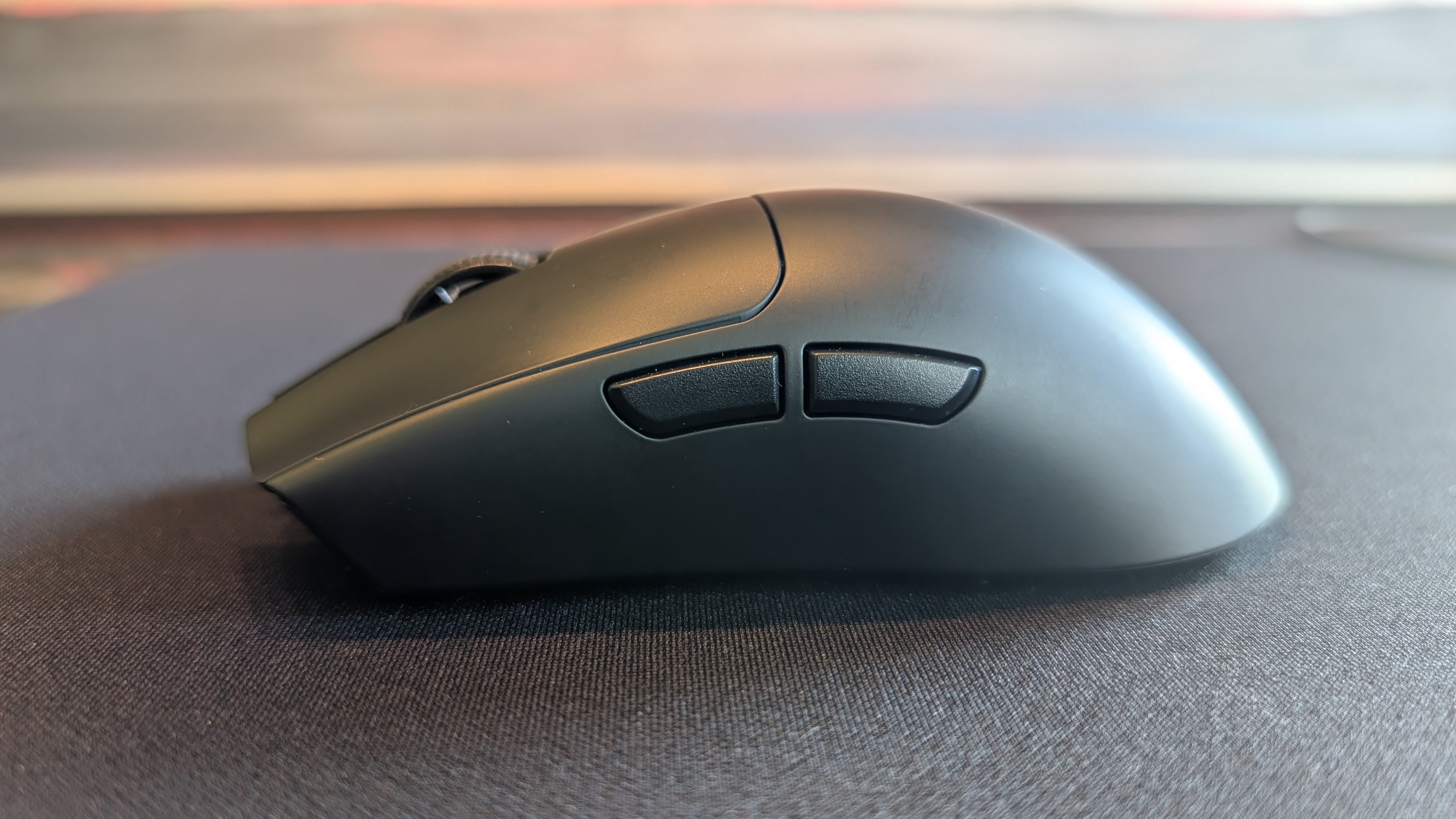
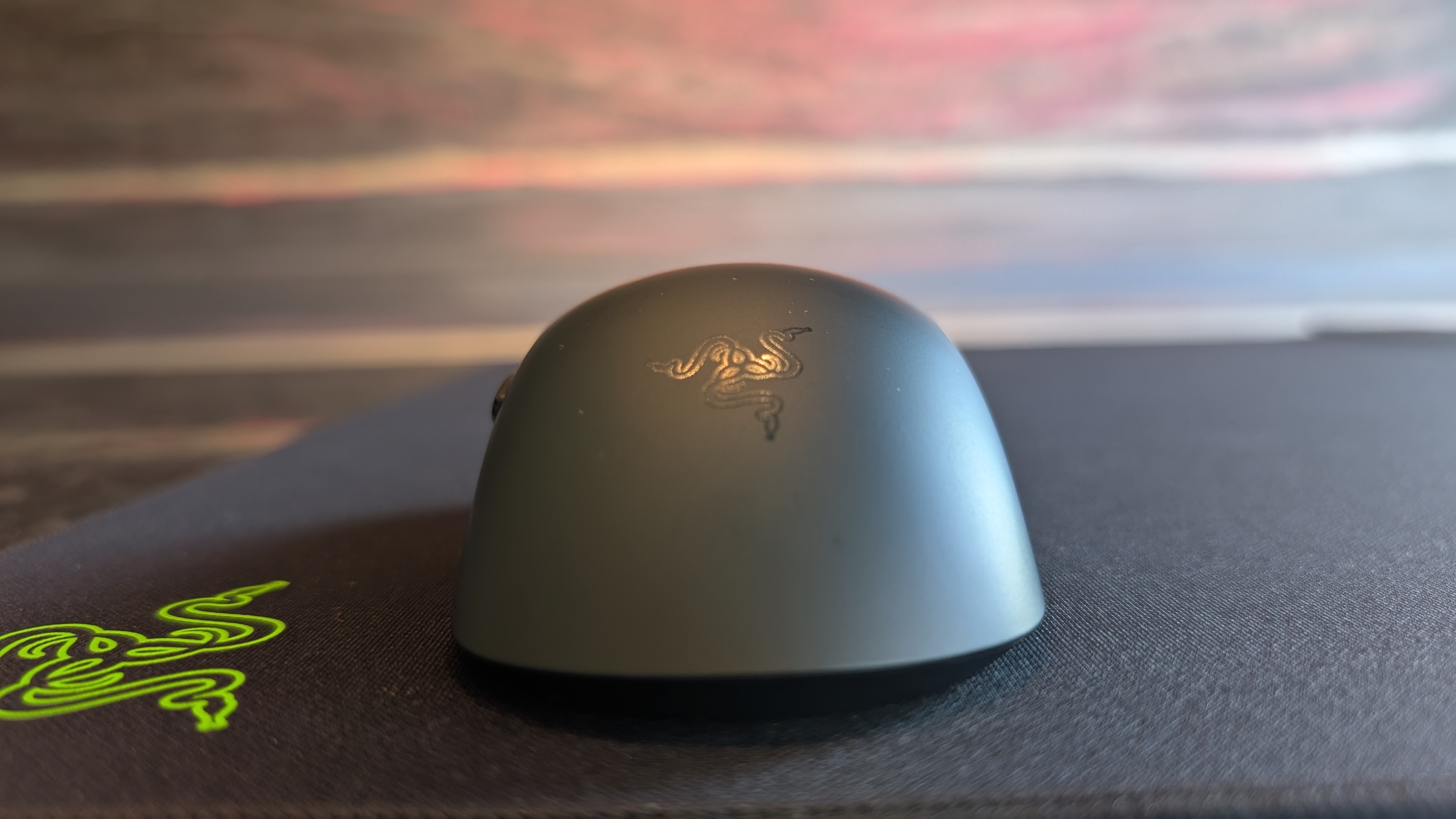
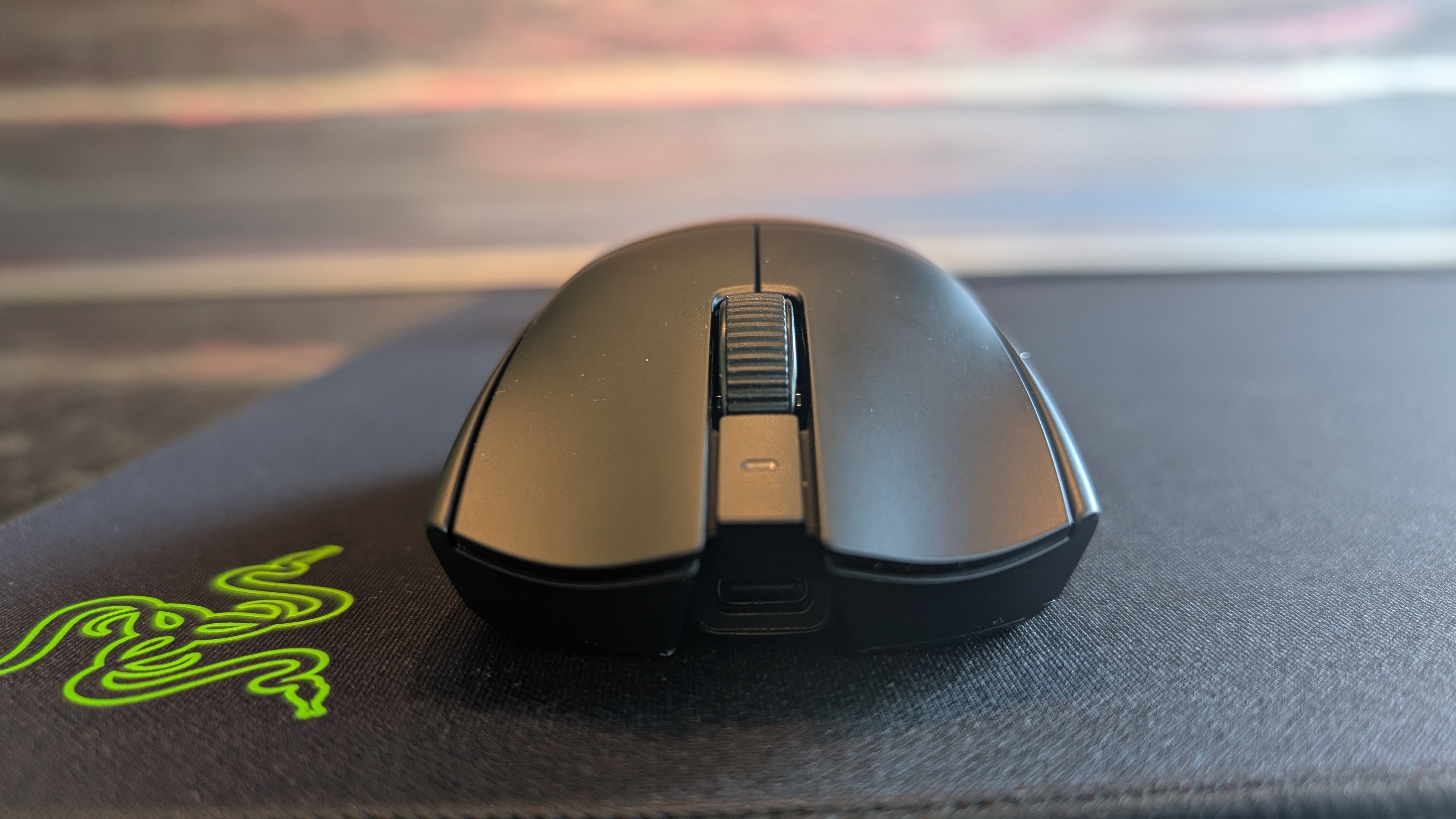
The Razer Viper V4 Pro gaming mouse pictured on the Razer Gigantus V2 Pro mouse mat.

(Image credit: Future)

Razer is a good brand for PC gaming hardware, but I have noticed a tendency over the years to make its generational hardware upgrades... iterative might be the kind way to put it, but if I were feeling uncharitable, I might call them rudimentary – improving something, but sometimes not to a sufficient degree that an entirely new product release feels worthwhile.

I feared this might be the case with the Razer Viper V4 Pro. That wouldn't have been a disaster by any means; we gave the previous Viper V3 Pro a four-star score when we reviewed it back in 2024, which is perfectly respectable. But when I saw the V4 Pro for the first time, my first thought was that it didn't look any different from the V3 Pro whatsoever, and my heart sank.

Once I got my hands on the new model, though, I was pleased to be proven wrong. Despite looking virtually identical to the previous model, the Viper V4 Pro has undergone extensive improvements where it counts – on the inside.

For starters, Razer has managed to shave off another five grams from the already-low package weight, bringing this mouse down to a staggeringly lightweight 49g. The battery life has been almost doubled, and the buttons (and scroll wheel) have been updated with new optical switches, which provide better durability without compromising on tactile feedback.

The sensor has been upgraded, too, with the Viper V4 Pro packing Razer's third-generation Focus Pro 50K optical sensor. 50,000 DPI is far more than 99% of people will ever need, but it helps cement this as a peripheral for serious, hardcore competitive gamers. The 8K polling rate (returning from the V3 Pro) also aligns with this; the average gamer won't need it, but for pros, it's a must-have.

Really, it's genuinely difficult for me to find anything I don't like about this mouse. It's comfortable in the hand and feels supremely responsive even in high-stakes virtual shootouts. The lack of a left-handed version is a shame (although I imagine many of my fellow southpaws have adapted to life in a right-handed world and use their mouse on the right out of habit), and it's admittedly pretty expensive, but these feel like minor issues – bugs on the windshield of an extremely nice car. From my time with it, I'm very confident in saying that the Razer Viper V4 Pro deserves a place among the best gaming mice on the market.

Razer Viper V4 Pro: Price & availability

  • How much does it cost? $159.99 / £159.99 / AU$279.95
  • When is it available? Available now
  • Where can you get it? Available globally

Anyone familiar with Razer's hardware will be aware of the 'gamer tax' on the brand's products, but even taking Razer's often-steep pricing, this is one very expensive mouse.

At $159.99 / £159.99 / AU$279.95, it's very slightly cheaper than the Razer Deathadder V4 Pro, which we featured in our list of the best mice, and is fundamentally very similar to the Viper V4 Pro beyond its right-handed grip shape.

Don't get me wrong: this is an extremely high-quality mouse, but there's no getting around the fact that it'll simply be out of reach for many PC gamers at this price point. It's arguably also quite feature-light for such an expensive mouse; some potential buyers might feel shortchanged here, especially if they're looking for a mouse with more customization options.

Razer Viper V4 Pro: Design

  • Incredibly lightweight design
  • Sturdy, tactile optical switches
  • No version for left-handed users
The Razer Viper V4 Pro gaming mouse pictured on the Razer Gigantus V2 Pro mouse mat.
Future
The Razer Viper V4 Pro gaming mouse pictured on the Razer Gigantus V2 Pro mouse mat.
Future
The Razer Viper V4 Pro gaming mouse pictured on the Razer Gigantus V2 Pro mouse mat.
Future
The Razer Viper V4 Pro gaming mouse pictured on the Razer Gigantus V2 Pro mouse mat.
Future

Compared to the Logitech G502 Lightspeed I use daily for work and gaming, the Razer Viper V4 Pro feels like I'm holding nothing at all (nothing at all...)

Seriously, I almost can't believe the Viper V4 Pro even weighs the 49g listed on the spec sheet; this thing is phenomenally lightweight, to the point where I actually busted out the kitchen scales to make sure I wasn't going crazy. Sure enough, it weighed exactly the listed 49g.

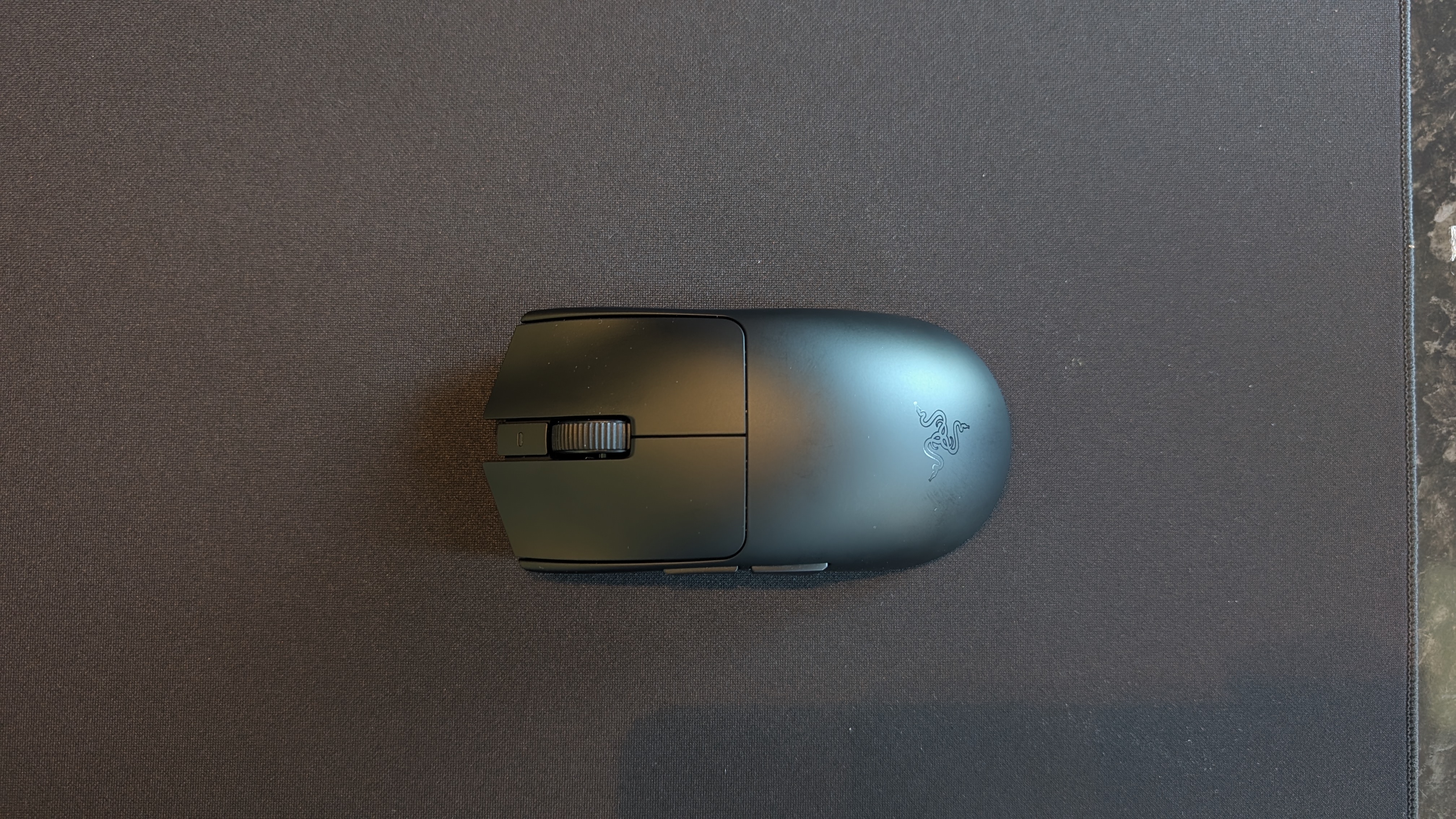
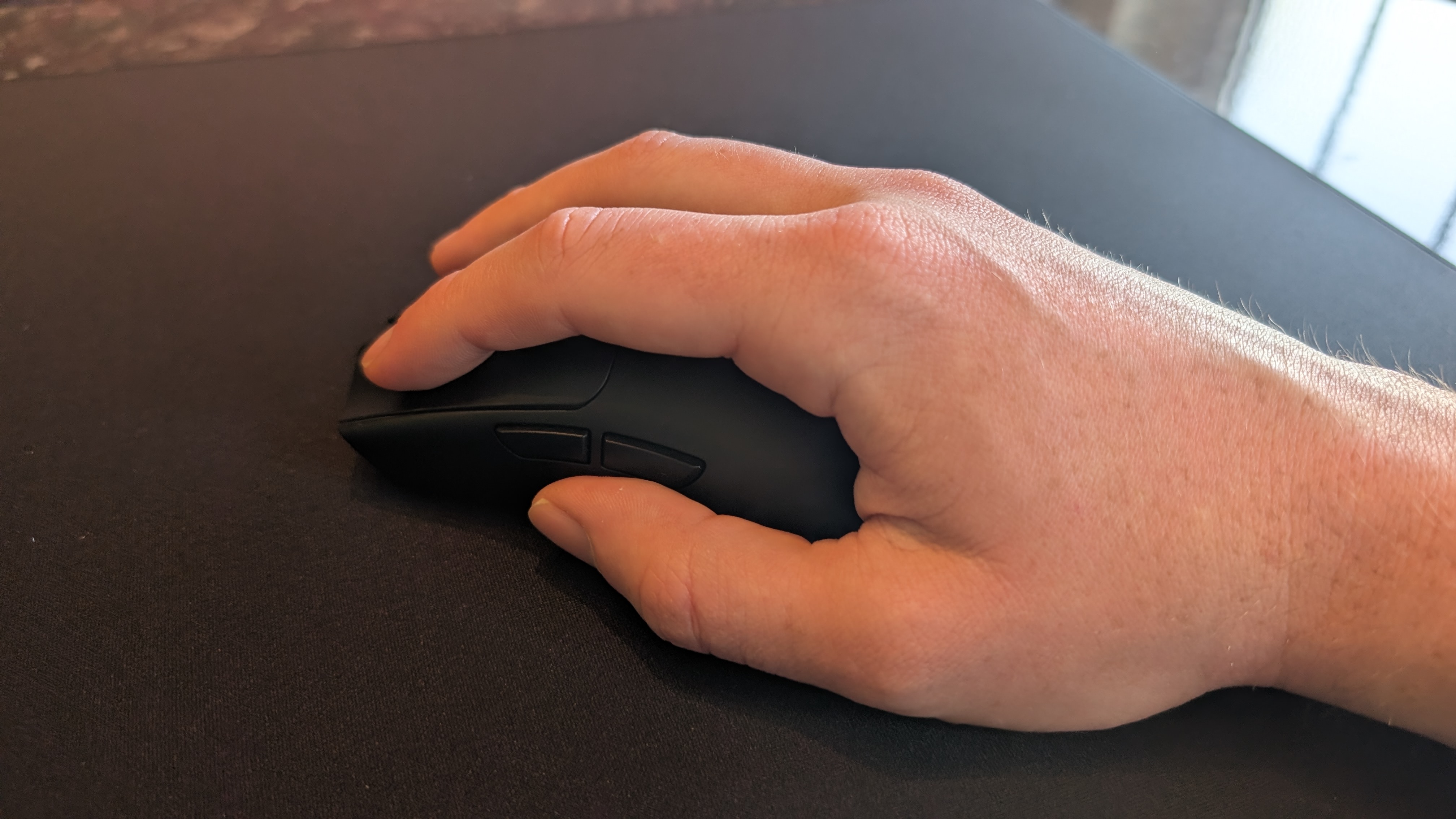
It's also just a generally very comfortable mouse to use. The exterior casing is almost entirely symmetrical and lacks a thumbrest, which would generally mean that it's best suited for claw and fingertip mouse grippers, but as someone who tends to shift between claw and palm grip styles, I can attest that the latter feels comfortable with the Viper V4 Pro as well. As I noted further up in this review, despite the mostly symmetrical design, the Viper only comes in one right-handed model, so lefties are out of luck.
The Razer Viper V4 Pro gaming mouse pictured on the Razer Gigantus V2 Pro mouse mat.

(Image credit: Future)

The buttons and scroll wheel have a pleasing amount of tactile feedback, updated to shiny new optical switches underneath the matte plastic buttons. They feel robust, with the main two mouse buttons rated for 100 million clicks, though I would note that they have a fairly loud 'click' to them – something to bear in mind if you prefer a quieter mouse.

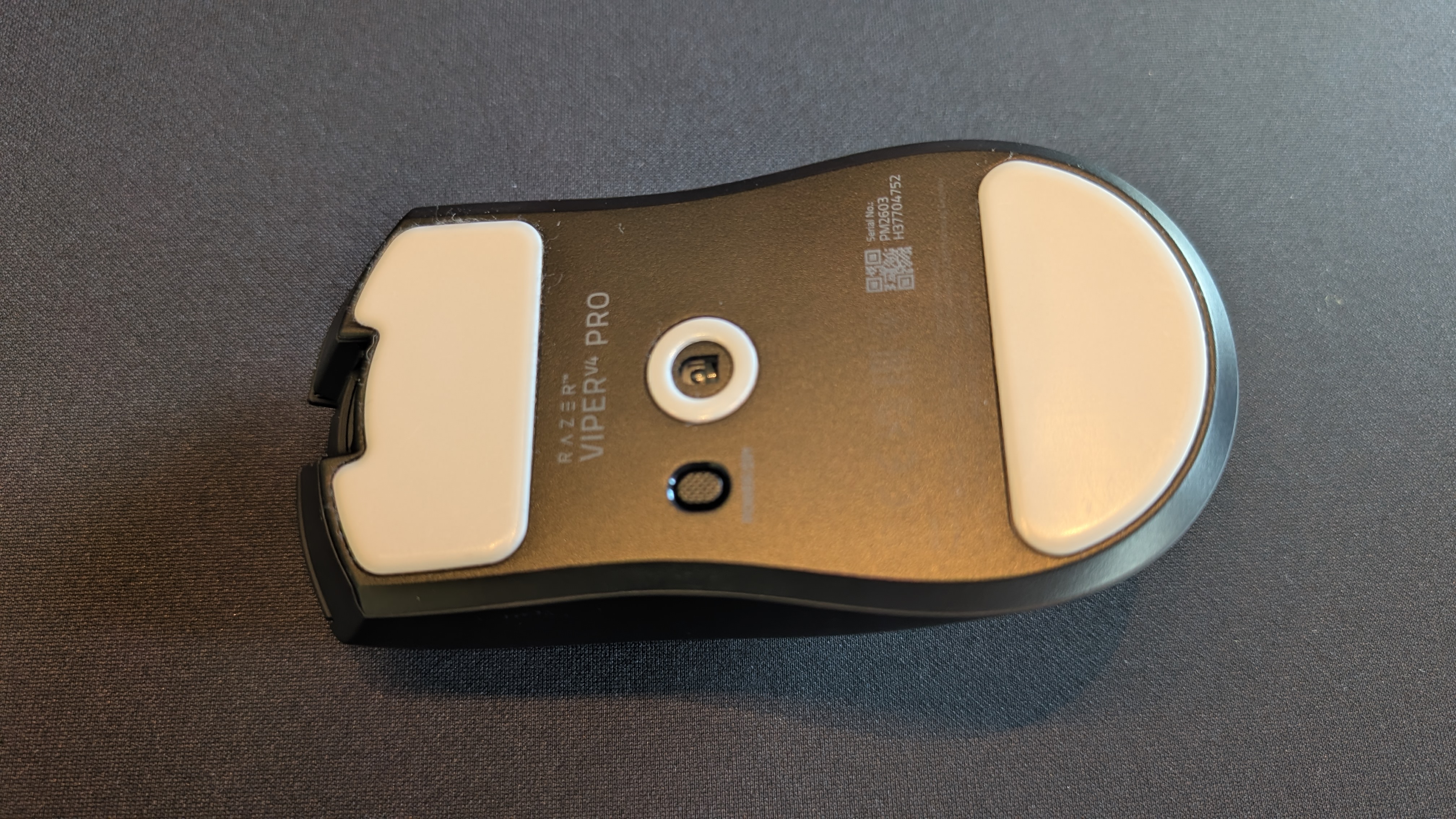
The underside of the mouse features only the sensor, a DPI/power button, and two wide PTFE feet that offer a good amount of smoothness on a variety of surfaces (more on that down in the performance section). I'm personally not a huge fan of DPI buttons being inaccessible during use, but it's unlikely to bother the majority of users.

Overall, it's a pleasingly straightforward design; considering that the Razer name is sometimes considered synonymous with bright RGB lighting, I like how stripped-back and purpose-built the Viper V4 Pro feels.

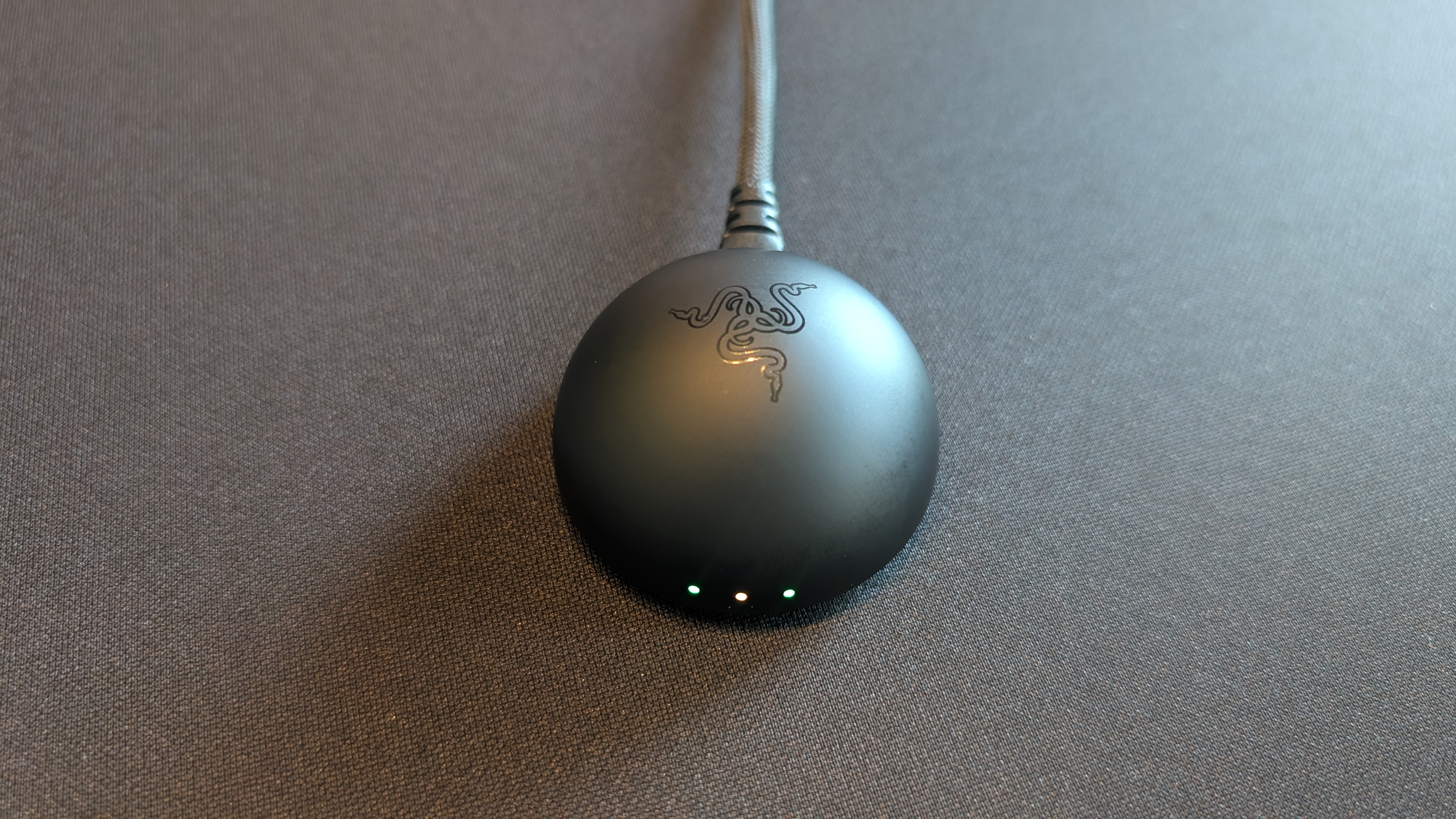
In fact, the only LEDs to be found here are a single white power indicator above the scroll wheel, and three RGB LEDs on the wireless dongle – which rather helpfully display the mouse's connection status, battery life, and polling rate mode via color-coding.

This dongle was recently redesigned from a rather blocky shape to a far more aesthetically pleasing mini dome with the Razer logo emblazoned on the top, and it connects to your PC via an included USB-C to USB-A cable. This cable can also be used to charge the mouse itself or connect it for fully wired play, but there's no Bluetooth support here, so laptop gamers with limited ports should bear that in mind.

Razer Viper V4 Pro: Performance

  • Snappy, satisfying performance in shooters
  • Razer Synapse is better than ever
  • 8K polling rate is probably unnecessary for most PC gamers
The Razer Viper V4 Pro gaming mouse pictured on the Razer Gigantus V2 Pro mouse mat.

(Image credit: Future)

Simply put, this is one hell of a gaming mouse for first-person shooters. I used the Viper V4 Pro to play Valorant, Marathon, Overwatch, and Counter-Strike 2 – and while I'm not sure if it actually made me better at clicking heads, I certainly felt like it was a better fit for fast-paced, twitchy shooting than my usual Logitech G502 Lightspeed Wireless.

Razer was kind enough to send me some mouse mats to test the Viper V4 Pro on, and I found that it offered a good amount of glide on practically any surface. From the moderate friction of the Razer Gigantus V2 Pro (featured in the photography for this review) to the silky-smooth tempered glass Atlas Pro mat, the Viper felt swift and easy to use regardless of surface. In fact (sorry Razer), I'd even say that you barely need a fancy mouse mat for this mouse; it worked perfectly even just on the bare wooden surface of my desk.

The Razer Synapse app has come a long way – no longer the annoying bloatware I used to heckle in every Razer product review, but now a sleeker and more effective (and, importantly, less intrusive) piece of tweaking software. Even better, it's now available as a web app, letting you tweak settings in your browser without needing to download the main app itself.
The Razer Viper V4 Pro gaming mouse pictured on the Razer Gigantus V2 Pro mouse mat.

(Image credit: Future)

There isn't a vast amount of customization options here, which is unsurprising given the minimalist nature of the Viper V4 Pro, but the options you do get come with a great amount of granularity. Most importantly, the mouse sensitivity can be adjusted right down to 1-DPI increments to get you the exact right amount, and you can also adjust the sensor's tracking angle to ensure that the mouse input from fast horizontal movements stays level, which I actually did find helped with landing repeated shots on strafing targets. As you'd expect from a premium gaming mouse, you can also set up macros, but you'll need to download the full-fat version of Synapse for that.

One feature that didn't actually help at all was the 8,000Hz polling rate mode. This feature is becoming increasingly common as a selling point for both mice and keyboards, but I remain dubious; in my recent review of the Keychron Q1 Ultra 8K gaming keyboard, I called it a gimmick – and I stand by that assessment.

See, an 8K polling rate helps minimize input latency from your peripherals (the standard is usually 1K, which the Viper V4 Pro is set to by default unless you turn on the 8K mode in Razer Synapse), which is undeniably a good thing, but 1K polling is frankly already good enough for the vast majority of users in the vast majority of use cases. The average gamer likely won't even notice the difference – I feel like there was a very slight, almost imperceptible increase in reactivity, but not enough to actually make me hit my shots more consistently.
The Razer Viper V4 Pro gaming mouse pictured on the Razer Gigantus V2 Pro mouse mat.

(Image credit: Future)

Still, I won't knock the Viper V4 Pro down a point for this, because it's something every gaming mouse manufacturer is also doing, and because this is a mouse marketed towards esports gamers. I'm sure the Valorant and League of Legends masters Razer quotes on its website actually can tell the difference in a high-stakes tournament match, I'm just too much of a filthy casual to really reap the benefits. It also doesn't make me any better at Slay the Spire 2. Seriously, the Waterfall Giant can sod off.

One nifty feature that I did appreciate was an adaptive polling mode, which can be toggled on with Synapse (though it's not yet available in the web app version). This switches on the 8K polling rate for gaming, but automatically returns to 1K mode for other activities on your PC, which helps preserve the battery life of the mouse. And on that topic: the battery life is great. Razer advertises up to 180 hours, almost double the 95-hour battery of the last-gen Viper V3 Pro, and I can confirm that I didn't need to charge the mouse even once during the week I spent testing it.

Should you buy the Razer Viper V4 Pro?

Razer Viper V4 Pro: Scorecard

Value

Unsurprisingly for a Razer product, the Viper V4 Pro isn't cheap – but the great build quality and performance are worth it.

4/5

Design

The Razer Viper V4 Pro keeps the same clean, minimalist external design as the previous model, but with a lot of worthwhile internal improvements.

4.5/5

Performance

Sure, the 8K polling rate is probably overkill for the average gamer, but there's no denying that this mouse feels fantastic for fast-paced online games.

5/5

Average rating

This might actually be one of the best gaming mice Razer has ever made: no fancy features, just pure precision and performance.

4.5/5

Buy the Razer Viper V4 Pro if…

Battery life is important to you

The battery life on the Viper V4 Pro is best-in-class, and the LED battery indicator on the wireless dongle is a smart little inclusion.View Deal

You prefer a lightweight mouse

At just 49g, this is one of the lightest gaming mice on the market. Well, one of the lightest ones I'd actually recommend buying, anyway.View Deal

You want a mouse for competitive shooters

In one sentence: this mouse was made for clicking on heads.View Deal

Don’t buy it if…

You want lots of features

The Viper V4 Pro is geared towards minimalist efficiency, making it a poor choice for MMO gamers who want lots of buttons to map.View Deal

You’re on a tight budget

Yes, there are pricier mice out there, but this is still a very expensive peripheral aimed at hardcore PC gamers.View Deal

You’re left-handed

There’s only one orientation available here, and it's for right-handed users. Sorry to my fellow lefties.View Deal

Razer Viper V4 Pro: Also consider

Asus ROG Harpe Ace Mini

Another super-compact, super-lightweight gaming mouse with a minimalist design that focuses on raw performance over features, the Harpe Ace Mini from Asus weighs exactly the same as the Viper V4 Pro (49g) but is slightly smaller and squeezes in a tiny bit of RGB lighting on the scroll wheel. Read our full Asus ROG Harpe Ace Mini review.View Deal

Razer Deathadder V4 Pro

Basically the same mouse, but a bit heavier and with a less symmetrical body that favors palm grippers more. Like the Viper V4 Pro, the latest Razer Deathadder packs an updated sensor and new optical switches, making it another great choice for esports gamers. Read our full Razer Deathadder V4 Pro reviewView Deal

How I tested the Razer Viper V4 Pro

As is standard for my mouse reviews, I swapped out my ever-reliable Logitech G502 Lightspeed for the Razer Viper V4 Pro for one week, using it for both my day-to-day tasks and gaming during my off hours.

I downloaded the Razer Synapse app and spent a while tweaking the mouse settings to my liking, then dived straight into my current addiction (Marathon, which truly does not deserve the hate it's been getting online). I also played a selection of other games, mostly online shooters like Valorant and Apex Legends, plus a spot of solo RPG gaming in the rather excellent Esoteric Ebb.

First reviewed May 2026
Thursday, May 28, 2026

‘One of the best in its price range’ — the Xiaomi 17T Pro improves on an already excellent sub-flagship formula

Xiaomi 17T Pro: Two-minute review

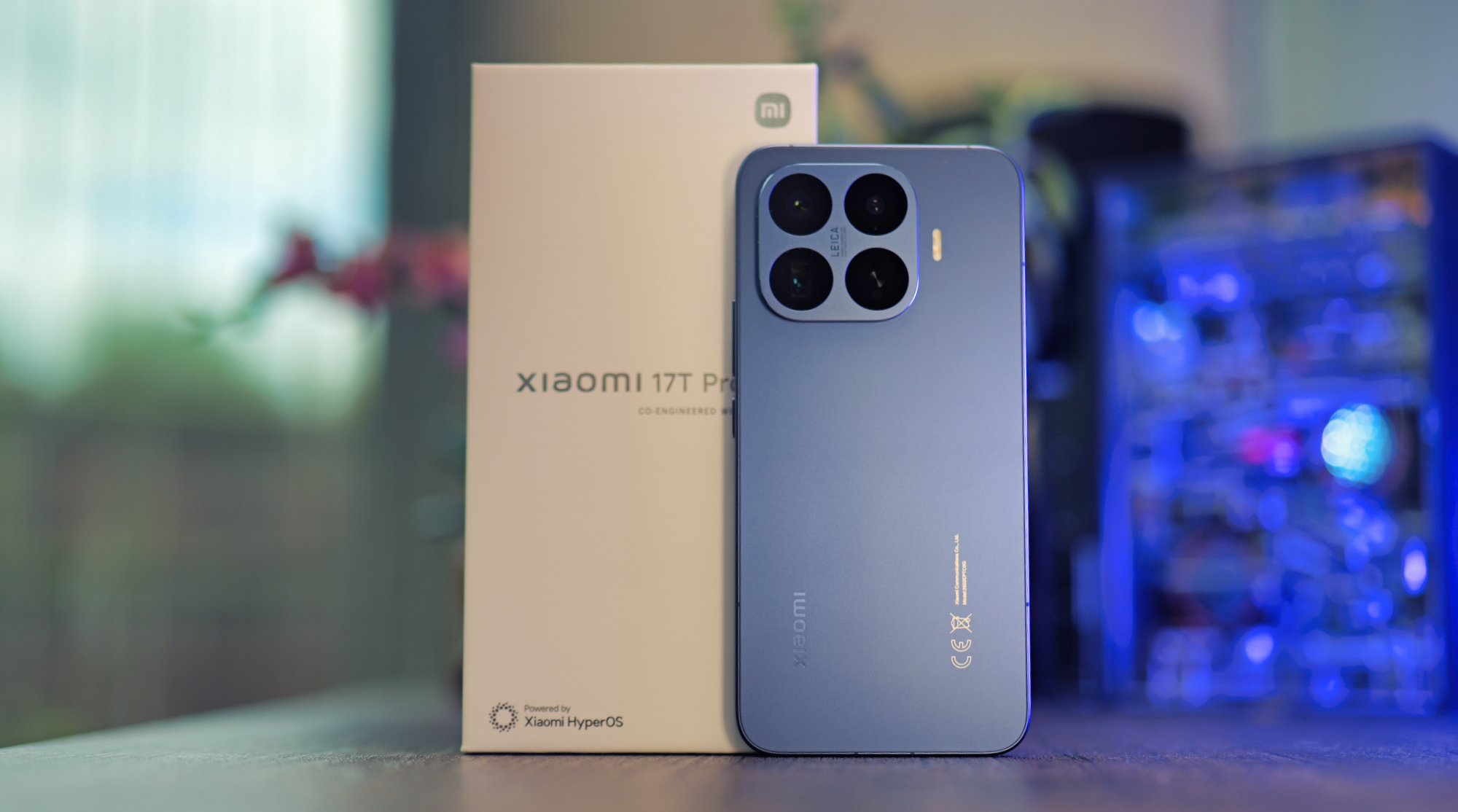
It has only been about seven months since the Xiaomi 15T Pro launched, and already, its successor has landed. The 15T Pro was my favorite better-than-mid-range-but-not-quite-flagship phone of 2025, so I had high hopes for this newer model.

On the surface, though, it would seem that not much has changed. The Xiaomi 17T Pro has a very familiar look, and it shares a lot of specifications with last year's model, too.

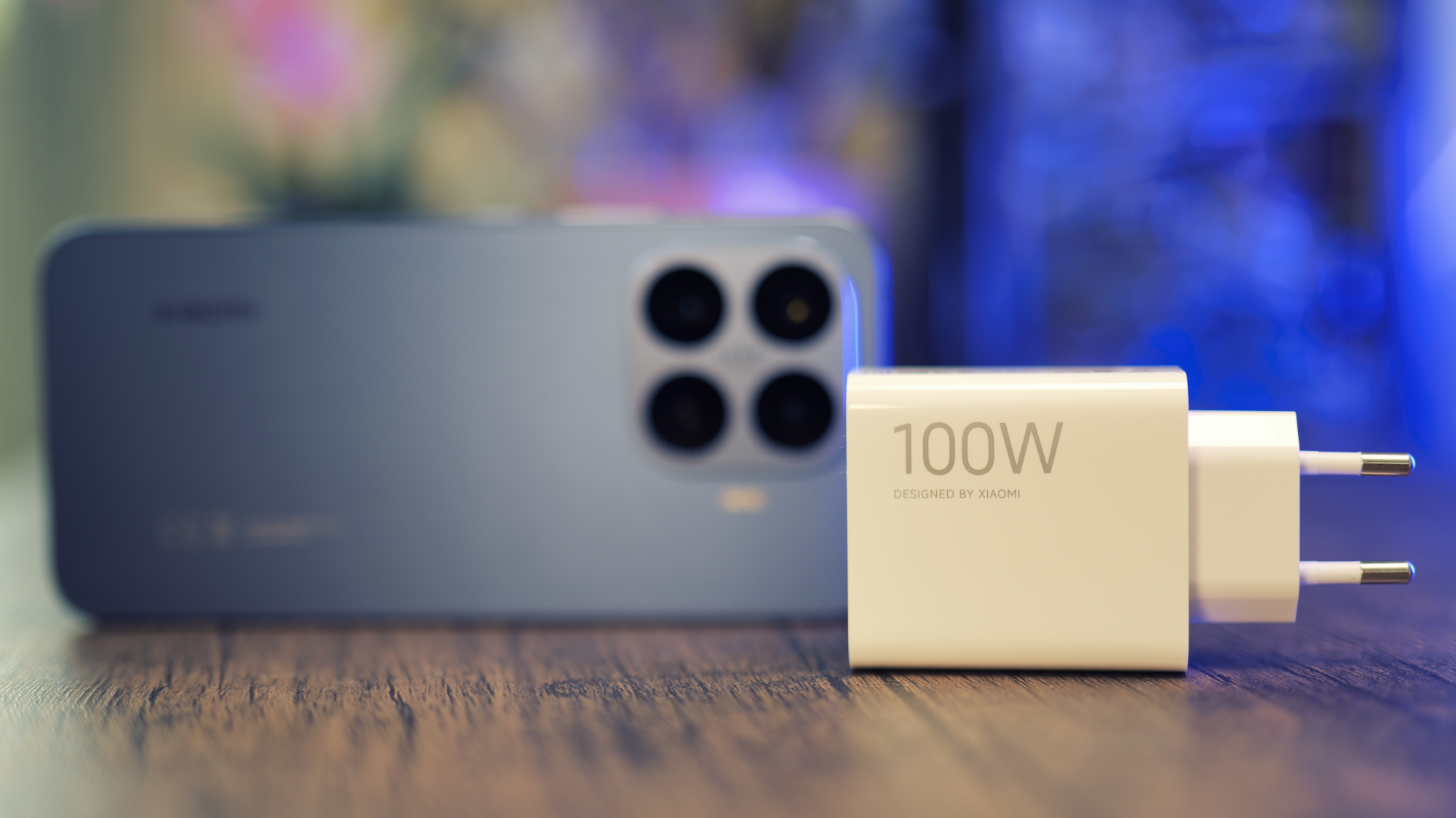
So, what's new? The 17T Pro boasts a significantly larger battery (it's now 7,000mAh, up from 5,500mAh on the 15T Pro), and it charges more quickly (it can be juiced up at 100W with a wire and 50W wirelessly). It also has a newer and faster processor inside, and comes in some lovely new colors.

Otherwise, it's a very familiar phone, with the same screen specs, the same camera hardware, and similar software features to its predecessor. That's not a bad thing; it just means the Xiaomi 17T Pro is not particularly exciting, especially if you already invested in the 15T Pro.

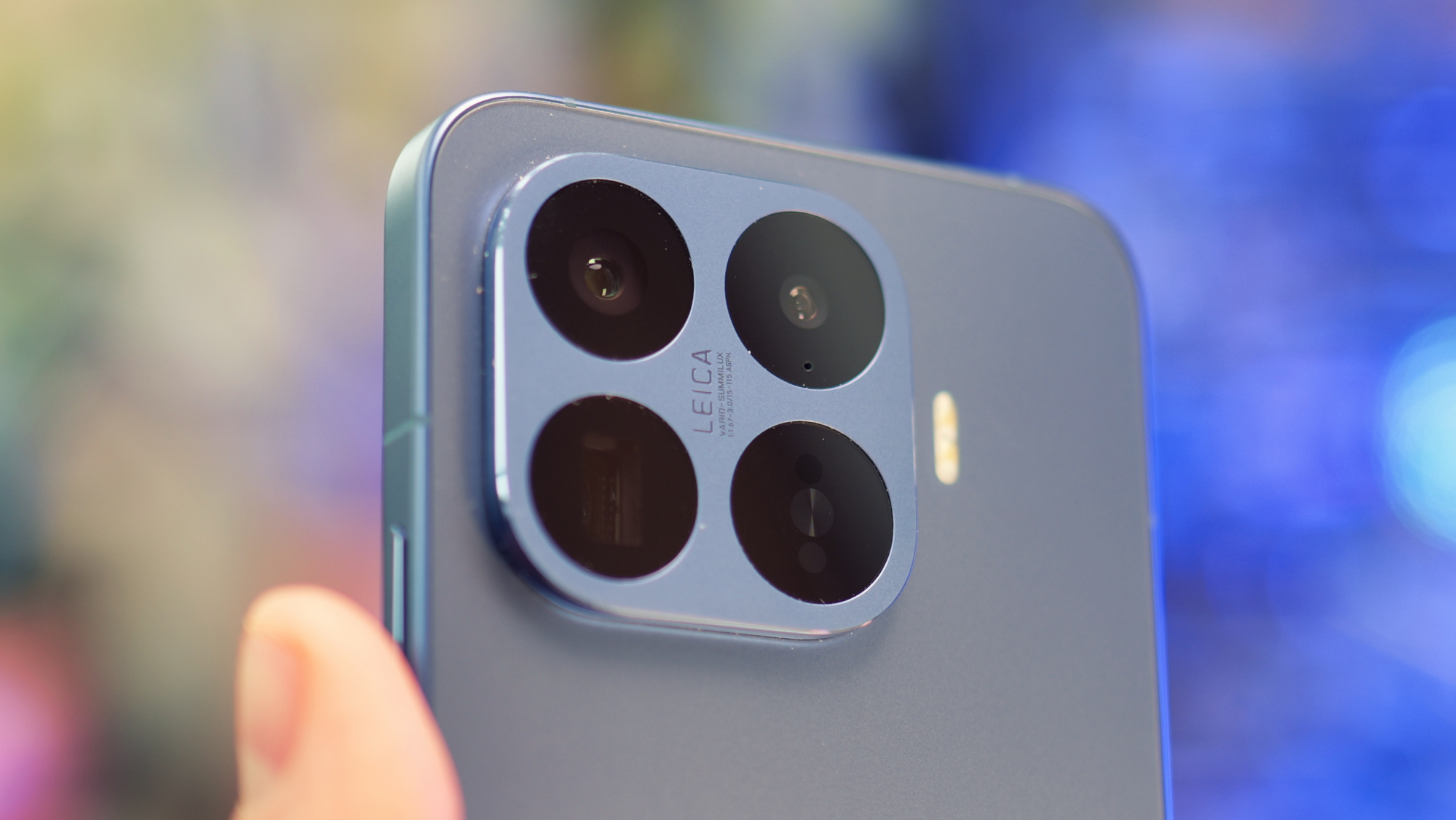
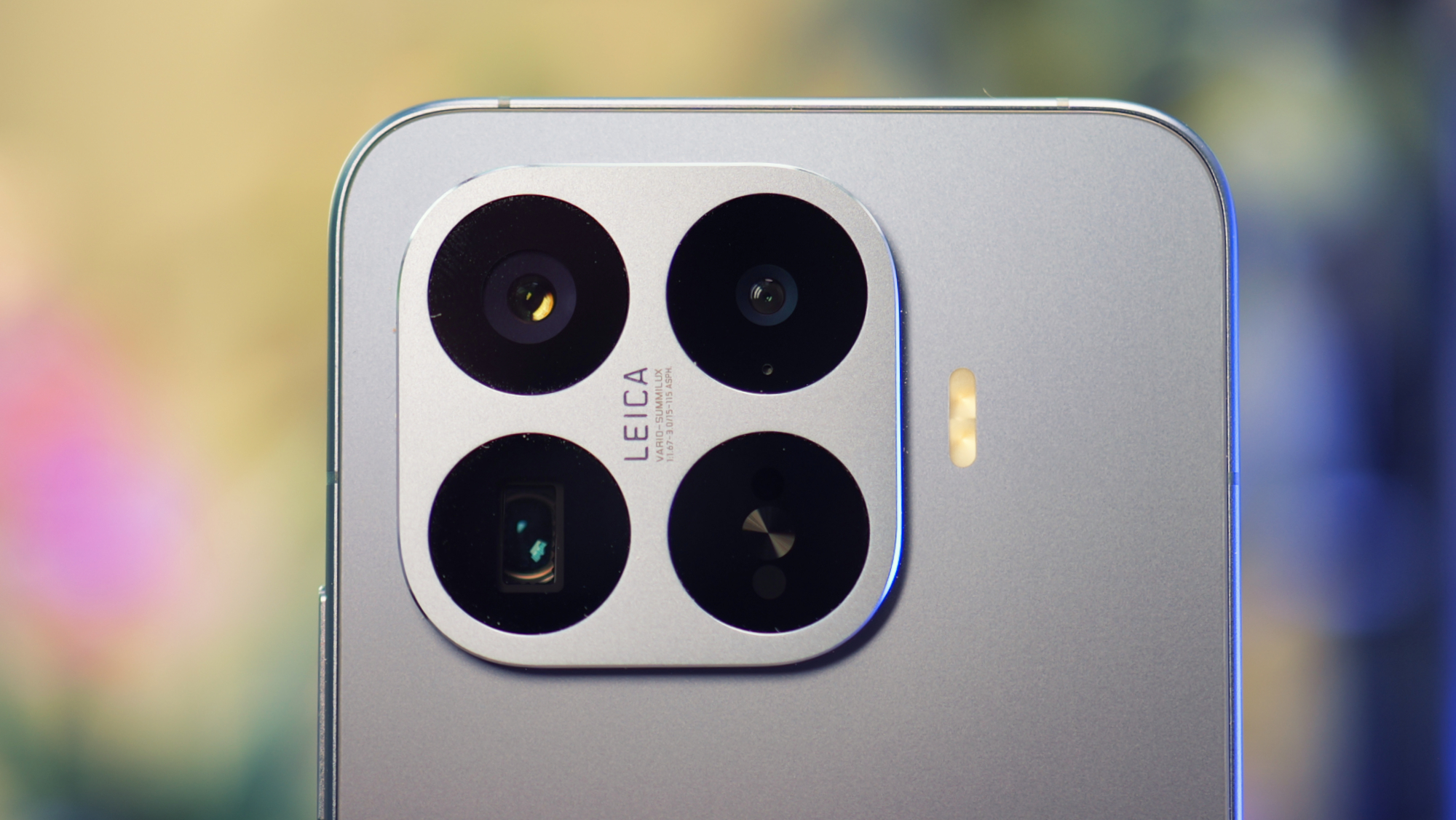
Xiaomi 17T Pro review

(Image credit: Future)

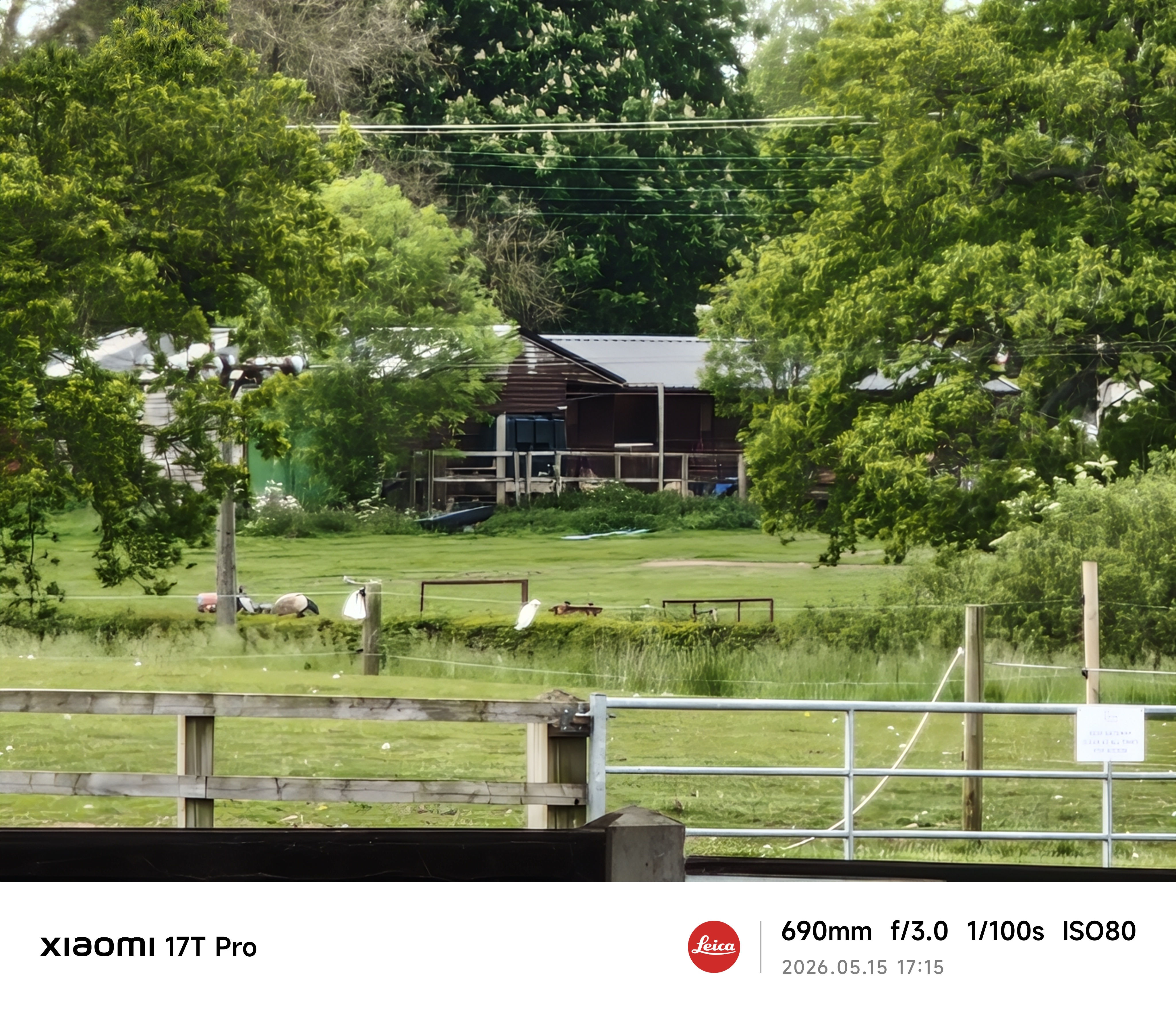
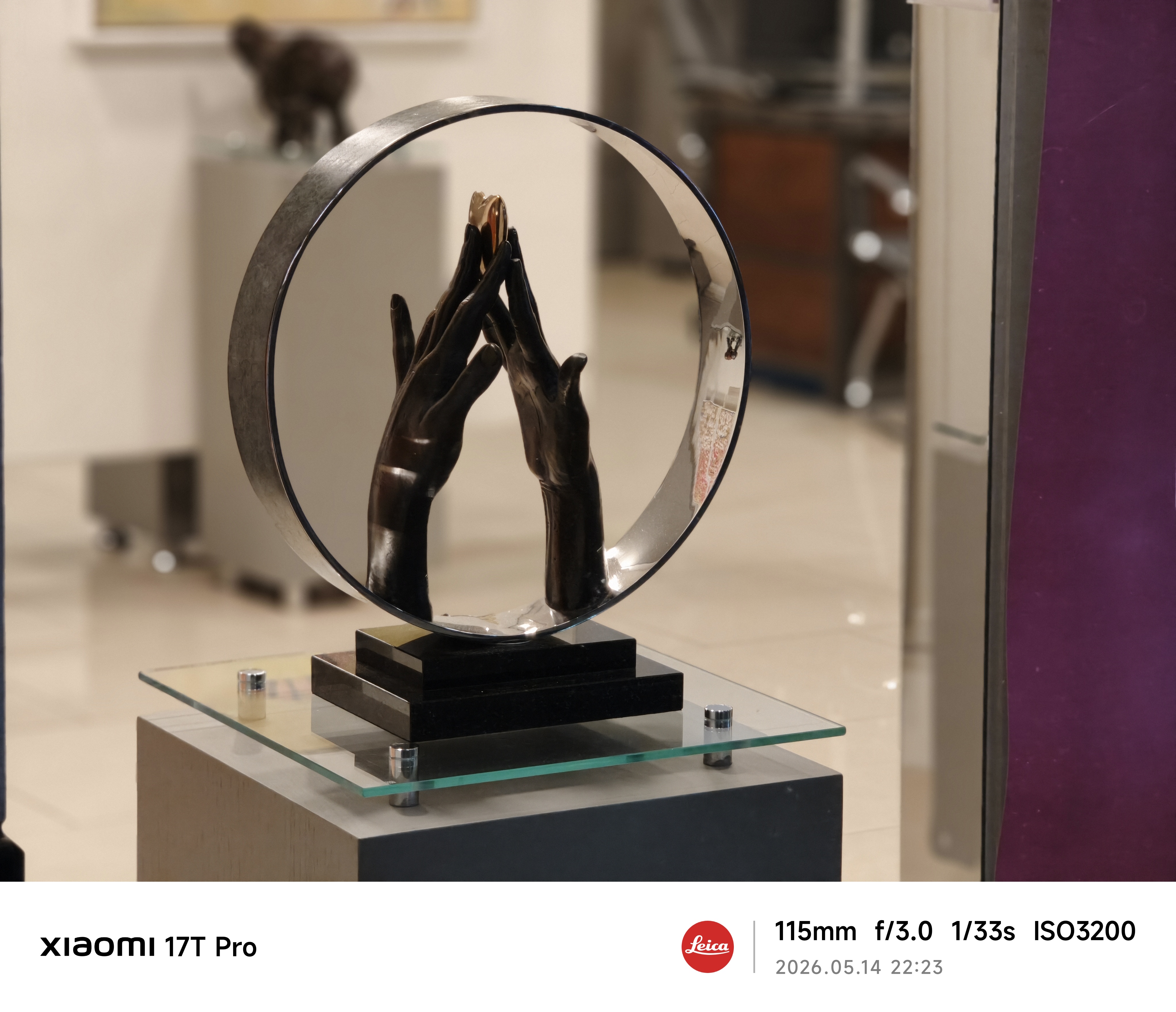
Despite the lack of hardware changes, the camera system still stands out as one of the most accomplished in this price bracket. The Leica-backed color science is as impressive as ever, and there are more pro-level features than you'll find in similarly-priced phones, like the ability to shoot in 4K 60fps with Log.

Just like last year, though, the ultra-wide camera fails to impress. It has a much lower resolution than the other cameras, and it lacks autofocus, which limits its usefulness.

As for the performance, I have no complaints. This 17T Pro has a proper flagship-grade chip inside, and it's excellent for productivity and gaming alike. The experience is enhanced by some strong haptic motors, a lovely screen, and very decent speakers.

The battery tends to last me just under a day and a half on a charge. It's very easy to live with, but with such a high-capacity cell inside, I was expecting more. Perhaps we'll see improvements as updates roll out. On the plus side, it charges very quickly, either wired or wirelessly.

The Xiaomi 17T Pro is very easy to recommend overall. It might not be a revolutionary update, and 15T Pro owners shouldn't rush out to buy one, but this phone still stands out as one of the best in its price range (which, following a price increase, is now firmly at the top of the mid-range spectrum). The cameras are among the best you'll find on any non-flagship phone, the performance is hard to fault, and it looks and feels premium throughout.

Xiaomi 17T Pro: Price and availability

Xiaomi 17T Pro review

(Image credit: Future)
  • 256GB model costs £799
  • 512GB and 1TB versions also available
  • Not available in the US or Australia

The Xiaomi 17T Pro starts at £799 in the UK. That's for the model with 256GB of storage and 12GB of RAM, though 512GB and 1TB variants are also available, costing £849 and £999, respectively. The phone isn't available in the US or Australia at the time of writing.

Frustratingly, those prices represent substantial increases on the Xiaomi 15T Pro, which started at £649 only six months ago. Increases seem to be plaguing all phone manufacturers at the moment — the similarly-specced Honor 600 Pro costs an eye-watering £899.99, which also marks a £200 increase over its predecessor — and a £799 price tag puts the Xiaomi 17T Pro at the sharp end of the mid-range spectrum (it's probably better described as an entry-level flagship).

Thankfully, Xiaomi's T-series phones often come with enticing bundle deals or early discounts, so we're expecting to see the same here, but details haven't surfaced yet.

The 17T Pro also stands out among its similarly priced rivals through its super-sized battery and 5X telephoto camera, which neither the Honor 600 Pro nor Vivo X300 FE match.

  • Value score: 4 / 5

Xiaomi 17T Pro: Specs

Here’s a look at the Xiaomi 17T Pro’s key specs:

Xiaomi 17T Pro

Dimensions:

162.2 x 77.5 x 8.25mm

Weight:

219g

OS:

Hyper OS 3, based on Android 16

Display:

6.9-inch OLED, 144Hz

Resolution:

1280 x 2772 pixels

Chipset:

MediaTek Dimensity 9500

RAM:

12GB

Storage:

256GB / 512GB / 1TB

Battery:

7,000mAh

Rear cameras:

50MP (f/1.7) main, 12MP (f/2.2) ultra-wide, 50MP 5x telephoto (f/3)

Front camera:

32MP (f/2.2)

Xiaomi 17T Pro review: Design

Xiaomi 17T Pro review

(Image credit: Future)
  • Aluminum frame and glass-fibre rear
  • Black, Violet, Deep Blue options
  • IP68 dust and water-resistant

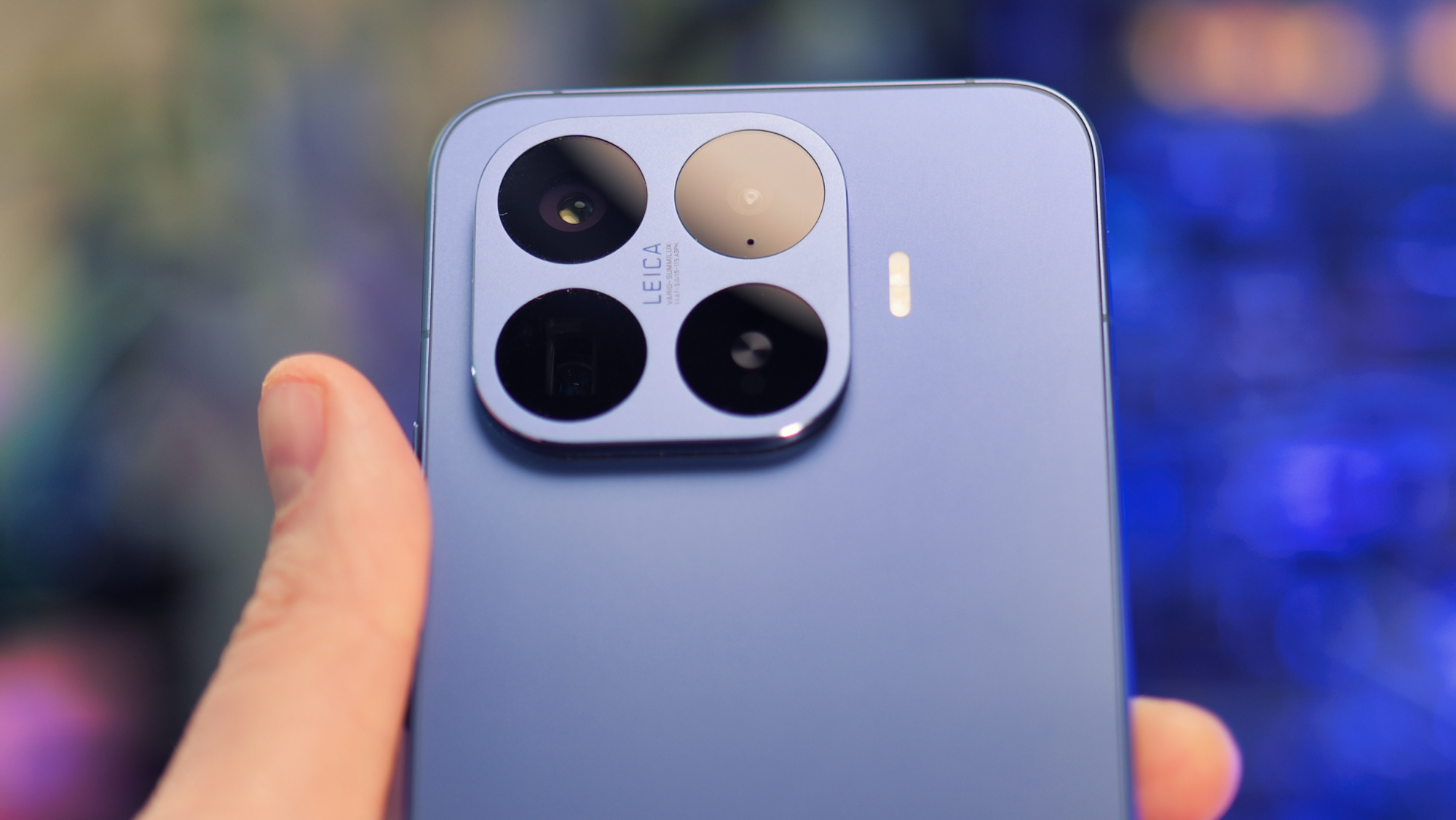
The Xiaomi 17T Pro looks almost identical to last year's 15T Pro. The only notable change with the design is that the bevelled edge around the camera module has been removed. The camera bump appears smaller on the newer model, but in reality, the thickness is about the same.

That said, we do get some new colors to choose from. The 17T Pro is available in Black, Violet, or Deep Blue, and I have the latter in for testing. The colors are a bit livelier this time around, and I'm all for it. The blue model reminds me of the Galaxy Z Fold 7; it's a very similar shade. I loved it on that phone, and I love it here, too.

It's a pretty large phone, around the same size as an iPhone 17 Pro Max, and it feels very premium. The sides are made from aluminum, and the rear looks and feels like glass, but it's actually a reinforced plastic and glass-fibre panel.

The rear doesn't smudge easily, so it's easy to keep it looking nice, and you also get a matte black TPU case included in the box.

It has an IP68 rating for dust and water resistance, matching last year's model, so you needn't worry about using it in the rain or at the beach. The screen is covered with Corning Gorilla Glass, which should do a decent job of warding off scratches, and there's a basic plastic screen protector installed as standard.

  • Design score: 4 / 5

Xiaomi 17T Pro review: Display

Xiaomi 17T Pro review

(Image credit: Future)
  • 6.9-inch 144Hz OLED display
  • 3,840Hz PWM dimming
  • 3,500 nits peak brightness

The Xiaomi 17T Pro has a large, fully flat screen with slim symmetrical bezels on all sides. The specs match the previous model, but the 15T Pro already had a great screen, so that's not a bad thing.

It has a blisteringly fast 144Hz refresh rate, but applications that will actually utilize such speeds are few and far between. Still, it's super smooth, and it'll dynamically switch down to 60 or 30Hz to conserve battery life.

The phone also supports DC dimming. This means you shouldn't see any flicker, even while using low brightness levels. I'm not sensitive to flicker, so I'd be lying if I said I could tell the difference, but it's supposed to be easier on your eyes.

It's also a very bright panel, and I never had trouble seeing it outdoors, even in direct sunlight. Xiaomi says it can output 3,500 nits at peak, but these measurements should always be taken with a grain of salt.

Regardless, the 17T Pro's display is more than bright enough for most people's needs. And perhaps more importantly, it can dim as low as 1 nit, perfect for late-night scrolling sessions

Otherwise, the screen delivers exactly what you'd expect from a high-end OLED panel. The black levels are impeccable, the colors are vivid, and HDR content looks superb on this screen.

  • Display score: 5 / 5

Xiaomi 17T Pro review: Cameras

Xiaomi 17T Pro review

(Image credit: Future)
  • 50MP main (f/1.7)
  • 12MP ultra-wide (f/2.2)
  • 50MP 5x telephoto (f/3)
  • 32MP selfie camera (f/2.45)

Last year, I felt that the Xiaomi 15T Pro had the most impressive cameras in the upper mid-range/sub-flagship category. The new model comes with the exact same set of snappers, so while I would have loved to see some hardware innovation, these lenses were already ahead of the pack.

The main camera has a sizable 1/1.3-inch sensor, roughly matching the main sensor of the iPhone 17 Pro. You also get an impressive 5x telephoto with OIS and the ability to focus from just 30cm away.

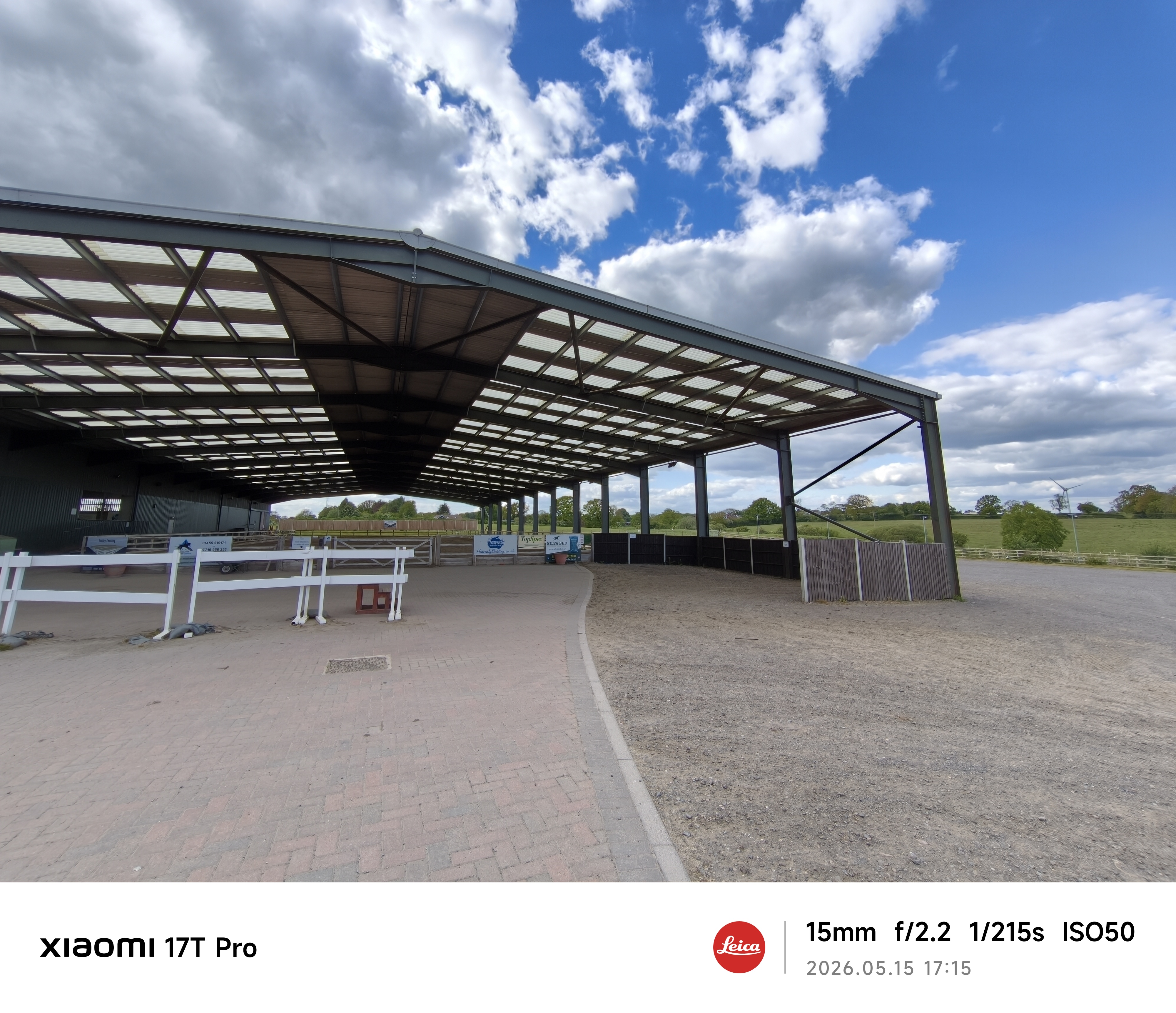
What's less impressive is the ultra-wide camera. It only has a 12MP resolution, a relatively tiny 1/3.06-inch sensor, and it's fixed focus, so you can't use it for close-ups.

The ultra-wide gave me some uninspiring results, and it's pretty useless in low-light conditions, but if you stick to the main and telephoto cameras, you can expect some great shots.

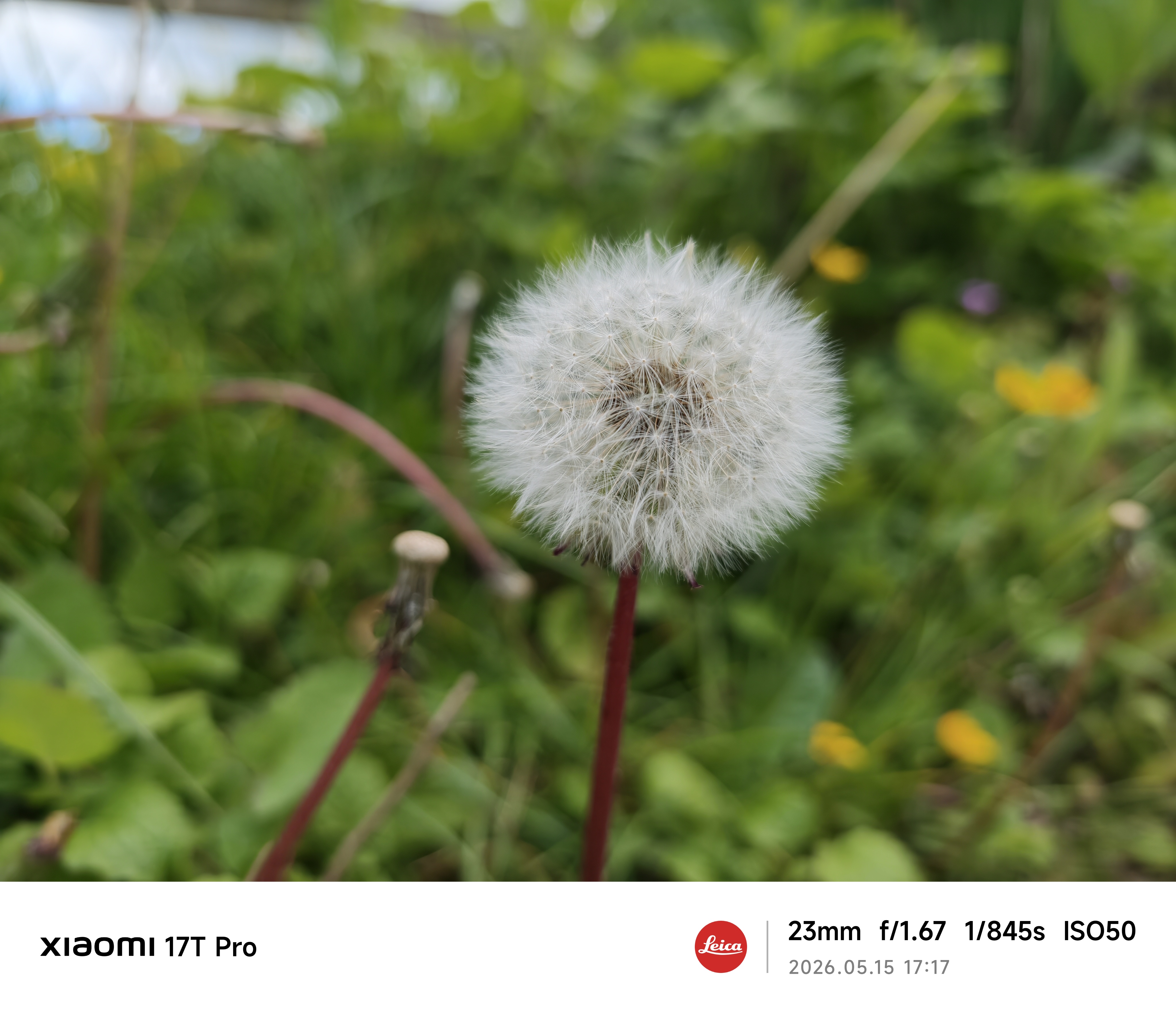
Xiaomi 17T Pro camera sample

(Image credit: Future)

The 17T Pro benefits from Xiaomi's partnership with Leica, just like its flagship phones. This means you get the same excellent picture profiles and lens simulations as the much more costly Xiaomi 17 Ultra.

There's also a new addition to the roster called Leica Live Moment, which is similar to Apple's Live Photos feature, but comes complete with the Leica color science you know and love.

The feature works across all of the rear lenses, and it works in Portrait mode, too. Just like Apple's version, it captures a second or so of video before you press the shutter, and you can extract different frames to use as your photo, or share it as a short looping video. The main difference is that you can use all of the excellent Leica-backed picture styles and some unique watermarks to make your live photos stand out from the crowd.

Around the front, you'll find a 32MP punch-hole selfie camera. Again, this shares the same specs as the previous generation. It provides decent results, but unlike Xiaomi's mainline flagships, this selfie camera doesn't have autofocus — so group shots won't always look as sharp as they could.

Xiaomi 17T Pro camera sample

(Image credit: Future)

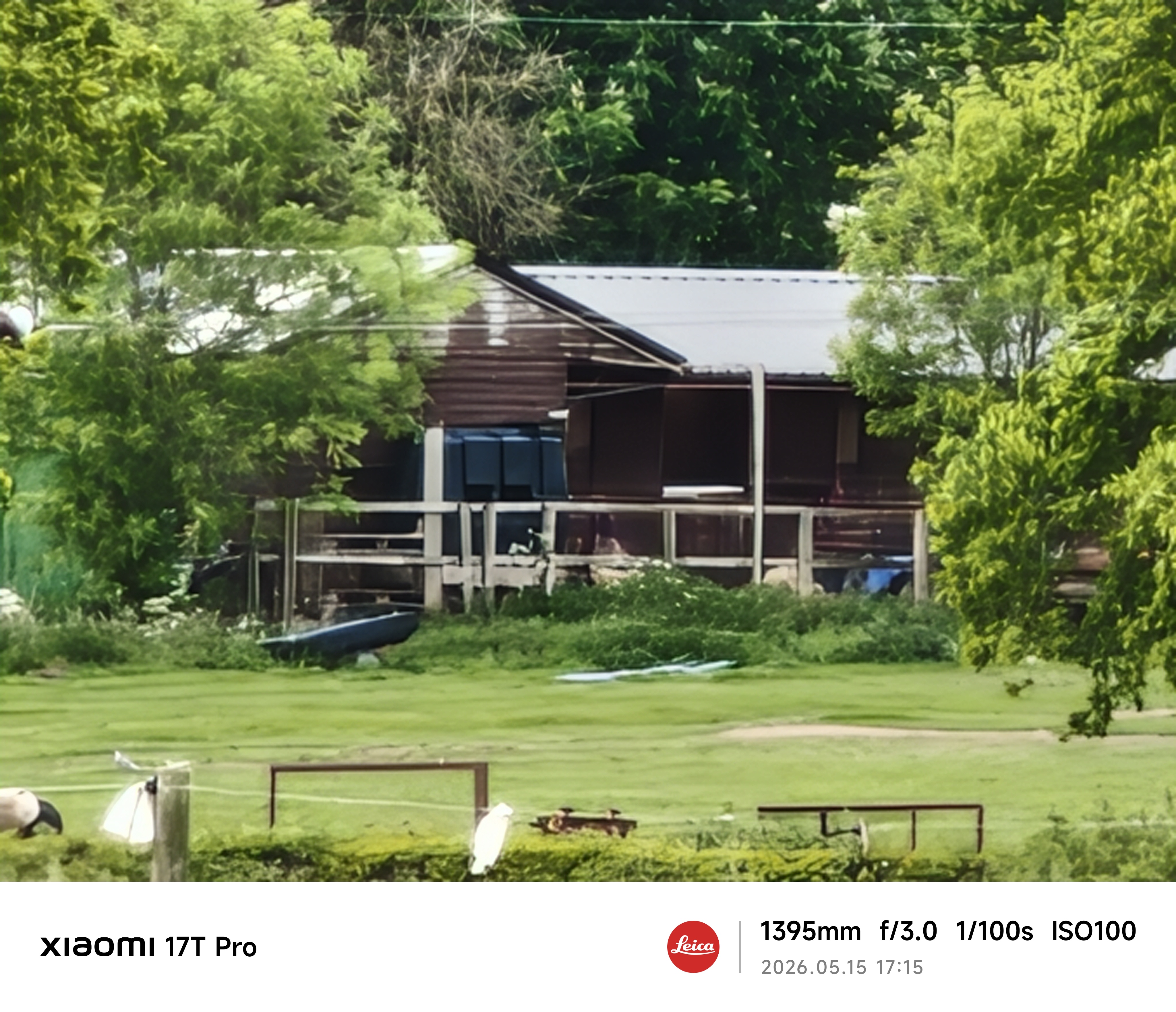
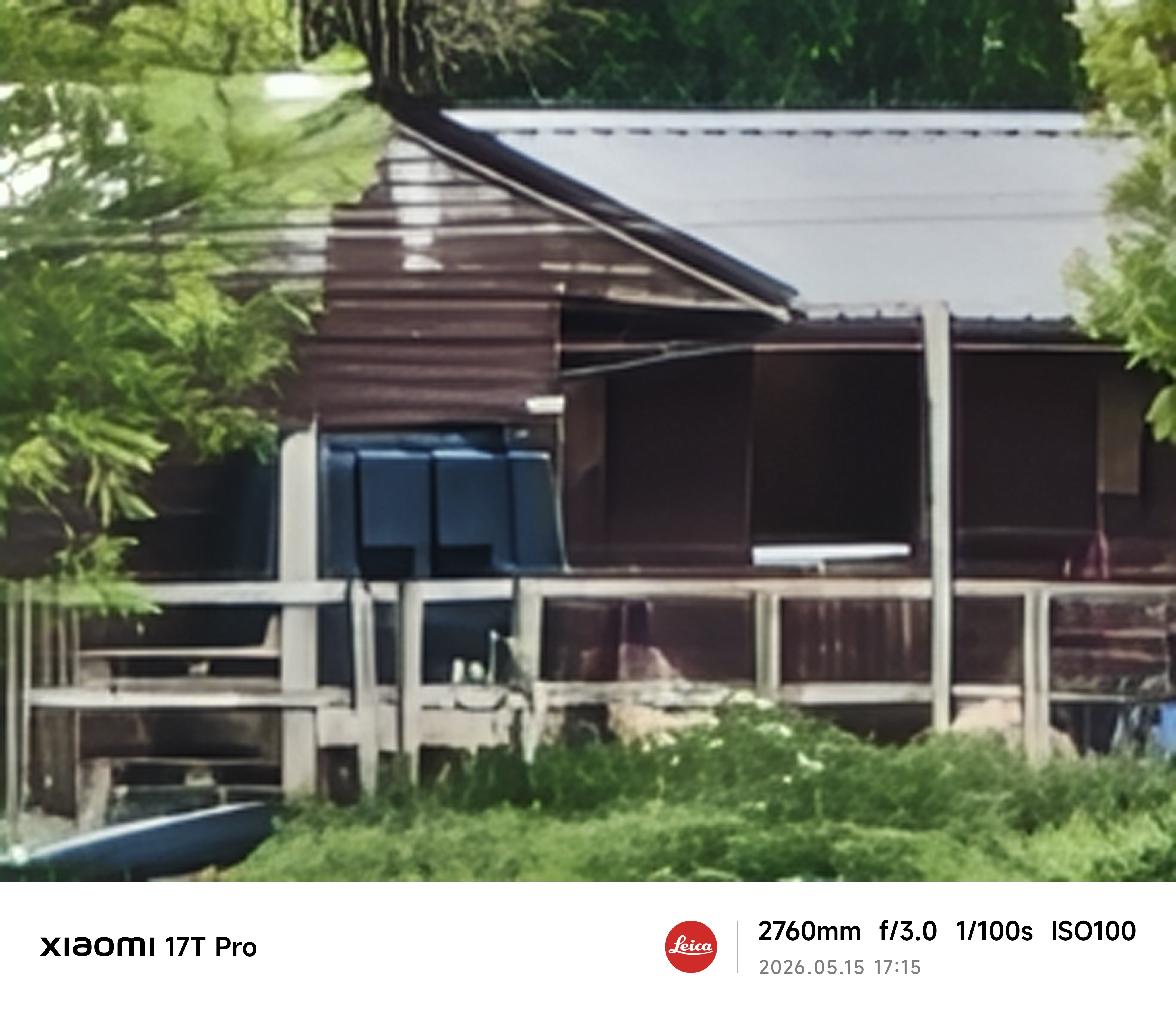
Overall, it's a pretty versatile setup, and the standout is the telephoto. The reach of the 5x lens sets it apart from the competition and provides some lovely compression when used for close-ups. I'd recommend turning off automatic lens switching in the settings if you want to do so, as it has a tendency to jump to the main camera sooner than it needs to.

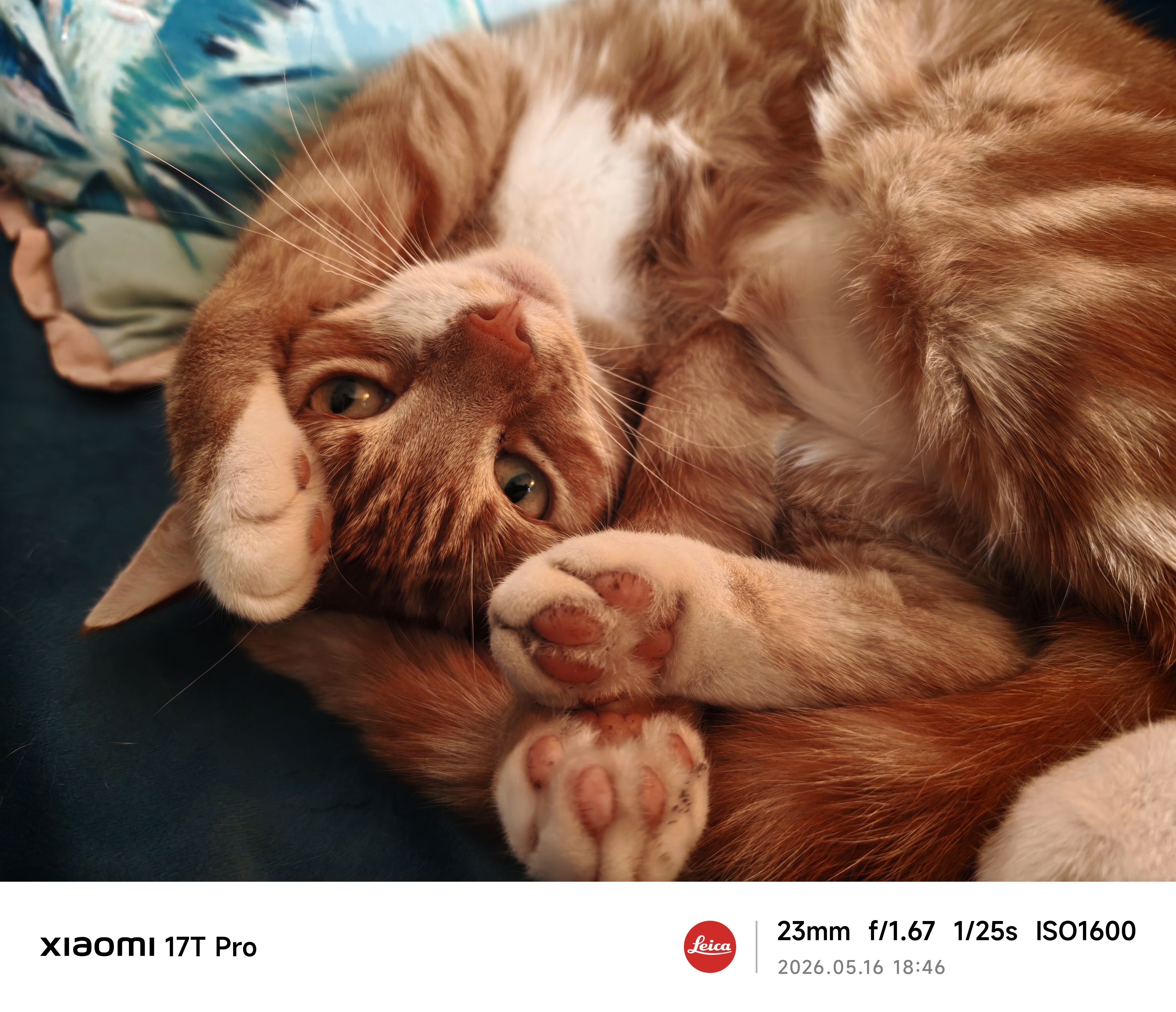
Xiaomi's default image tuning has very appealing color reproduction, and the slightly higher level of contrast makes images pop. If you're not feeling the default flavor, though, that's no issue, as there are loads of styles to choose from, and they can all be customized in Pro mode.

The Xiaomi 17T Pro is equally impressive for video shooting. It supports Xiaomi's excellent Log profile at up to 4K 60fps, and you can even shoot 4K 120fps on the main lens, albeit without much stabilization.

  • Cameras score: 4 / 5

Xiaomi 17 review: Camera samples

Xiaomi 17T Pro camera sample
Future
Xiaomi 17T Pro camera sample
Future
Xiaomi 17T Pro camera sample
Future
Xiaomi 17T Pro camera sample
Future
Xiaomi 17T Pro camera sample
Future
Xiaomi 17T Pro camera sample
Future
Xiaomi 17T Pro camera sample
Future
Xiaomi 17T Pro camera sample
Future
Xiaomi 17T Pro camera sample
Future
Xiaomi 17T Pro camera sample
Future
Xiaomi 17T Pro camera sample
Future
Xiaomi 17T Pro camera sample
Future
Xiaomi 17T Pro camera sample
Future
Xiaomi 17T Pro camera sample
Future
Xiaomi 17T Pro camera sample
Future
Xiaomi 17T Pro camera sample
Future
Xiaomi 17T Pro camera sample
Future
Xiaomi 17T Pro camera sample
Future
Xiaomi 17T Pro camera sample
Future

Xiaomi 17T Pro review: Performance

Xiaomi 17T Pro review
Future
Xiaomi 17T Pro review
Future
  • MediaTek Dimensity 9500 chipset
  • 12GB RAM
  • 512GB / 1TB storage

The Xiaomi 17T Pro is powered by the MediaTek Dimensity 9500 SoC, the same flagship chipset that we've seen in phones like the Oppo Find X9 Pro and Vivo X300 Pro. It comes with 12GB of RAM and either 512GB or 1TB of storage. I have the 512GB version.

Having used the Oppo Find X9 Pro as my main phone for several months, I'm already very familiar with the capabilities of this chip. It's super powerful, and while Qualcomm's latest might have the edge in certain games, the Dimensity 9500 is never going to hold you back.

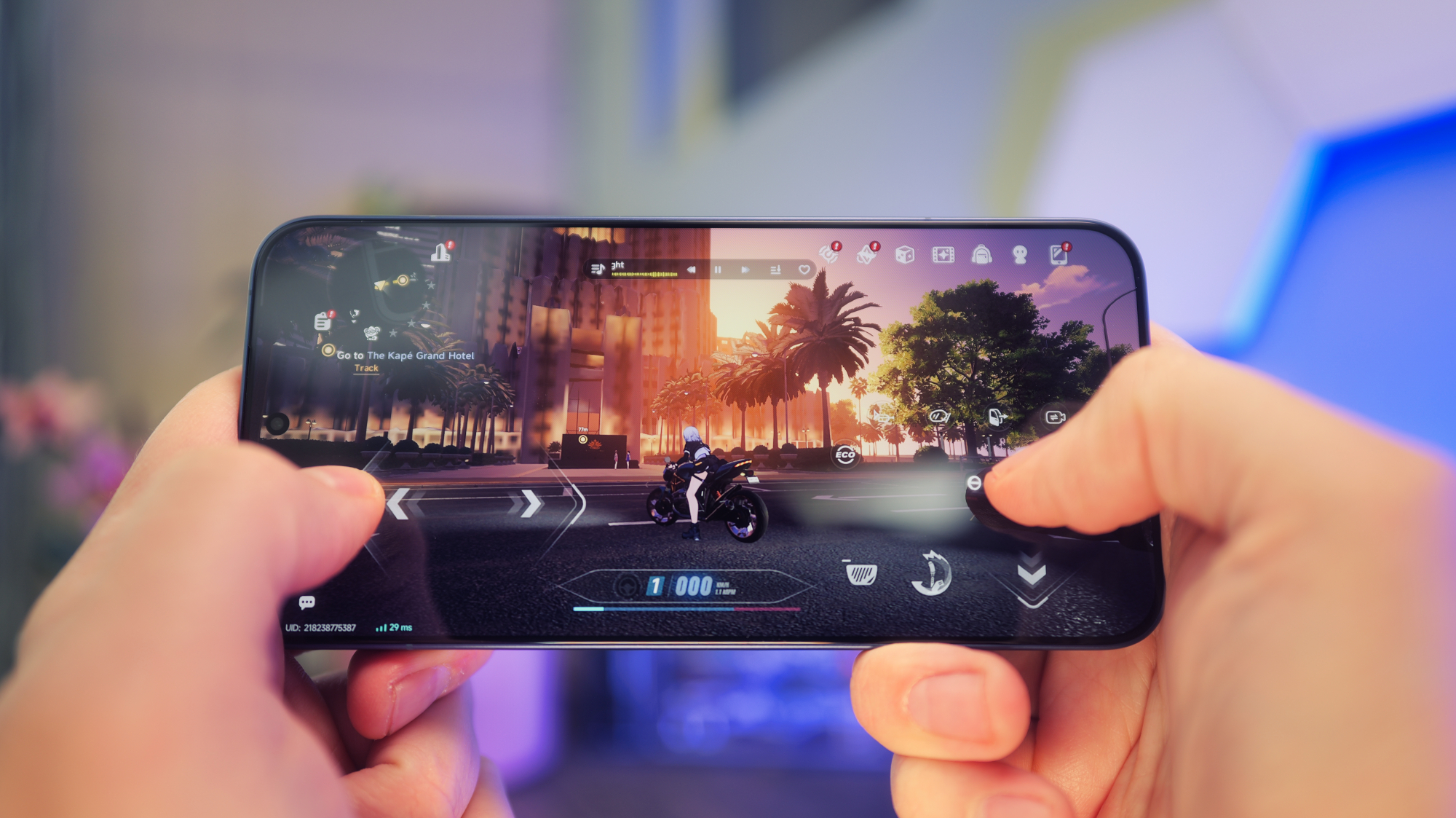
The phone feels speedy, no matter what you ask of it. I've been sinking some hours into Neverness to Everness, the latest graphically demanding gatcha game that makes even the most expensive phones on the market sweat. While it struggled at the highest settings, the Xiaomi 17T Pro had no trouble running it at 60fps on the 'balanced' preset, which still looks stunning.

The frame of the phone gets pretty toasty after a while, but that's just the cooling system doing its job, and I didn't notice much of a performance hit. If you use the included case, it'll keep your fingers comfortable, and of course, it's even better with a clamp-on controller like the GameSir X5 Lite.

It's also worth mentioning the haptics, as they also enhance the gaming experience. The vibration motors in this phone are stronger than most and are able to provide very precise feedback, which is great for typing.

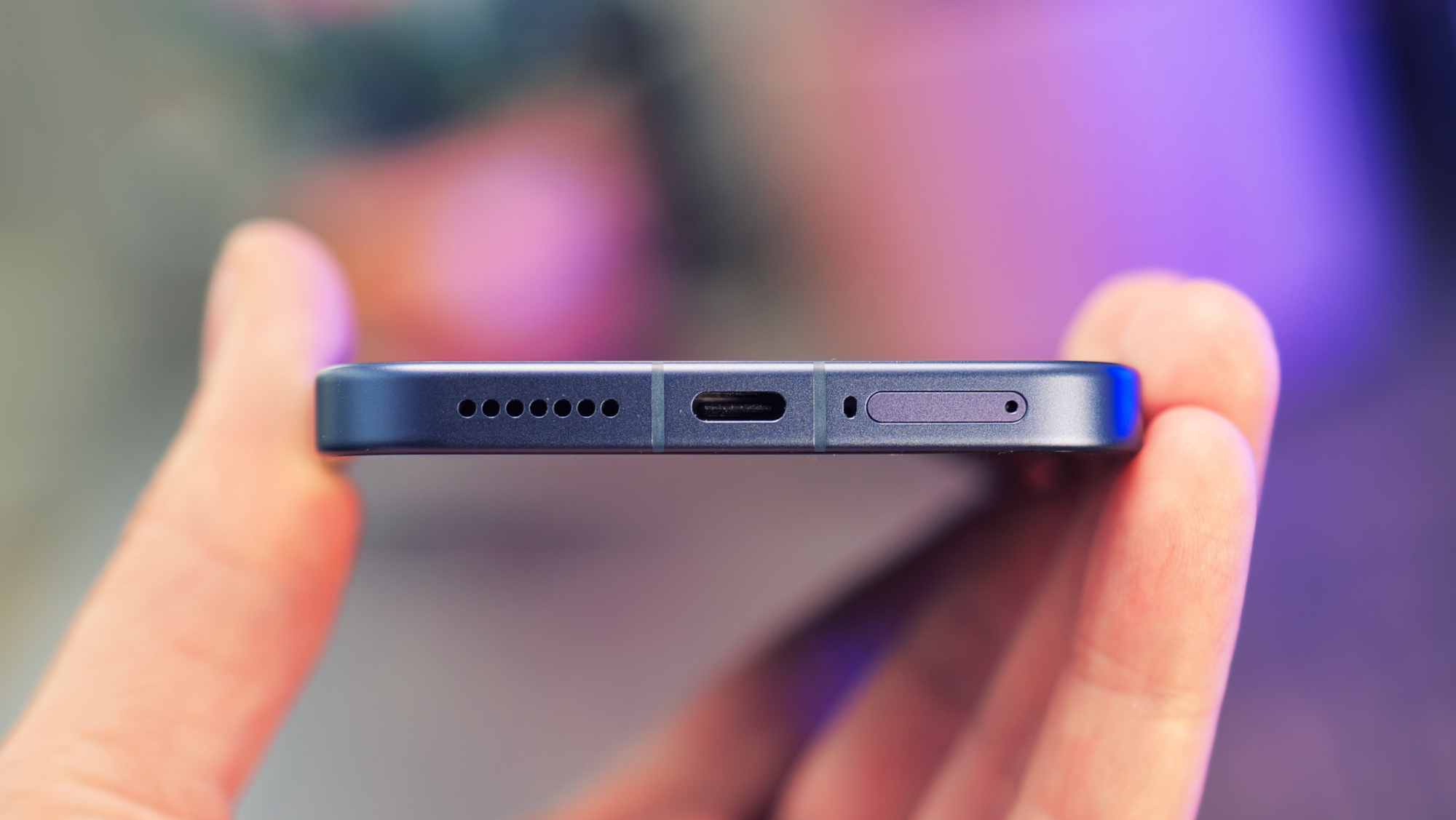
The speakers are also very impressive. They can get pretty loud, produce detailed highs, and have better bass response than most phone speakers in this price range.

  • Performance score: 5 / 5

Xiaomi 17T Pro review: Software

Xiaomi 17T Pro review
Future
Xiaomi 17T Pro review
Future
Xiaomi 17T Pro review
Future
  • Hyper OS 3, based on Android 16
  • iOS-inspired design
  • 5 years of updates, 6 years of security patches

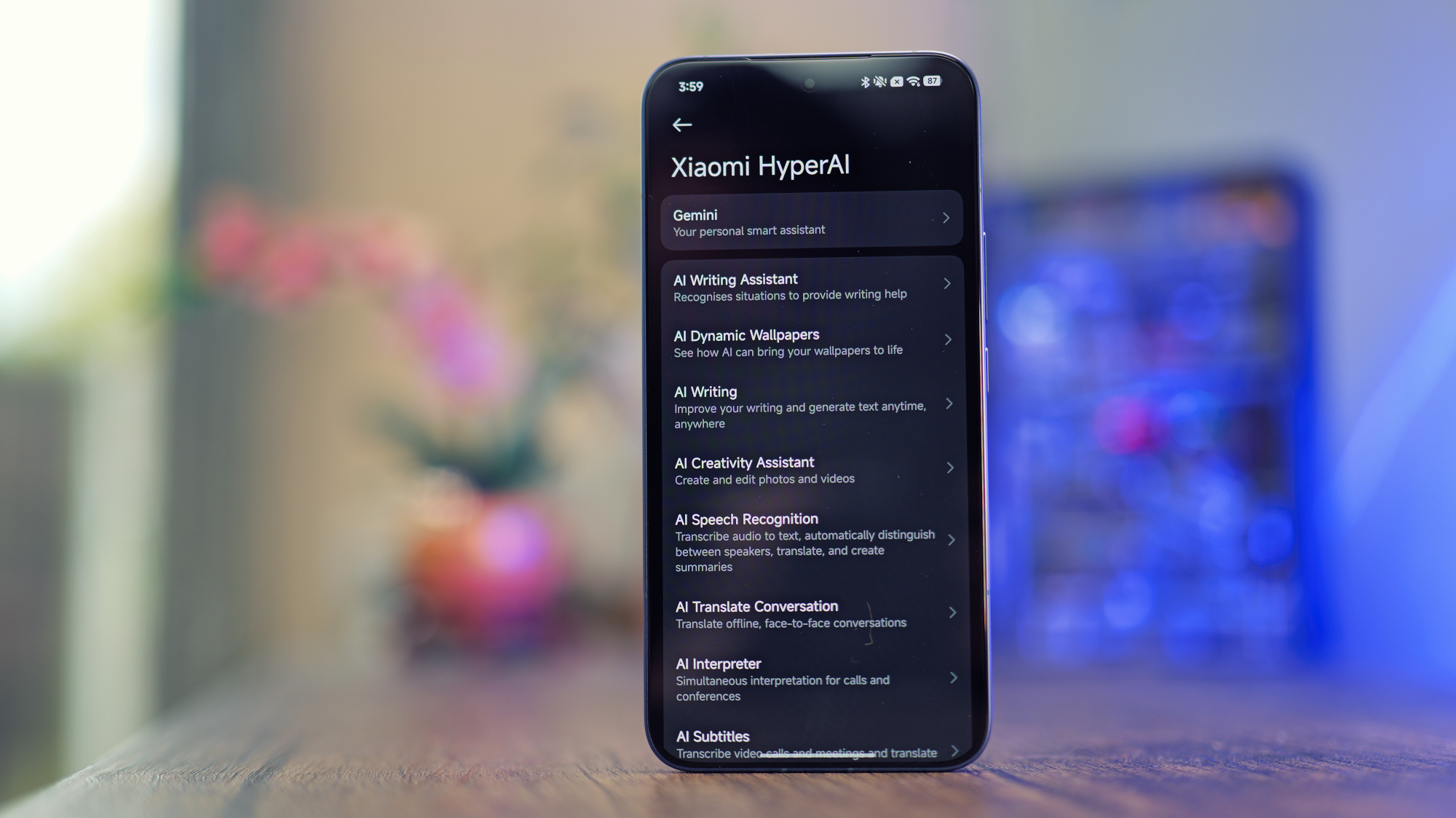
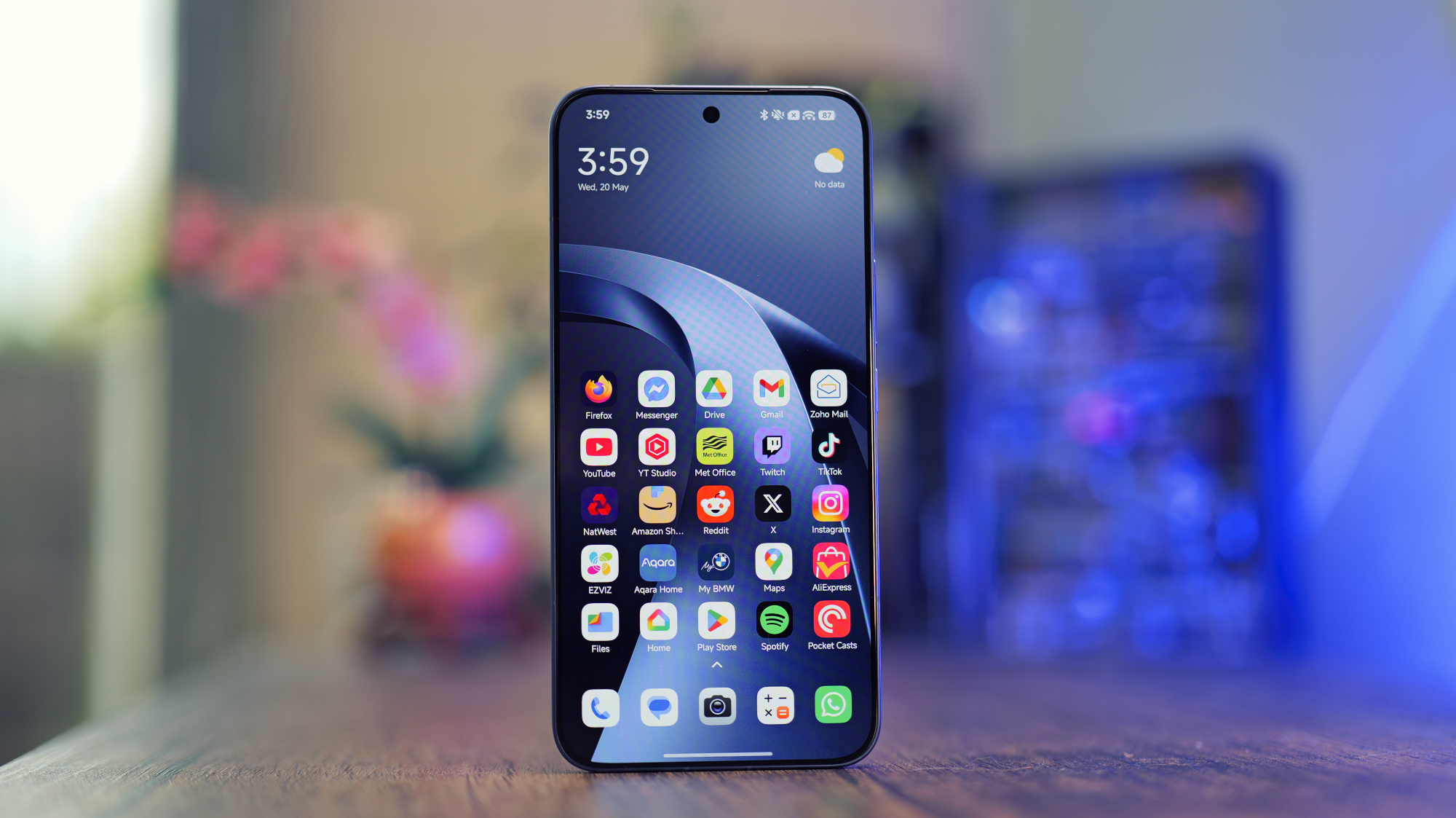
The Xiaomi 17T Pro runs Hyper OS 3, Xiaomi's custom software built on top of Android 16. I haven't noticed any major changes with this release; it's essentially the same experience that I had with Xiaomi's recent flagships and the latest Poco devices.

The difference here, compared to Xiaomi's pricier phones, is that there's a bit of bloatware to clean up when you first set it up. It's nothing major — just a handful of random preinstalled apps — but having to remove them detracts from an otherwise premium experience.

Aside from that, I have no real complaints about the software experience. Hyper OS 3 has been consistently smooth and responsive, and it's easy to customize the look if you don't like the default vibes.

As we've seen with most Chinese Android skins lately, there's some Apple influence to the styling. Xiaomi has its own version of Dynamic Island, and some of the lock screen options look quite iPhone-like, with oversized clocks and depth effects. Most importantly, though, they look good and work well.

Xiaomi is promising five generations of updates and six years of security patches for European customers. It's a decent showing, if slightly behind the commitments offered by Samsung and Google. This means the 17T Pro should get the latest version of Android until at least 2031.

  • Software score: 4 / 5

Xiaomi 17T Pro review: Battery

Xiaomi 17T Pro review

(Image credit: Future)
  • 6,330mAh silicon-carbon battery
  • 100W wired charging
  • 50W wireless charging

The Xiaomi 17T Pro has the largest battery of any Xiaomi phone to date, besting the brand's mainline flagships with a whopping 7,000 mAh capacity.

With such a large cell on board, I had high hopes for the battery life, but the reality was a little underwhelming. Don't get me wrong, the battery life is very good — it always gets me through the day, and usually through a second morning. But I was expecting a little more.

To be fair, though, I received the phone well before the launch, and it was running pre-release software. There's every chance the battery life will improve further as the software becomes more optimized.

In any case, charging the 17T Pro is barely a hassle. It supports up to 100W speeds with a wire, and the powerful wall adapter comes included in the box. I found it was enough to take the phone from fully dead to well over 50% charged in half an hour, which is impressive considering the capacious battery pack.

The wireless charging speeds are impressive, too. The Xiaomi 17T Pro can be juiced up at up to 50W with Xiaomi's official wireless charger, but don't expect those speeds with any old charging pad; everything I had to hand topped out at a measly 15W.

  • Battery score: 4 / 5

Should you buy the Xiaomi 17T Pro?

Attributes

Notes

Rating

Value

The 17T Pro is not an outright bargain, and it costs substantially more than its predecessor. But it's in line with the competition, and boasts more impressive overall specifications.

4 / 5

Design

The Xiaomi 17T Pro looks and feels premium, and it comes in some very fetching colours — but it's basically the same as the old one.

4 / 5

Display

The display is large, crisp, and bright with plenty of eye-care features.

5 / 5

Cameras

The main and telephoto cameras are excellent, but the ultra-wide could be improved.

4 / 5

Performance

The Xiaomi 17T Pro will handle just about anything you can throw at it. The haptics and speakers are very good, too.

5 / 5

Software

Xiaomi's Hyper OS is feature-packed and smooth, but a bit of bloatware sours an otherwise premium experience.

4 / 5

Battery

The 17T Pro packs a massive 7,000mAh battery that charges very quickly. I expected it to last longer, though, so perhaps more software optimization is required.

4 / 5

Buy it if...

You want an excellent camera phone at an affordable price

The Xiaomi 17T Pro has a lot of the same camera features as the brand's more expensive flagship phones, but it won't hurt your wallet quite so much.

You're looking for speedy performance and solid battery life

With a full-fledged flagship SoC and a mammoth 7,000mAh battery on board, the Xiaomi 17T Pro offers a great experience for gaming and productivity.

Don't buy it if...

You already have the Xiaomi 15T Pro

There aren't too many changes from last year's model, so if you already have that phone, this won't feel like much of an upgrade.

You love ultra-wide photos

While the cameras on the Xiaomi 17T Pro are impressive overall, the ultra-wide is much weaker than the other lenses, especially at night.

Xiaomi 17T Pro review: Also consider

The Xiaomi 17T Pro is a great sub-flagship option, but it's important to look at the competition, too. Here are a couple of competitors that are worth checking out.

Honor 600 Pro

Honor's recently released 600 Pro is a similarly priced phone with a focus on cameras and gaming performance. It offers autofocus on the ultra-wide camera, but the Xiaomi has better video capabilities and a nicer telephoto camera.

Read our full Honor 600 Pro review

Vivo X300 FE

Vivo's latest sub-flagship is another strong contender. It also has excellent cameras, but it's not quite as powerful, and the ultra-wide camera is even worse. Limited global availability may limit its appeal, too (note that we haven't yet reviewed this device).

Xiaomi 17T Pro

Honor 600 Pro

Vivo X300 FE

Price:

TBA

£899

€999

Display:

6.83-inch OLED

6.57-inch OLED

6.3-inch OLED

Cameras:

50MP main; 12MP ultra-wide; 50MP telephoto

200MP main; 12MP ultra-wide; 50MP telephoto

50MP main; 8MP ultra-wide; 50MP telephoto

Processor:

MediaTek Dimensity 9500

Snapdragon 8 Elite

Snapdragon 8 Gen 5

Battery:

7,000mAh

6,400mAh

6,500mAh

How I tested the Xiaomi 17

  • Review test period: One week
  • Testing included: Everyday use, including web browsing, social media, photography, video calling, gaming, streaming video, music playback
  • Tools used: Geekbench 6, 3DMark, native Android stats

I popped my SIM into the Xiaomi 17T Pro and used it as my main phone for just over a week. I used it as I would use any other phone, taking lots of photos and videos, gaming, messaging, working, streaming video, and navigating with Google Maps.

I also compared the experience of playing graphically demanding games like Neverness to Everness to my experience on other Android flagships like the Samsung Galaxy S26 Ultra and Oppo Find X9 Ultra. I ran plenty of benchmarks on the phone, including 3DMark and Geekbench, to confirm my performance findings.

I assessed the battery performance based on my real-world usage, and charging times were measured using the included wall adapter and USB-C cable.

First tested May 2026
Oscal Pilot 6 review: A durable design and added extras make this a serious contender in the rugged phone market

OSCAL Pilot 6: 30-second review

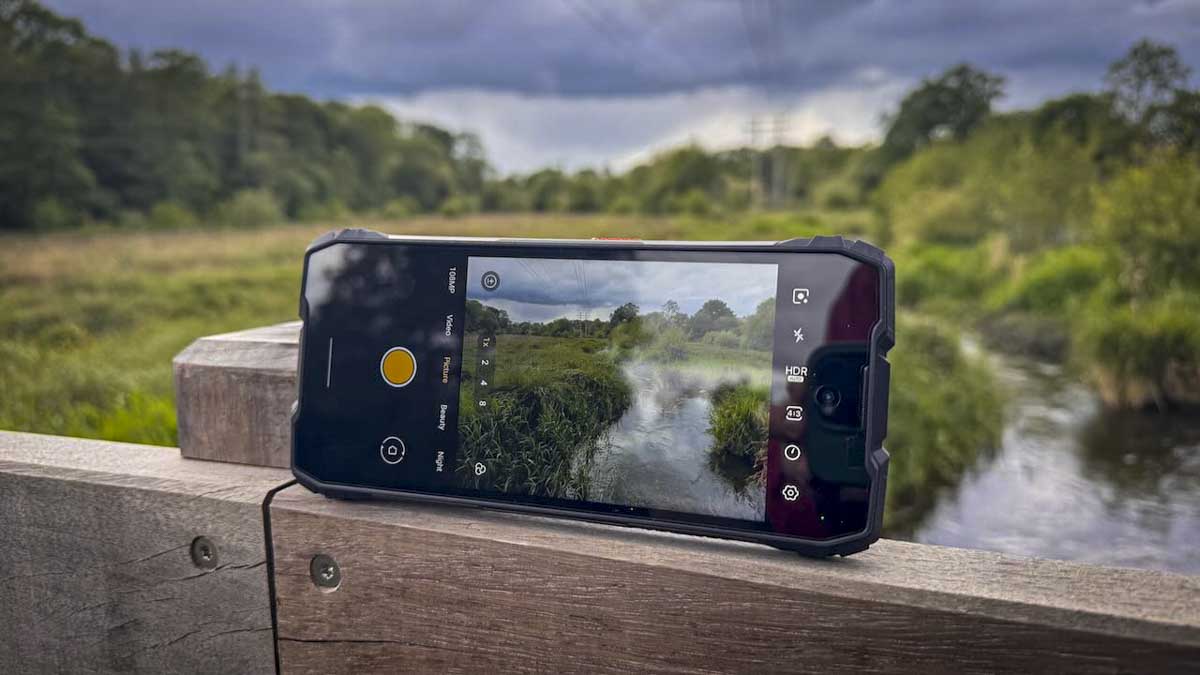
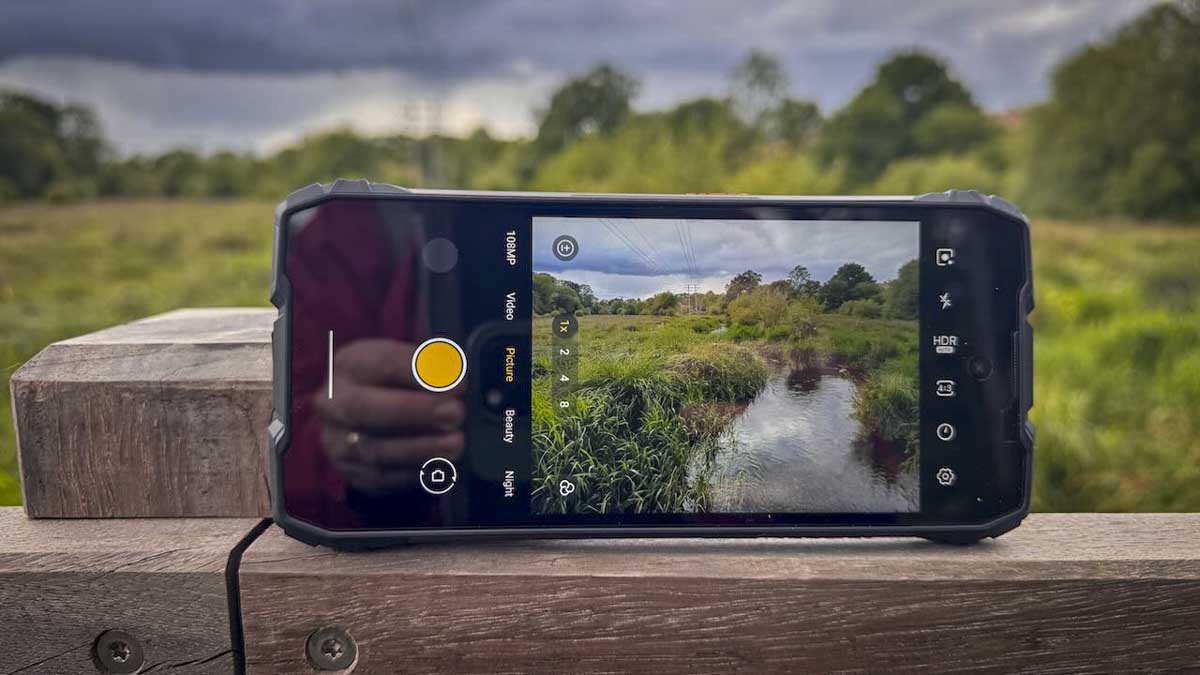
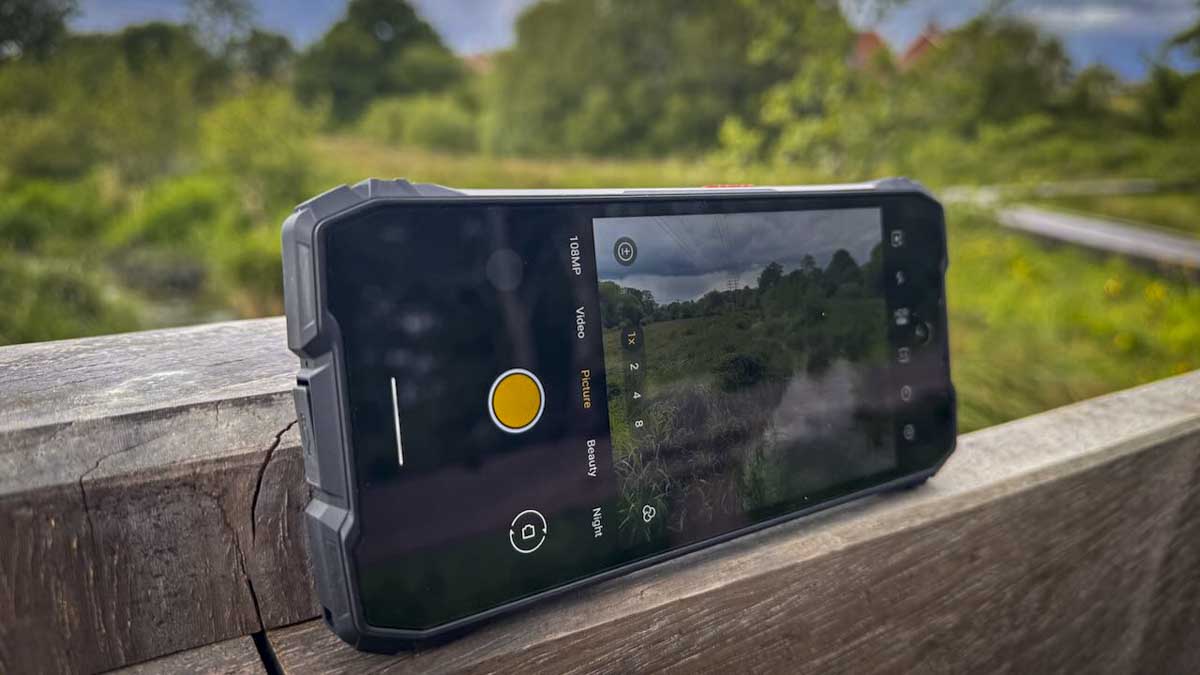
The Oscal Pilot 6 is a rugged Android phone designed for anyone working outdoors who needs a phone that can withstand far more than a standard commercial model. The design is rugged and, whilst it’s slightly larger than a standard phone, its plastic reinforced casing keeps it from being overly large, and it will just about slip into a pocket.

The bulk and weight, while more than your average consumer phone, is still less than many other larger rugged smartphones. Still, it’s nicely designed with the usual industrial design aesthetic synonymous with rugged smartphones. It’s comfortable to hold and use, and when it comes to that ruggedness, it offers IP68/IP69 and MIL-STD-810H ratings, highlighting that it can withstand significant abuse.

What makes this phone stand out against many of the other rugged smartphones is that it not only features all the usual camera specifications, including a massive 108-million-pixel camera, but also a thermal camera, which makes it great for trade, and a large 10,000mAh battery, which ensures that it can last for days in between charging. This battery can also be wirelessly charged at 15W and supports reverse charging for topping up other devices.

When used to navigate productivity apps, the handset's speed is okay, just held back a little by the MediaTek Helio G100, which is really a mid-range CPU, backed again by a mid-range Mali-G57 MC2 GPU. So, whilst it’s usable for updating documents and browsing the internet, it’s not the fastest on the market. What is nice, though, is that it’s all fronted by a 6.78-inch 120Hz screen, which is perfectly viewable in all conditions.

Also, what I really liked was that it has a built-in 98dB speaker that produces relatively decent audio quality. If you’re working on-site and want to listen to music, then this could be the perfect option.

For the consumer market, this phone is a little large for the general user. However, in trade, engineering, and surveying, the features, build quality, and size make it one of the best rugged phones I've tested. It’s just a little bit of a shame that it’s limited to 4G.

OSCAL Pilot 6: Price and availability

  • How much does it cost? £330/$294
  • When is it out? Now
  • Where can you get it? Directly from Oscal or Amazon

At present, the Pilot 6 is available on Blackview's fficial website, with the 12GB/256GB model priced at $558.99 / £319. But keep an eye on the website as the price does change.

  • Value: 4/5

OSCAL Pilot 6

(Image credit: Alastair Jennings)

OSCAL Pilot 6: Specs

CPU: MediaTek Helio G100, octa-core, up to 2.2GHz
Graphics: Mali-G57
RAM: 12GB LPDDR4X, expandable virtually up to 36GB
Storage: 256GB UFS 2.1, microSD/TF expansion up to 2TB
Ports: USB-C
Connectivity: 4G, Wi-Fi 802.11 a/b/g/n/ac, Bluetooth 5.2, NFC, GPS/GLONASS/Galileo/Beidou/QZSS
Audio: 4.5W 98dB Smart-PA BOX speaker, USB-C earphone support
Camera: 108MP Samsung ISOCELL HM6 rear, 50MP Samsung ISOCELL JN1 front, 160×120 thermal camera
Size: 182.8 × 82 × 18.1mm; 410.8g
OS Installed: DokeOS 5.0 based on Android 16
Accessories: Manual, USB cable, SIM ejector pin, and lanyard

OSCAL Pilot 6: Design

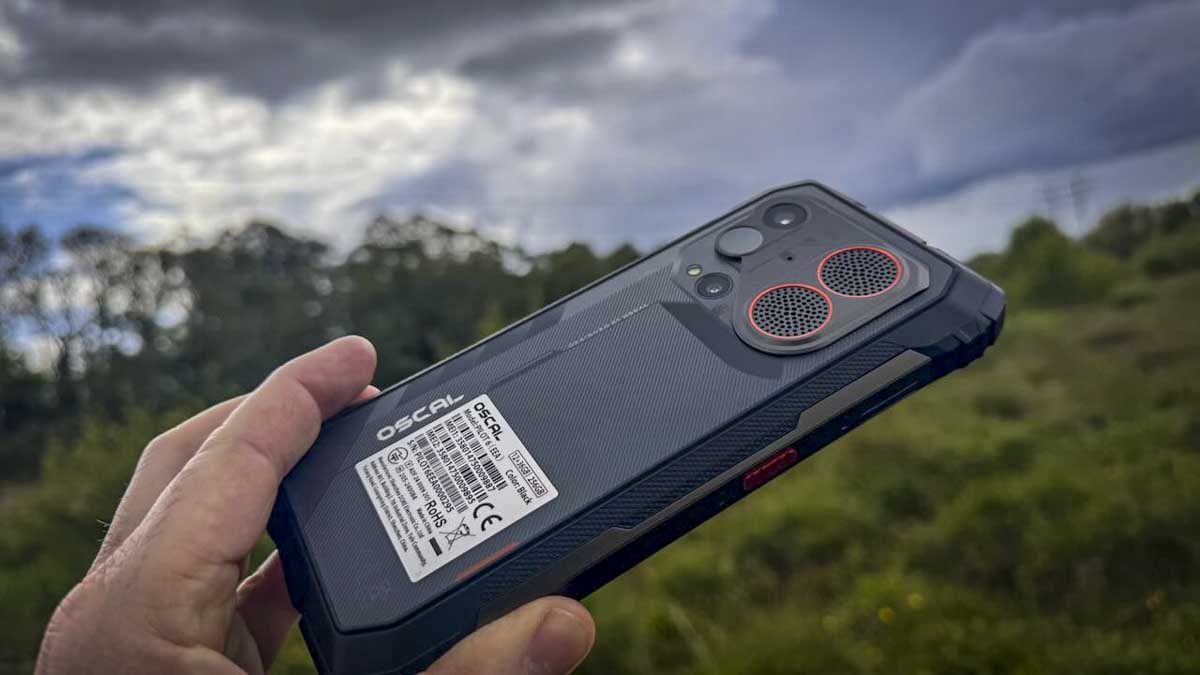
As I removed the Pilot 6 from the packaging, it was unmistakably a rugged smartphone with the usual industrial design, with credentials, including IP68, IP69K, and MIL-STD-810H. Sure enough, in the hand it feels good and rugged, and whilst it’s larger than most consumer-model smartphones, it’s not overly cumbersome, and it’s easy enough to handle, measuring 182.8 x 82 x 18.1mm and weighing 410.8g.

Whilst the size and weight do make it a little bit more bulky than a consumer phone, such as an iPhone, it’s still not overly large. If you do need to put it in a jacket or pocket, then whilst it’s going to be relatively bulky, it’s possible.

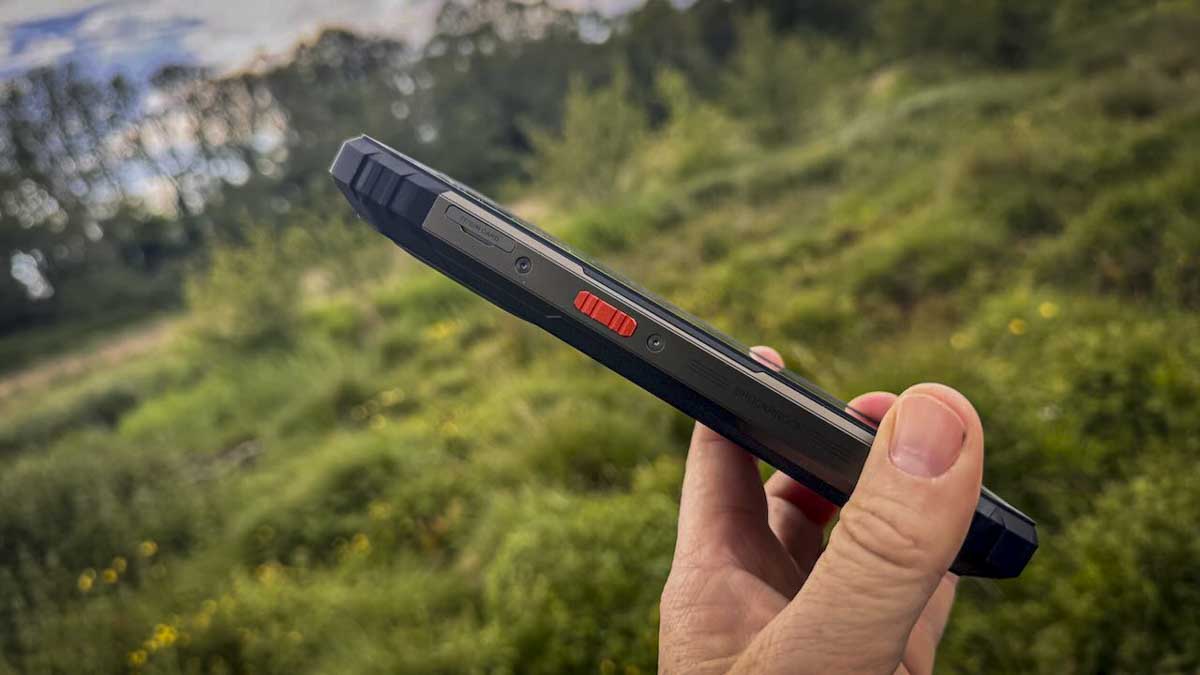
Checking through some of the build materials, it does look like OSCAL has really put a lot of thought into the rugged design, with an Al-Ti alloy used for the metal frame bracket, aluminium side strips, and the shockproof plastic base, which thankfully stays in one piece if dropped from a height.

It’s also good to see that the large 6.78-inch screen uses Gorilla Glass 5, and throughout the test, it withstood being dropped and submerged in water with no damage other than a little grime on the body, which was easily wiped away.

That screen offers a decent brightness of 750 nits, which makes it more than viewable in almost all sunny conditions, and throughout the test, which was conducted in the late spring in the UK, that brightness was made it easy to read documents and website content easily enough.

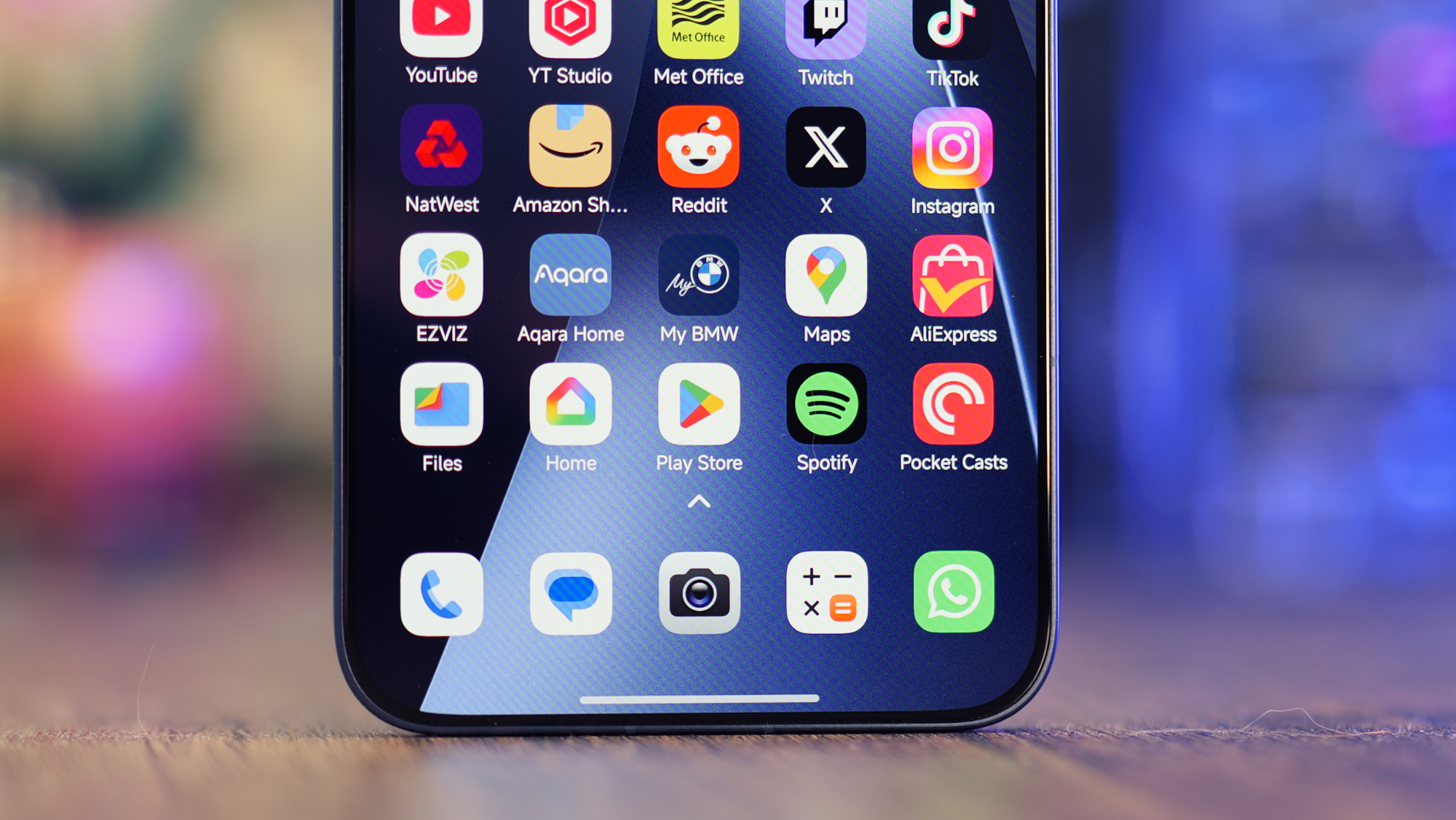
Alongside the impressive 108-million-pixel camera, which is backed by a Samsung sensor, is an infrared camera that enables you to pick up heat signatures, which will be especially of interest to anybody working in trades. This feature, along with the torch that sits at the top of the handset, is activated through dedicated apps that are all pre-installed.

OSCAL Pilot 6

(Image credit: Alastair Jennings)

The torch offers 93 lumens of brightness, and being mounted at the top of the handset rather than the back makes it very easy to use. There’s no ability to focus it, so whilst it’s relatively bright and great for looking into crevices, it isn’t a replacement for a standard flashlight that has a focused beam.

Another feature I liked was the 98dB speaker on the back, which you can see clearly on the phone. This produces very loud audio, which is great for listening to music whilst you’re busy at work.

And ensuring it runs all day, even if you can’t charge up, there’s that huge 10,000mAh battery, which charges relatively quickly but has more than enough capacity to last all day without a charge.

  • Design: 3.5 / 5

OSCAL Pilot 6

(Image credit: Alastair Jennings)

OSCAL Pilot 6: Features

The Oscal Pilot 6 is packed with features, with the main headline being the 160 x 120 thermal imaging camera that can detect heat signatures between -15°C and 550°C. Whilst that resolution might not seem that great, when it comes to detecting everything from wildlife hiding in the bushes if you’re out shooting photographs to detecting where piping and wiring might be if you work in the trade, a thermal camera like this on your smartphone can be a real use.

The camera is activated through the thermal app, with a 25Hz frame rate that provides a relatively smooth live view, and it offers under 50 mK thermal sensitivity alongside measurement and reporting tools, giving you a complete suite in this one relatively small mobile phone.

Alongside the headline thermal camera is a 108-million-pixel HM6 main camera, capable of capturing high-resolution images perfect for surveys and site visits, as well as for video conferencing. There’s a 50-million-pixel Samsung JN1 front camera that also offers decent resolution and frame rate.

The mobile phone is powered by a 10,000 mAh battery. This offers plenty of usage time and features 27W fast charging, 15W wireless charging, and 10W reverse charging, if you need to top up other devices.

Interestingly, another main feature of the smartphone is the 98dB loudspeaker, which is visible on the back of the phone near the camera array, and it is perfectly good for listening to music on-site. As long as you’re not too bothered about high-fidelity music, it is perfectly good, but where it really comes into its own is through speakerphone calls, because that speaker makes it far easier to hear if there’s a group of you on a conference call, utilising the phone.

When it comes to rugged credentials, they’re pretty impressive, with IP68 and IP69K ratings alongside MIL-STD-810H, meaning it can survive being underwater for a period of time, as well as being dropped and generally not looked after quite as carefully as you would with a standard consumer-level mobile phone.

When it comes to connectivity, this phone is only 4G; however, it offers NFC, Wi-Fi 802.11, 2.4 GHz and 5 GHz, and Bluetooth 5.2. When it comes to network connectivity, whilst it doesn’t offer 5G, it is backwards-compatible with 2G and 3G.

Inside, powering the smartphone is a MediaTek octa-core Helio G100, 6nm, up to 2.2GHz, paired with a Mali-G57 MC2 GPU and 12GB of LPDDR4X RAM and 256GB of UFS 2.1 ROM. Whilst built-in storage is quite limited, as is the RAM, the RAM can be expanded to 36GB using virtual RAM, and, with a TF card or microSD card, you can expand the internal storage up to a huge 2TB.

The 6.78-inch 2.4K 120Hz screen is nice and bright, reaching 750 nits. That 1080 x 2460 resolution lets you see plenty on the screen, so if you do need to update documents, it’s a good resolution and brightness for doing so, even out in the field.

Checking through the specifications and features, it is quite obvious that this phone has been designed primarily for field use, by trade and industry, rather than consumer phone users. Still, with those loudspeakers, which, used in moderation, are pretty good, and with that large bright screen and decent resolution, it is equally good for watching back media and taking pictures if needed.

OSCAL Pilot 6

(Image credit: Alastair Jennings)
  • Features: 4.5 / 5

OSCAL Pilot 6: Performance

The first thing you notice about the phone compared to my phone is its size and bulk. Whilst it is smaller than many rugged smartphones, it is considerably bigger than a standard iPhone, in my case, an iPhone 15 Pro. Still, it is of a decent size, and you can easily hold it in one hand with no issue.

It’s not as bulky and cumbersome as some rugged smartphones, so if you do want to use it as an everyday phone, then it is a good size. Likewise, the bulk is bigger than most consumer-level smartphones, mainly due to the reinforcement that makes it rugged, and whilst it will fit into a jacket or trouser pocket, it is worth considering that it is that much larger than a standard phone.

For everyday use, making calls, even though it is restricted to 4G connectivity, that connectivity is good and strong, and actually, in many situations, was better than my iPhone 15 Pro when it came to making standard calls. Obviously, the internet connectivity wasn’t as good, limited by that 4G connection.

As I’ve seen with other Oscal and Blackview phones, the Android 16 version that is used on the device is DokeOS 5.0, a slightly customised version for this brand of phone, and to be honest, it works exceptionally well for most uses, including many bespoke apps that enable a lot of functionality, including the torch, thermal camera and that speaker system. Alongside the custom apps, you also have all the usual Android applications, so if you want to download Google Docs, it's already installed on the phone.

Once you get up and running, accessing my standard applications, say Google Chrome for browsing and Google Docs, the phone can handle that quite well, and that larger-resolution screen enables everything to fit on quite nicely. This is quite an upgrade from many of the standard HD phones on the market, and whilst limited by the 4G connectivity, that screen resolution is absolutely ideal, giving plenty of real estate when you do need to edit or read documents.

The screen speed is also relatively good, although not quite as responsive as some other rugged smartphones. What I did note in the feature set is that there is a glove mode, so if you’re wearing gloves for work and still need to use that connectivity, you can activate it and still use the phone. This can be really handy both at work and when you’re out cycling and need to use a phone without removing your gloves.

In use, switching between apps, the phone was more than able to handle it, and whilst there were a few slight pauses, the overall workflow was quite smooth. What impressed me was the camera app; whilst it isn’t fully featured, it does offer a pro mode and plenty of flexibility over the images you take. That image quality, whilst not high-end, is also pretty good, and if you want to use it for something other than taking detailed site photos, then it’s actually far better than I had anticipated.

On the phone, there are a variety of apps, including AI Chat, AI Video, AI Photos and AI Music. All of these are pre-installed but require you to sign up for relatively expensive subscription plans. Likewise, some of the other applications that are pre-installed offer wallpaper options, but there’s advertising always integrated that wants to take you over to Temu, and there were several occasions when, for no reason whatsoever, an advert for a game would suddenly pop up on the screen, which I found incredibly annoying.

As the initial review went on, I actually went through and deleted a huge volume of the pre-installed apps, just because I kept getting notifications about products and Temu, or about games I didn't want to play when I was least expecting them.

One of the app options that was quite good was AI Photo, which lets you use a bit for free before you need to pay. You can enhance several pictures for free before any cost is involved, and I would’ve preferred a non-AI app pre-installed that let me play around with some images, rather than almost every single option on this phone trying to get me into some other subscription model.

Once I had settled all the apps on the phone and gone through and deleted a lot of them, the phone itself was actually pretty good, very much aimed at the mid-range, with a Helio G100 being perfectly good for all of the standard Android apps, navigation, messaging, watching media and quite a lot of other work apps, even able to download CapCut and utilise that to edit short video clips without any issue.

I also really like the headline features. The thermal imaging camera is really good and easy to use, and whilst the resolution is pretty low, with all the different colour overlays that you can use, it’s really good for spotting animals and creatures hiding in the bushes, and if you do want to detect pipes and electronics that are hidden behind walls and plaster, then it’s perfectly possible to do that as well. More of a guide than anything else, but it’s nice to have that feature built into the phone.

The small torch on the top of the phone was also good. Whilst it isn’t focused, the brightness is sufficient to be able to look inside cavities or the back of cupboards to discover things in the same way that you would with a standard flashlight. It’s a bit of a shame that it’s not focusable, but the brightness is there and is pretty decent.

The battery life is also superb, and it’s only after this first week of testing that I realised I still hadn’t charged the phone and just how good having such a large battery is. Essentially, you just keep the phone in your bag on standby, and you know that it’s going to be there, ready to go when you need it.

Overall, as a business phone, the Pilot 6 is a great option. It is slightly larger than a consumer-level phone, with a thermal camera, a high-resolution main camera, and that torch, and it all comes together with the ability to make calls, making it a useful addition for anyone working out in the field.

  • Performance: 3.5 / 5

OSCAL Pilot 6

(Image credit: Alastair Jennings)

OSCAL Pilot 6: Final verdict

OSCAL Pilot 6

(Image credit: Alastair Jennings)

The Oscal Pilot 6 is a great smartphone option for anyone working in industry or trade. The thermal camera and high-resolution main camera let you detect piping, wiring, and other heat-related objects that other cameras can’t, and, as it’s built into a smartphone, it is a good, quick indicator for on-site visits.

Backing up the thermal camera is a very decent 108-million-pixel main camera, which is good for taking detailed site images that are first-rate in tone and, compared with some other high-resolution cameras, maintain quality. I was just impressed with the overall tone, detail and clarity this small camera was able to produce.

The torch is a nice addition, but it’s not the best smartphone torch I’ve seen. The fact that it is mounted at the top of the smartphone does make it a little more useful and versatile, but with no ability to focus and, to be honest, limited brightness, it’s great for looking in cupboards and other things that are close. But if you’re thinking of using it as a flashlight, then its power just isn’t quite up to it.

As a slightly left-field feature, the speakers are actually pretty decent. If you’re on a conference call with people on site, this phone is well-suited to that use, and you can hear things above the ambient sounds of a building site, which could be exceptionally useful.

But then you come onto some of the downsides of this phone, and primarily that is the fact that many of the apps require a subscription or take you to some advertising randomly when you least expect it, and after a day of testing, I decided to sit down and delete all of the apps on the phone that would automatically take me elsewhere.

Once the OS was cleaned, it’s a relatively decent system, and DokeOS, as ever, is nice and stable and proved fast enough, even with a 4G network connection.

The CPU and GPU are mid-range. Whilst they’re good for productivity, they’re not ideal for multimedia editing or gaming. Still, if you want to do a bit of light gaming or multimedia editing, to be honest, most phones are powerful enough these days.

By the end of the test, it was clear that if you’re working in the trade or industry and looking for a rugged, thermal-cameras smartphone, this is a great option. If you’re into outdoor activities, then whilst this is a good mid-range phone, it probably won’t fully meet your needs. Whilst that camera is good, there are better options out there.

Should I buy the OSCAL Pilot 6?

Value

Great value for a phone, with high-resolution and thermal cameras in one relatively compact unit.

4/5

Design

Usual tough, rugged design with industrial aesthetics that enable this phone to stand up to more than most. 

3.5/5

Features

A very decent set of features for a smartphone, with the added interest of that thermal camera.

4/5

Performance

Very capable mid-range smartphone, just limited by 4G connectivity and slightly intrusive apps.

3.5/5

Overall

With the apps cleaned, this is a decent rugged smartphone that can withstand more than most and offers decent performance.

4/5

Buy it if...

Need thermal vision
If you need a phone with a built-in thermal imaging camera, this is a great option, backed by a high-resolution main camera for detailed site images.

Work away often
That 10,000mAh battery just kept going, needing just one charge per week despite heavy testing, making it good not only for trade but also for camping or as a backup phone for emergencies.

Don't buy it if...

Want slim comfort
While a smartphone might be appealing, at just over 400g and considerably larger than a consumer-level model, it can be more cumbersome to carry daily.

Need 5G speeds
It’s surprising that there are still phones without 5G connectivity, but for its use, 4G is more than adequate. If you do need a faster connection, 5G rugged smartphones are available.

For more durable devices, we've tested the best rugged tablets and the best rugged laptops.

Wednesday, May 27, 2026

I tested the flagship Samsung HW-Q990H Dolby Atmos soundbar, and while it sticks to the formula of its predecessors, it still sets the bar for soundbars in 2026

Samsung HW-Q990H review: Two minute review

The Samsung HW-Q990H continues the high standard set by its predecessors, which are reliably among the best soundbars on the market, delivering a full, multi-box Dolby Atmos experience for one of the most competitive prices around. While it doesn’t offer that many changes from its predecessor, it’s still a fantastic system.

An 11.1.4 channel soundbar system, the Q990H is packed with superb sound-enhancing features such as SpaceFit Sound Pro and Q-Symphony, which add more layers to its already excellent sound. Sound Elevation (where sound is raised to the height of the TV itself) is one of two new features introduced, and while I didn’t use it for much of my testing, it could be useful depending on your circumstances.

It supports both Dolby Atmos and DTS:X enhanced audio formats, and there’s even support for 4K 120Hz and VRR passthrough in the soundbar’s two HDMI 2.1 In ports — perfect for those who don’t own one of the best gaming TVs.

The Q990H’s performance is phenomenal. It delivers an immersive, powerful sound with bass that’s both meaty and controlled, aided by the returning small-sized, dual-driver subwoofer introduced in last year's Q990F. Sound mapping is accurate, with details placed precisely to the correct channels and connected with the action on screen. Speech is consistently clear, and Dolby Atmos effects are re-created faithfully with real clarity. While it doesn’t innovate much on last year’s Samsung HW-Q990F, it’s still a superb soundbar.

Design-wise, the Q990H benefits from the compact subwoofer, which is easy to position while still delivering excellent sound. While the soundbar itself feels sturdy and has a nice color to it, the actual grated design doesn’t feel as premium as 2024’s Samsung Q990D, and the alphanumeric display isn’t always the easiest to read, but is a welcome feature. It would be nice to see Samsung mix up the design of the flagship model in future.

The Q990H is incredibly easy to set up and use. Actual installation took a few minutes, and I used the SmartThings app to control EQ and other features, never running into any issues. There is a supplied remote for those who don’t want to use the app, but I suggest you give the app a try.

The Q990H is a premium soundbar system, and while it delivers the performance to back up its asking price of $1,999 / £1,599 / AU$1,999, there aren’t a great many changes over its predecessor the Q990F. The latter is available for $1,599 / £999 / AU$1,599 at the time of writing, so it's the better option in my view. Once it disappears though, the Q990H is a more than worthy successor.

Samsung HW-Q990H review: Price and release date

Samsung HW-Q990H soundbar in front of Samsung S95F TV taken from side angle

(Image credit: Future)
  • Release date: May 2026
  • Price: $1,999 / £1,599 / AU$1,999

The Samsung HW-Q990F is the flagship model in Samsung’s 2026 soundbar lineup. It sits above the Samsung HW-900H, HW-Q800H and the HW-QS90H, the latter of which is a follow-up to the Samsung QS700F from 2025.
The HW-Q990H’s launch prices are pretty consistent with its predecessor, the HW-Q990F, from last year. The Q990H is launching for £100 cheaper in the UK and AU$100 cheaper in Australia, however.

Samsung HW-Q990H review: Specs

Dimensions (W x H x D)

Soundbar: 1232 x 70.8 x 138mm (48.5 x 2.8 x 5.4 inches); Subwoofer: 249 x 251.8 x 249mm (9.8 x 10.0 x 9.8 inches); Rear speaker: 129.5 x 201.3 x140.4mm (5.1 x 8.0 x 5.5 inches)

Speaker channels

11.1.4

Connections:

1x HDMI out (with eARC), 2x HDMI 2.1 in, optical digital audio, Wi-Fi, Bluetooth

Dolby Atmos/DTS:X

Yes/Yes

Sub included

Yes

Rear speakers included

Yes

Features

Q Symphony, SpaceFit Sound Pro, Adaptive Sound, Sound Elevation, Auto Volume, Game Mode Pro, Tap Sound, AirPlay 2, Chromecast, HDMI 2.1 120Hz pass-through, HDR10+ and Dolby Vision pass-through, wireless Dolby Atmos

Samsung HW-Q990H review: Features

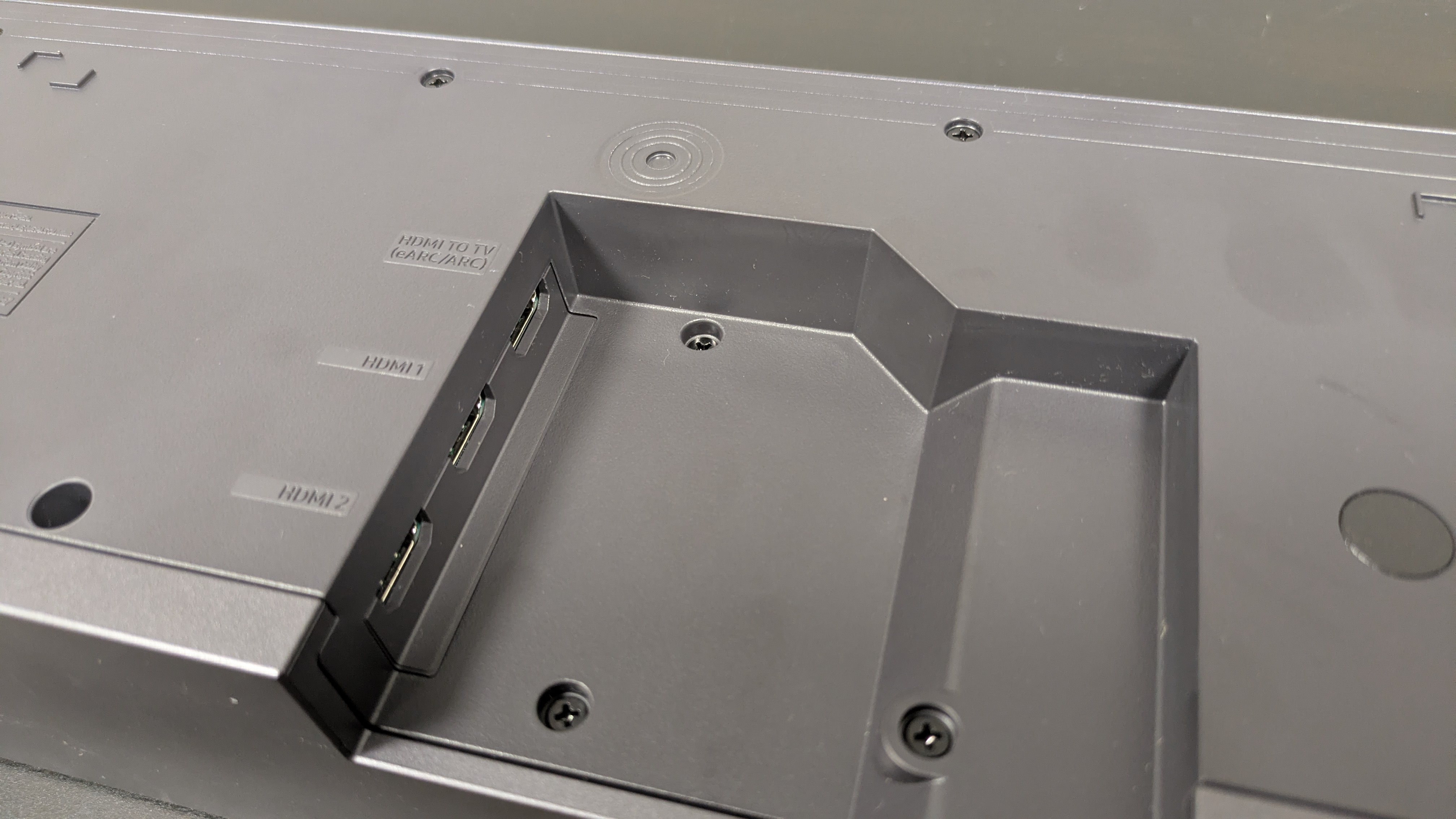
Samsung HW-Q990H ports on main soundbar

The Q990H has two HDMI In ports, both of which support 4K 120Hz passthrough for gaming (Image credit: Future)
  • 11.1.4 channel soundbar system
  • Dolby Atmos and DTS-X support
  • HDMI 2.1 input ports rated for 4K 120Hz gaming

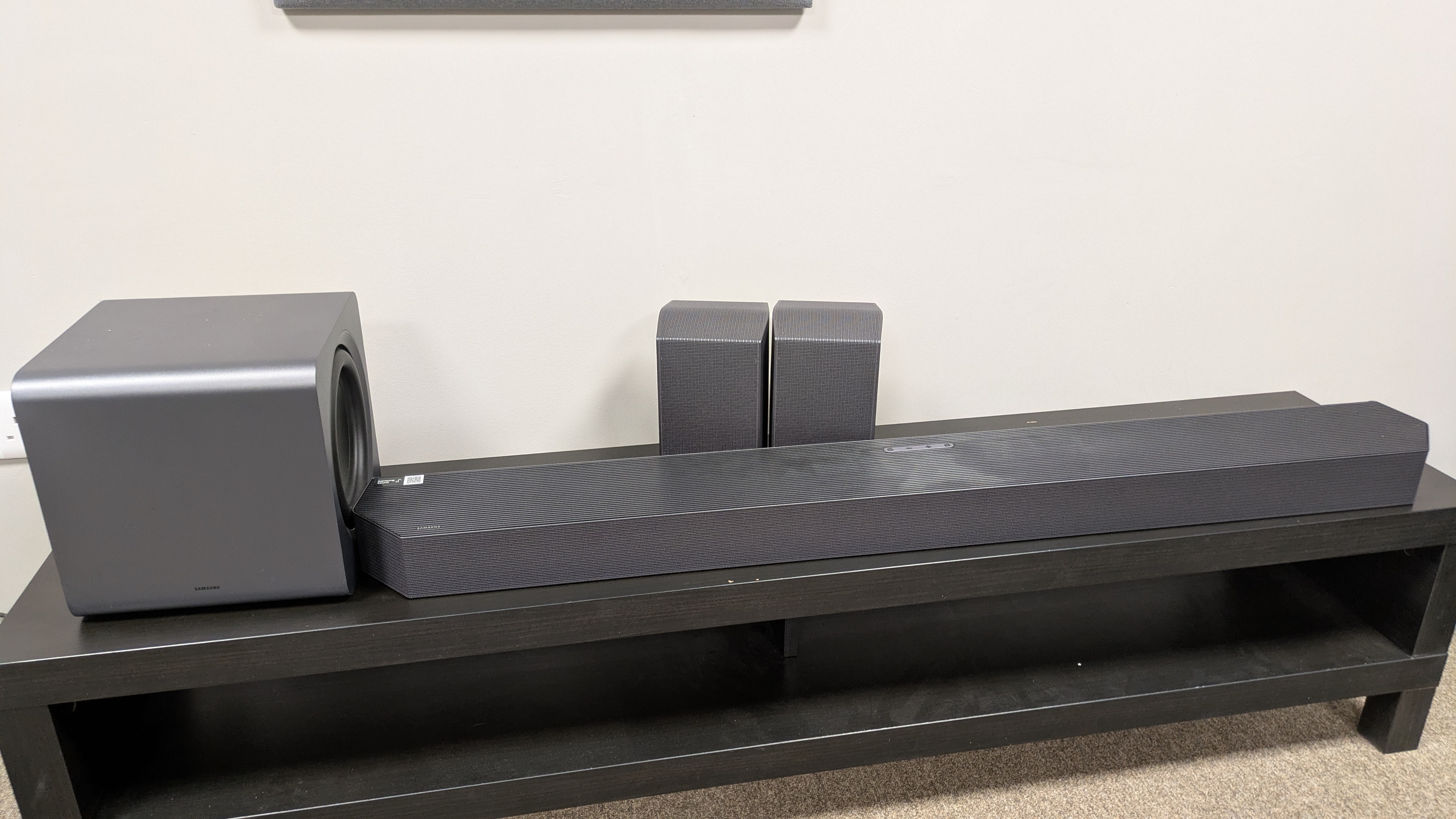
The Q990H doesn’t bring many new features to the table compared to last year’s Q990F, but that’s not a bad thing, as that soundbar's features were pretty impressive. The Q990H is an 11.1.4 channel soundbar system comprising four units: a main soundbar, a subwoofer (the same compact unit introduced with the Q990F), and two rear speakers. It has the same 23-speaker layout as the Q990F.

In terms of audio support, the Q990H supports Dolby Atmos and DTS: X sound formats, and there’s support for Eclipsa Audio, Samsung and Google’s joint foray into the 3D sound world. Wireless Dolby Atmos and DTS:X are also supported.

Connections are the same as last year, with an HDMI eARC port for connection to your chosen display, as well as two HDMI In ports. Both are HDMI 2.1 and rated for 4K 120Hz gaming, and both support HDR10+ HDR. There's also Wi-Fi and Bluetooth connectivity for music streaming.

The Q990H introduces two new sound features. Sound Elevation is designed to direct the sound towards the screen itself in order to create a more natural listening experience, while Auto Volume aims to reduce sudden spikes in volume when changing channels or content.

Returning sound-enhancing features include SpaceFit Sound Pro, which optimizes the sound profile to suit the environment you’re in; Adaptive Sound, which analyzes the content being played and adjusts it in real time; and Active Voice Amplifier Pro, which analyzes voices within a scene and optimizes them. The Q990H also supports Q-Symphony, which enables a compatible connected Samsung TV’s speakers to be employed to enhance the audio further.

There are a number of night-mode listening features as well, such as Private Audio, which directs the sound to the rear speakers, and Moderate Bass, which mutes the subwoofer and directs the bass to come from the soundbar itself.

The Q900H can be controlled by the SmartThings app, where adjustments to the EQ and sound levels for each channel can be made. You can also choose from the soundbar’s four listening modes here: Standard, Surround, AI and Game. The aforementioned sound enhancements can also be controlled via the app.

  • Features score: 5 / 5

Samsung HW-Q990H review: Performance

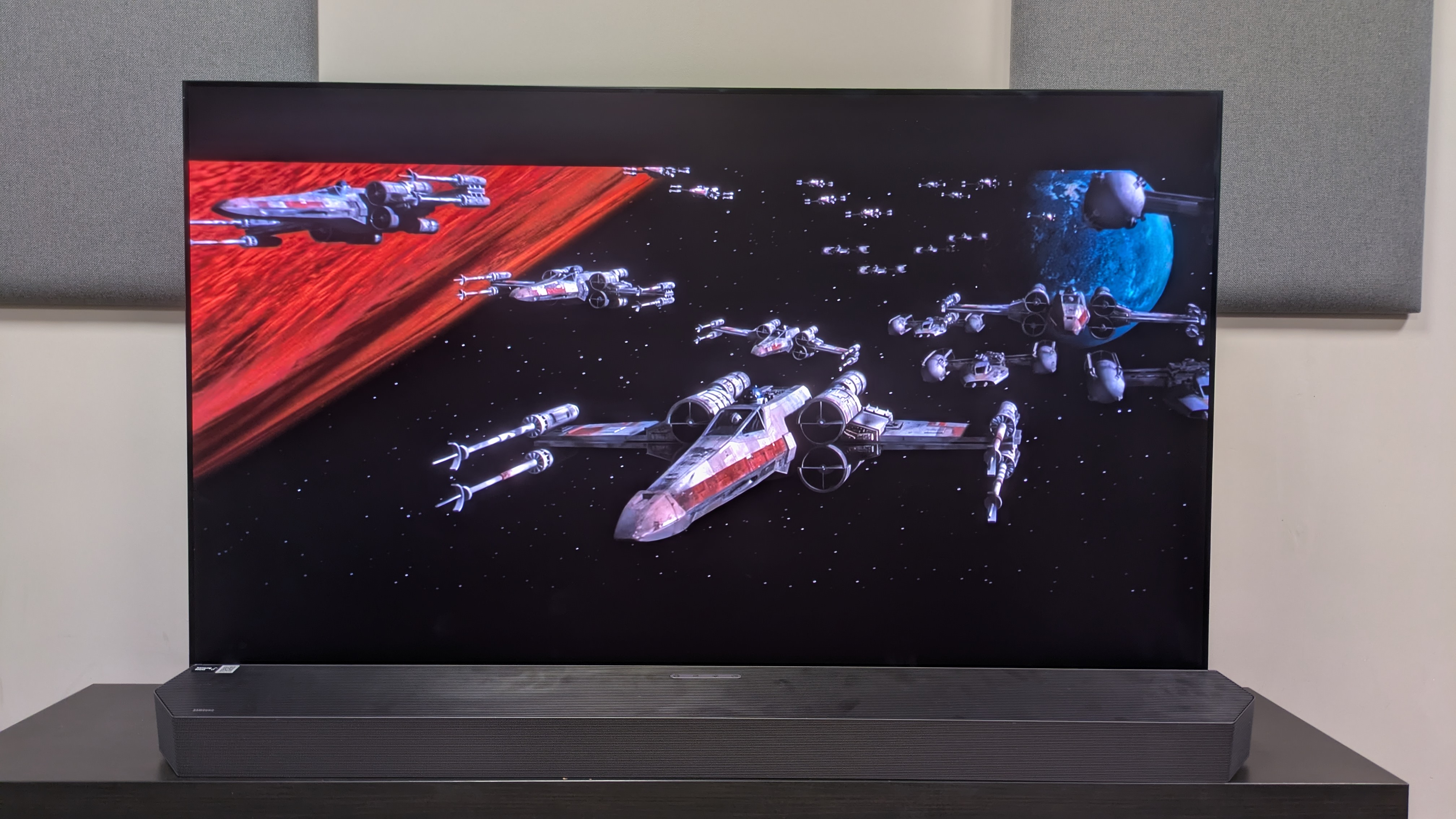
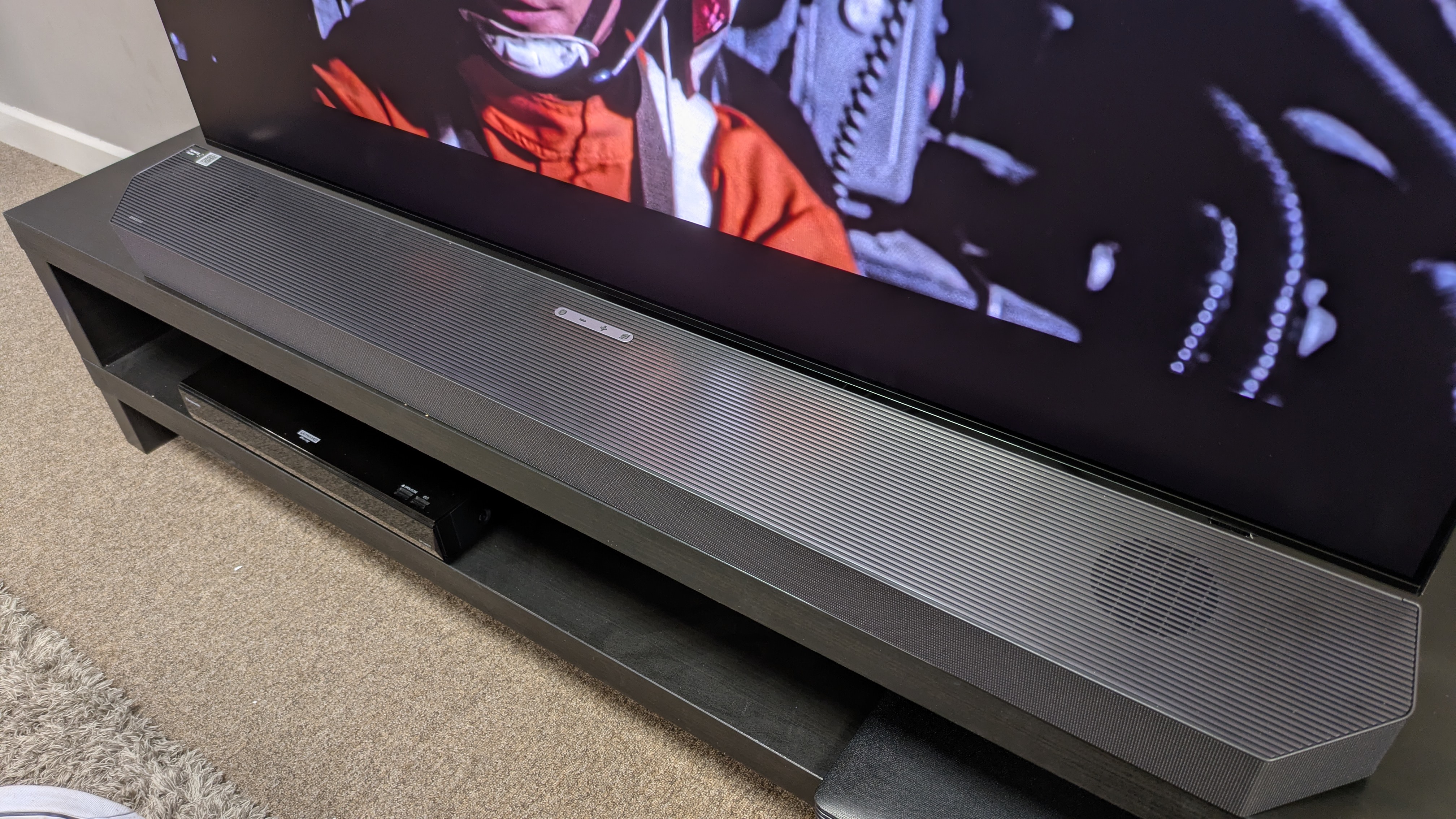
Samsung HW-Q990H connected to Samsung S95F with Star Wars A New Hope on screen, showing X-Wings before Death Star attack

The Q990H's excellent sound positioning and detail mean scenes like the Death Star attack from Star Wars: A New Hope are immersive and cinematic. (Image credit: Disney / Future )
  • Detailed expansive sound
  • Powerful, controlled bass
  • Great Atmos reproduction

Of the Q990H’s four sound presets (Standard, Surround, Game and AI) I chose Surround, as I felt it gave the most consistently immersive sound. I also used the SpaceFit Sound Pro setting to calibrate the soundbar to our testing lab, and this created a more immersive sound profile.

The Q990H’s sound placement and mapping are superb. Watching the Death Star attack run from Star Wars: A New Hope, the whir of the X-Wing’s engines came from the rear speakers, laser fire came from all around, and the flight paths of the various TIE fighters and X-Wings was accurately placed, making me feel like I was in the cockpit.

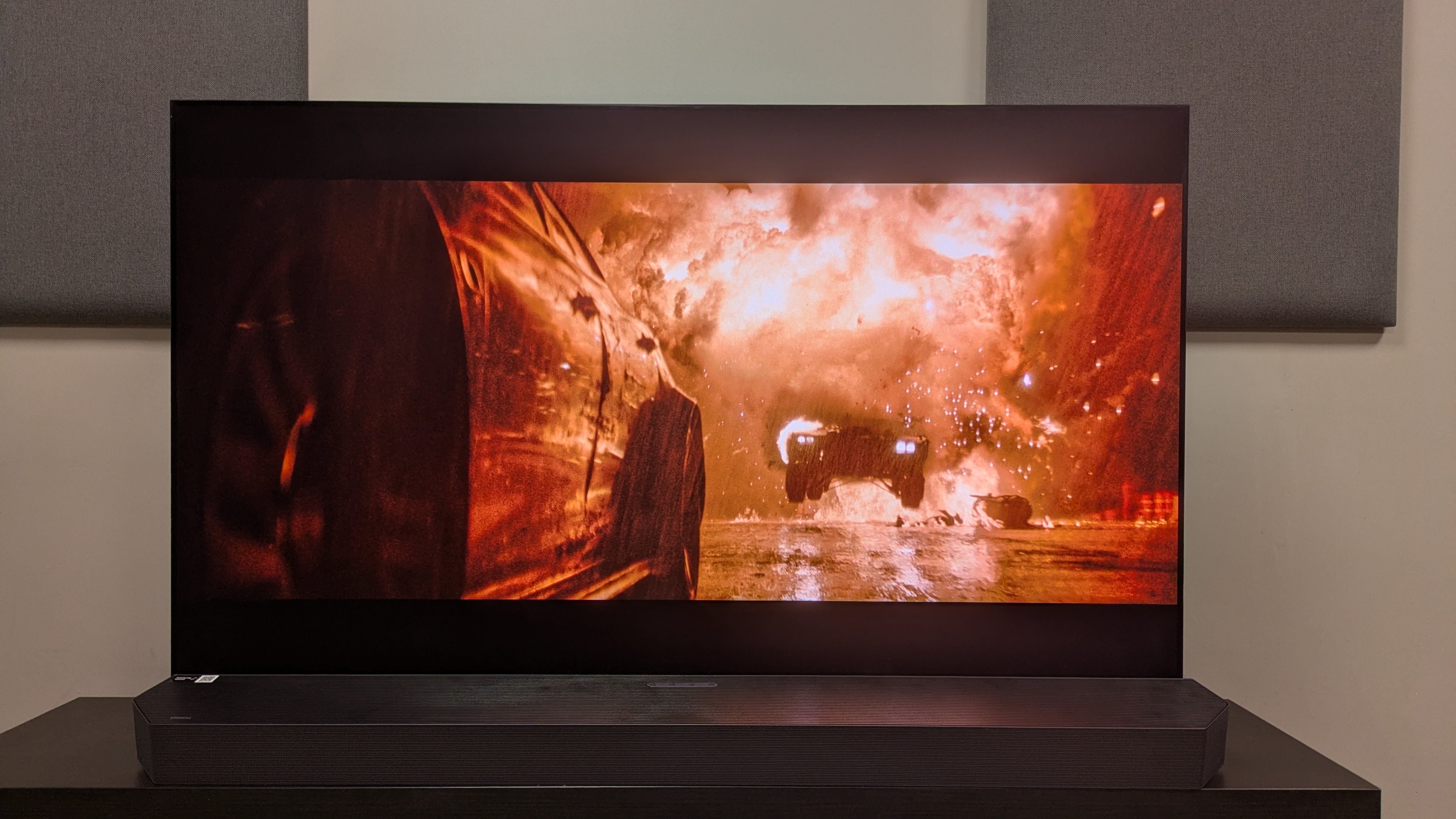
Watching The Batman, as Penguin fired a spray of bullets towards Catwoman, the sound travelled from the front to the rear channels, following the direction of the action on screen. In the chase sequence itself, the swerving of tires and blaring car horns travelled across the soundbar, again mapped perfectly.

The compact subwoofer first introduced in last year’s Q990F returns here, and I was reminded of how good it was. Despite its smaller stature, the Q990H’s subwoofer packs a mighty punch. As the Batmobile’s engine fires up in The Batman, the subwoofer delivered an almighty rumble that filled the room, accurately delivering the roar and the crunching gear changes during the driving sequences. Crucially however, the bass never got ahead of itself, as the subwoofer demonstrated excellent control, with the same gear changes delivered with great detail.

Speaking of detail, the Q990H delivers it in spades. During the Darkstar test flight in Top Gun: Maverick, subtle sound effects, such as the wind passing through the jet’s outer panels and the tightening of Maverick’s gloves are all well balanced with the bass of the jet engine and the loud beeps of the various displays.

The Q990H benefits from four height channels, meaning Atmos effects are reproduced accurately. As Maverick flies over Admiral Kane in Top Gun: Maverick, the sound of the Darkstar’s flight path went over my head, delivering an expansive sound. The same was true as TIE Fighters flew overhead in Star Wars, with height channels precisely following their iconic howling sound.

Samsung HW-Q990H connected to Samsung S95F OLED TV showing the batman on screen, with the batmobile driving through fire

The Q990H's subwoofer delivers powerful, controlled bass: perfect for capturing the roar of the Batmobile's engine in The Batman (pictured) (Image credit: Warner Bros. / Future )

Throughout my testing, the Q990H’s front channels delivered crystal-clear speech, even in complicated scenes such as the Batmobile chase, accurately delivering the Penguin’s frantic shouts over the loud explosions and impacts.

As I tested the Q990H with the Samsung S95F, one of 2025’s best OLED TVs, I tried out the Q-Symphony setting. This added extra volume and more power to the front channels by using the S95F’s speakers, giving everything extra punch. If you don’t own a Samsung TV, fear not — this Q990H still sounds fantastic without Q-Symphony.

I tried out the new Sound Elevation feature, and while it did move the height of the sound effectively, it wasn’t necessary for my viewing. This could be a useful feature for those who wall-mount the soundbar, but I’d recommend giving it a try to see if it fits your environment.

The Q990H is also a solid soundbar for music. Listening to a Dolby Atmos version of Bad Bunny’s BAILE INoLVIDABLE, the Q990H delivered tightly controlled low-end from the track’s heavy bass synths and drums later in the song. The piano sounded detailed, and Bunny’s varied vocals were delivered accurately. High notes had plenty of brightness without sounding overbearing, and the horn section sounded punchy and detailed.

Switching to a heavier track, Dir En Grey’s Un Deux, the Q990H did a great job delivering the pounding guitars, crunching drums and Kyo’s soaring vocals, capturing the wide production of the track with its big soundstage. While other soundbars, such as the Sonos Arc Ultra, are better for music overall, the Q990H is still great.

  • Performance score: 5 / 5

Samsung HW-Q990H review: Design

Samsung HW-Q990H system with soundbar, subwoofer and rear speakers on dark wood bench

While I like the compact subwoofer, the rest of the HW-Q990H could do with a design refresh (Image credit: Future)
  • Return of the brilliant compact subwoofer
  • Sturdy build quality
  • Design becoming familiar

The Q990H is almost identical in appearance to last year’s Q990F, which in turn felt like a cheapened design of the 2024 Samsung HW-Q990D. While the Q990H does have a sturdy, weighty build that feels premium, my criticisms of last year’s design remain.

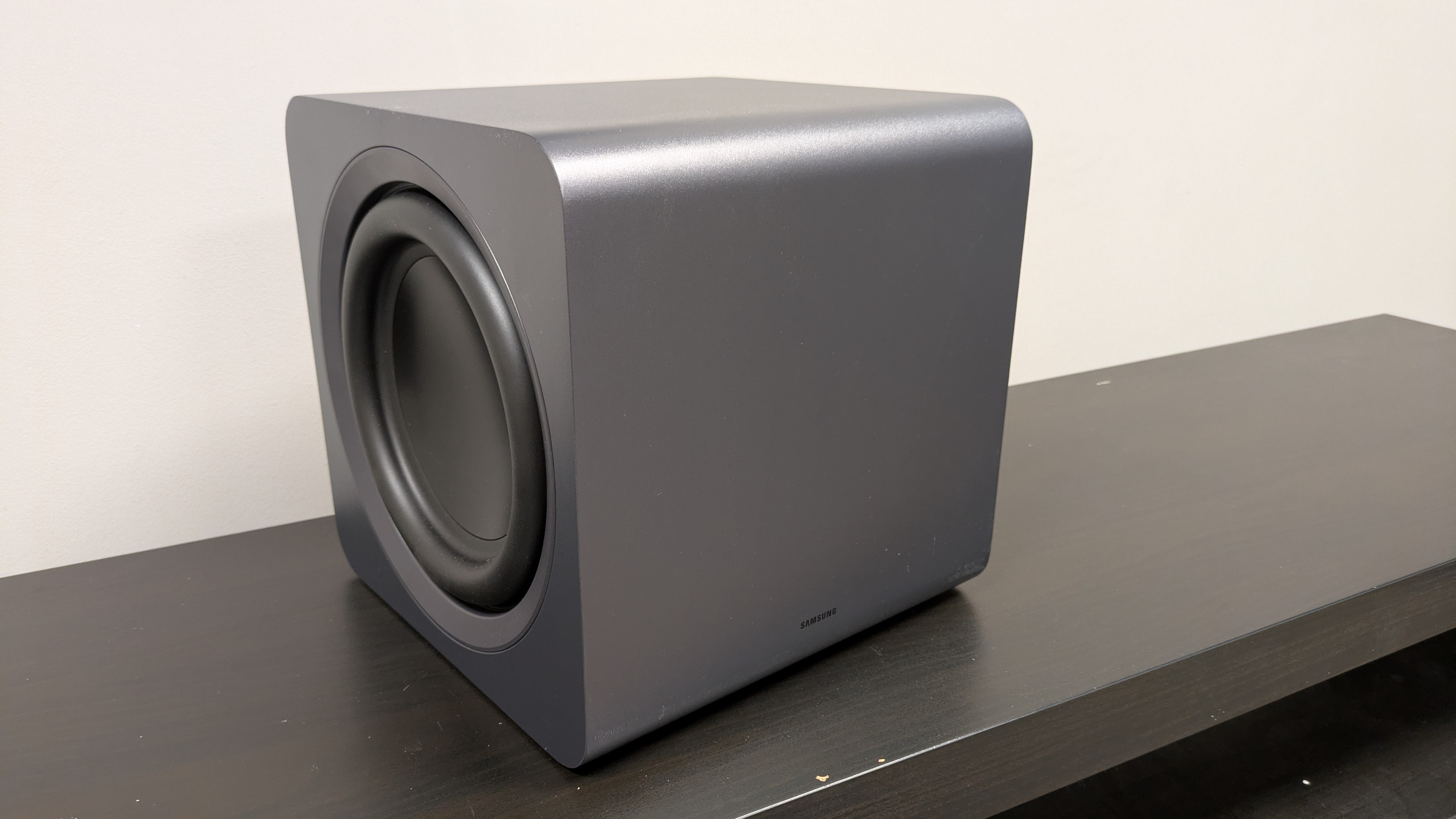
The highlight is once again the compact subwoofer design. The dual-driver unit is weighty, but has a much more visually appealing cubed design. Due to its more compact size, it’s much easier to conceal than most subwoofers. The main soundbar measures 1232 x 70.8 x 138mm (48.5 x 2.8 x 5.4 inches), which was the exact width of the 55-inch Samsung S95F OLED TV I tested the soundbar with. It’s quite a deep soundbar however, so you may need to consider this when placing it.

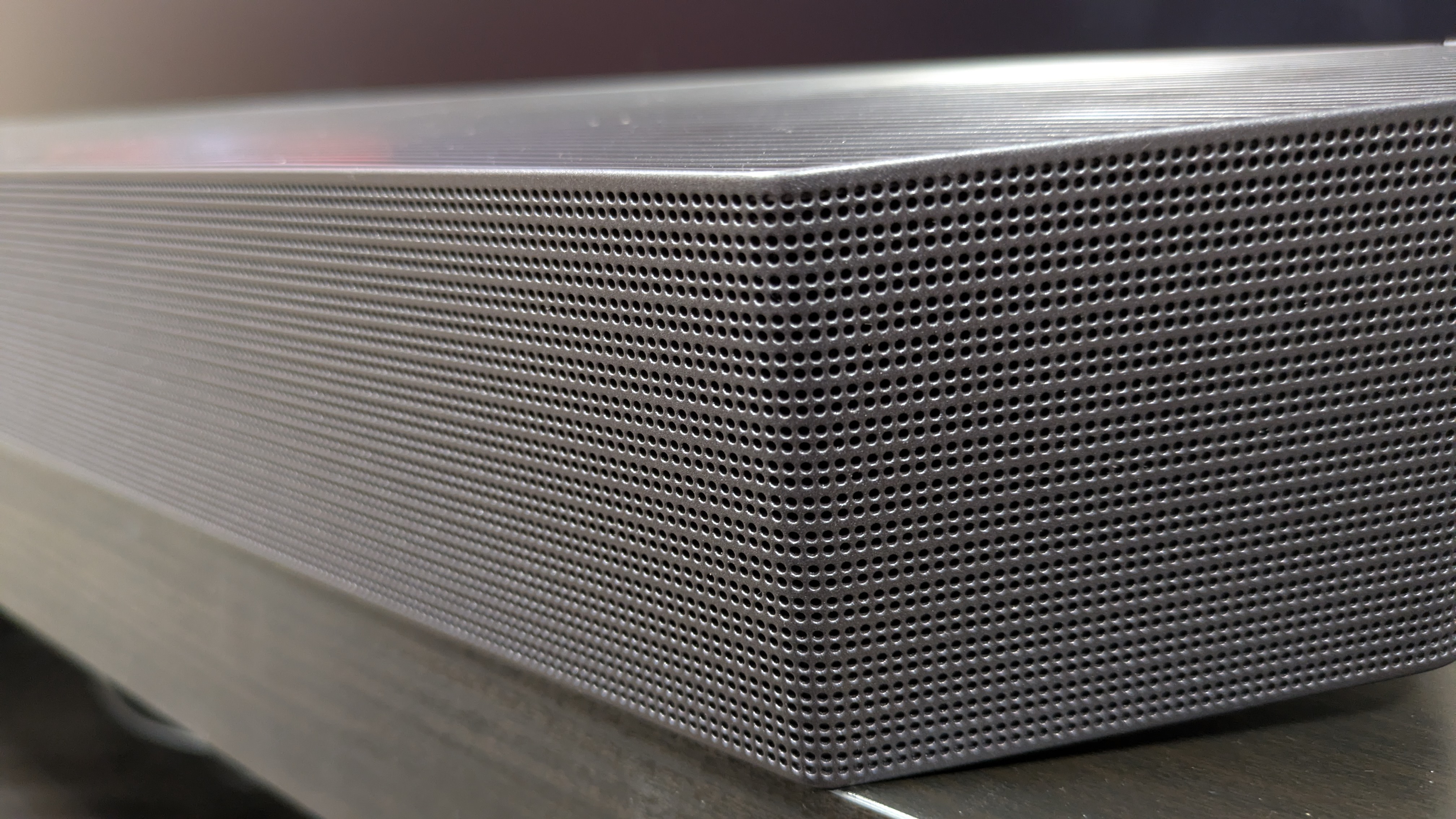
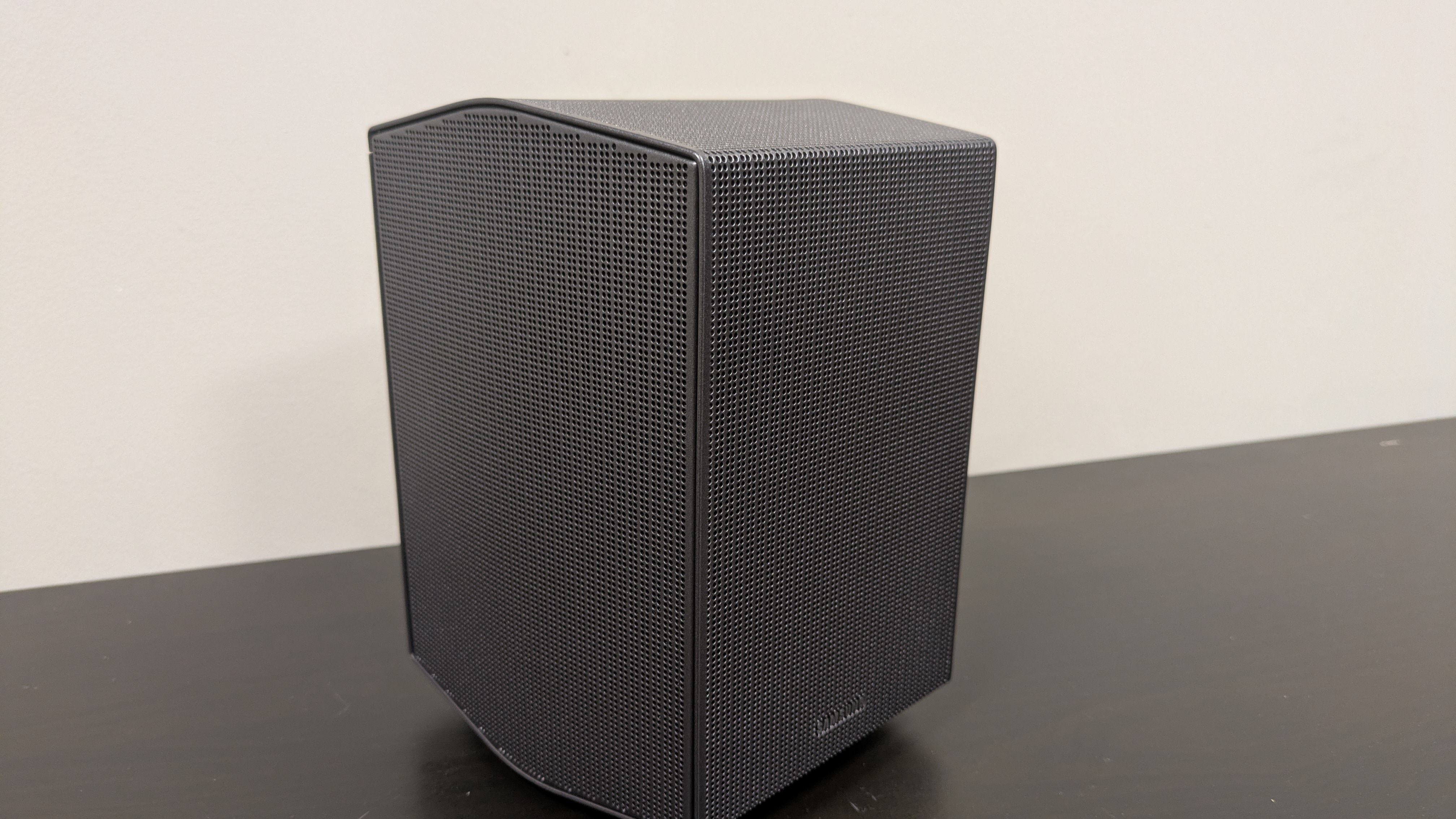
The actual look and materials of the Q990H are the main issue. While the metallic grille that’s been used for years remains, the cheaper-looking grated design introduced in the Q990F is still here, and it doesn’t look as appealing as older models. The same is true of the rear speakers, which don’t feel or look as premium.

The alphanumeric display included can still be a challenge to a read, but it’s still welcome. While the Q990H’s overall design is fine, Samsung could stand to learn from other multi-box units, such as the JBL 1300Mk2.

  • Design score: 4 / 5

Samsung HW-Q990H review: Setup and usability

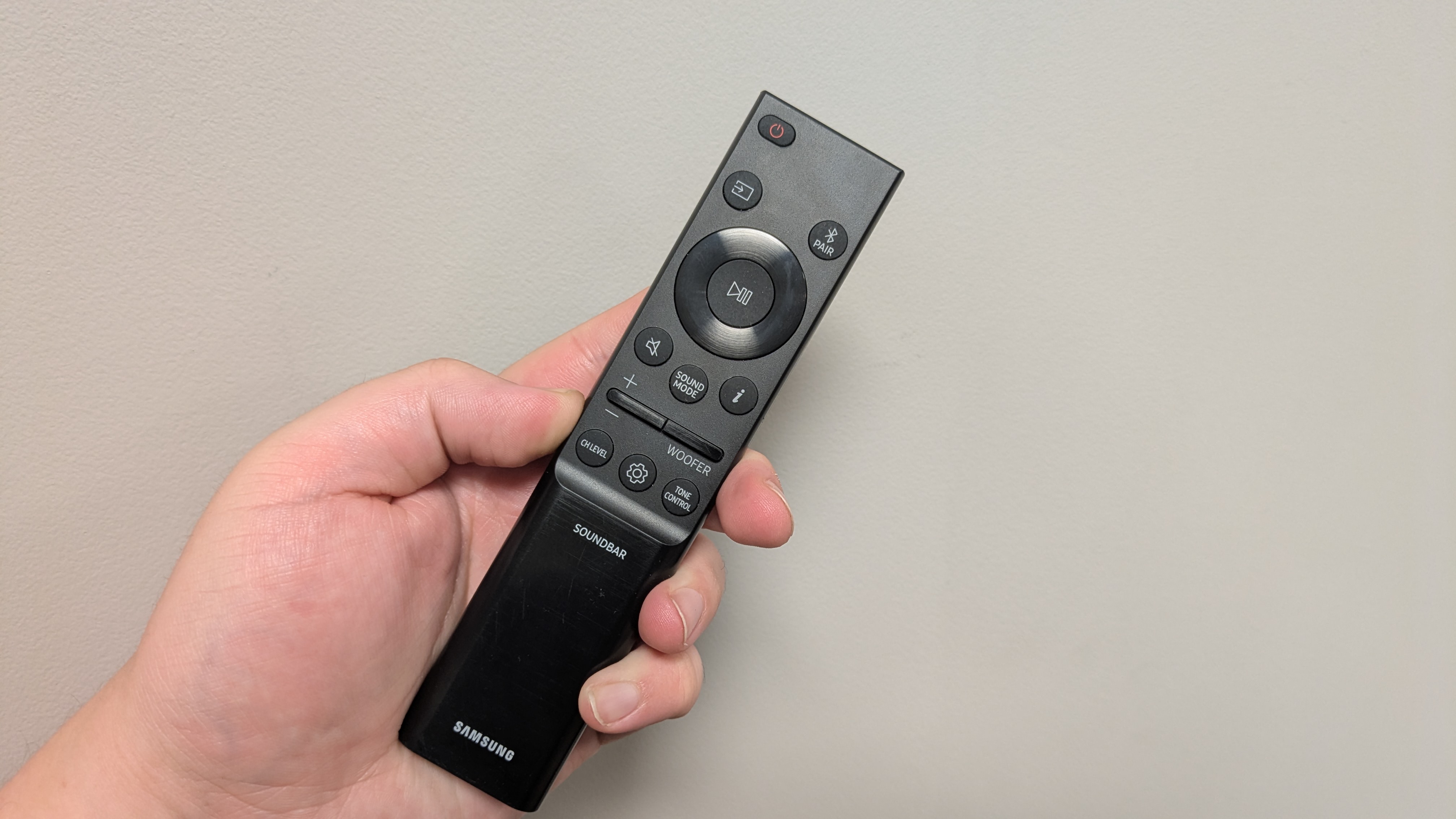
Samsung HW-Q990H remote

You can control the Q990H with the supplied remote (pictured) or the SmartThings or new Samsung Sound app (Image credit: Future)
  • Easy, hassle-free setup
  • SmartThings app for control as well as remote
  • Wireless connection between soundbar and other units

As I’ve found with the last few iterations of Samsung’s flagship soundbar, the Q990H was a breeze to set up. I simply connected the main soundbar to the TV via HDMI eARC, and then paired the subwoofer and rear speakers by holding down a button. At one point during my testing I had to disconnect and re-connect the same units due to a brief Wi-Fi issue, and this again took a matter of minutes.

The Q990H can be controlled by the supplied remote or the SmartThings app. I opted for the latter, and it allowed me to easily make adjustments to the EQ and sound levels as I saw fit, with said changes happening almost instantaneously. It’s worth trying out the app, but the Q990H also sounds great out of the box.

One quick note: Samsung advertises its new Samsung Sound app as the new control, though at the time of writing it doesn’t offer the full compatibility or support all the features of SmartThings, so you’re best sticking with the latter for now.

  • Setup & usability score: 4.5 / 5

Samsung HW-Q990H review: Value

Samsung HW-Q990H front grille up-close
Samsung Q990H soundbar Future
Samsung HW-Q990H subwoofer on dark bench
Samsung Q990H subwooferFuture
Samsung HW-Q990H rear speaker
Samsung Q990H rear speaker Future
  • Great flagship performance and features
  • Still a premium price
  • Only minor upgrades over predecessor

The Q990H is undoubtedly at the premium end of the soundbar market. Priced at $1,999 / £1,599 / AU$1,999, it’s pricier than a lot of all-in-one options such as the Sonos Arc Ultra and Marshall Heston 120, as well as more budget surround sound models from the likes of JBL, Hisense and Ultimea.

Major rivals such as the JBL 1300MK2 are also available for less, with the 1300MK2 priced at $1,699 / £999 in the US and UK (it’s pricier in Australia at $AU2,299). That said, the 1300MK2 did launch several months ago, so its prices have had time to drop.

Still, the Q990H is a flagship soundbar that delivers phenomenal audio quality and comes with a ton of useful features, most prominently its HDMI 2.1 ports for gaming. Compared to said multi-box rivals, it’s also pretty fairly priced.

There is the small matter, however, of the Q990H’s predecessor, the Q990F, still being available. While the Q990H offers a couple of upgrades, the Q990F is still a fantastic soundbar in its own right, and at $1,599 / £999 / AU$1,599 it’s the better option right now. Once it disappears, though, the Q990H will make a worthy successor — and we’ll have hopefully seen some discounts by then.

  • Value score: 4 / 5

Should I buy the Samsung HW-Q990H?

Section

Notes

Score

Features

Great list of sound enhancing features, WI-Fi and Hi-res audio for music and 4K 120Hz for gaming

5 / 5

Performance

Detailed, powerful sound with faithful and accurate Dolby Atmos reproduction

5 / 5

Design

Compact subwoofer returns and feel sturdy, but design feels familiar and could do with a refresh

4 / 5

Setup & usability

Easy setup and usage with easier supplied remote or SmartThings app

4.5 / 5

Value

A premium experience with a price to match. Few upgrades over predecessor

4 / 5

Buy it if...

You want the full Dolby Atmos experience at home
The Q990H delivers a powerful, refined and immersive sound experience with authentic Dolby Atmos, bringing the cinema to your home

You want a soundbar to cover all the bases
With Hi-res audio support, Dolby Atmos and DTS: X and 4K 120Hz for gaming, the Q990H really does cover all the bases.

You want a compact but powerful subwoofer
Some subwoofers prioritise design over sound and vice versa. The Q990H's subwoofer does both: it's small enough to hide but without compromising on sound.

Don't buy it if...

You're on a budget
The Q990H is a fantastic soundbar, but it comes with a premium price tag. There are cheaper Atmos soundbars available.

You want an easy-to-read front display
The Q990H design hasn't been updated for a while, and the LED front display is still tricky to read.

You own the Samsung HW-Q990F
The Q990H introduces a couple of new features and refinements, but it's not dissimilar to last year's Q990F. View Deal

Samsung HW-Q990H review: Also consider

Samsung HW-Q990F

Samsung HW-Q990F

JBL Bar 1300MK2

Sonos Arc Ultra

Price (May 2026)

$1,999 / £1,599 / AU$1,999

$1,599 / £999 / AU$1,599

$1,699 / £999 / AU$2,299

Dimensions

Soundbar: 1232 x 70.8 x 138mm (48.5 x 2.8 x 5.4 inches); Subwoofer: 249 x 251.8 x 249mm (9.8 x 10.0 x 9.8 inches); Rear speaker: 129.5 x 201.3 x140.4mm (5.1 x 8.0 x 5.5 inches)

Soundbar: 1232 x 70.8 x 138mm (48.5 x 2.8 x 5.4 inches); Subwoofer: 249 x 251.8 x 249mm (9.8 x 10.0 x 9.8 inches); Rear speaker: 129.5 x 201.3 x140.4mm (5.1 x 8.0 x 5.5 inches)

Soundbar: 40.6 x 2.3 x 5.4 inches / 1030 x 58 x 136mm; subwoofer: 12.4 x 10.9 x 10.8 inches / 315 x 277 x 275mm; surround speakers: 8 x 2.3 x 5.4 inches / 202 x 58 x 136mm
2.95 x 46.38 x 4.35 inches (75 x 1178 x 110.6mm)

Speaker channels

11.1.4

11.1.4

11.1.4

9.1.4

Connections

Two HDMI 2.1 input, One HDMI output, optical output, Wi-Fi, Bluetooth

Two HDMI 2.1 input, One HDMI output, optical output, Wi-Fi, Bluetooth

1x HDMI eARC, 3x HDMI in, digital optical, USB (playback US-only), Ethernet, Wi-Fi, Bluetooth 5.3 (surround speakers use 5.4)

1x HDMI with eARC, Ethernet, Wi-Fi, Bluetooth

Dolby Atmos/DTS:X

Yes/Yes

Yes/Yes

Yes / Yes

Yes/No

Sub included

Yes

Yes

Yes

No

Rear speakers included

Yes

Yes

Yes

No

Samsung HW-Q990F (2025)
The Samsung HW-Q990F is the Q990H's predecessor, and was Samsung's first flagship model to use the compact subwoofer featured on the Q990H. It delivers very similar performance and features to the Q990H, and is currently cheaper. This is your best bet until the Q990H's prices start dropping.

Read our full Samsung HW-Q990F review

JBL 1300Mk2
The JBL 1300Mk2 is an 11.1.4 channel Dolby Atmos system, the same as the Q990H. Its rear speakers are detachable from the front soundbar for easy storage, making it a neater system than the Q990H. While it is cheaper, it's lacking the 4K 120Hz passthrough the Q990H has, so if you want gaming features, the Q990H is your better option.

Read our full JBL 1300Mk2View Deal

Sonos Arc Ultra
The Sonos Arc Ultra is an all-in-one Dolby Atmos soundbar that delivers great performance. It's better for music than the Q990H, but the Q990H has rear speakers and a subwoofer included as standard, whereas the Arc Ultra's are optional. If you want the best value, the Q990H is my pick.

Read our full Sonos Arc Ultra review

How I tested the Samsung HW-Q990H

  • Tested with the Samsung S95F OLED TV
  • Tested using different sources
  • Dolby Atmos, 5.1 surround and stereo sound tested

I tested the Samsung HW-Q990H with the Samsung S95F OLED TV, which allowed me to test out the Q-Symphony feature, which employs the Samsung S95F's speakers in conjunction with the soundbar.

To test the Q990H soundbar, I used reference Dolby Atmos scenes that I also use to test TV speakers, namely The Batman and Top Gun: Maverick on 4K Blu-ray, and Star Wars: A New Hope for 4K streaming.

I used the Samsung SmartThings app to test out its sound features, including SpaceFit Sound Pro and Sound Elevation, as well as testing out its different sound presets.

I also tested the Samsung HW-Q990H's music capabilities using Dolby Atmos tracks such as Bad Bunny's BAILLE INoLVIDABLE, as well as stereo tracks such as Dir En Grey's Un Deux.

!!!!!!!!!!

Popular Posts

Categories

Blog Archive